Cybercab: 45 Cars, One Federal Probe
45 Cars, and Washington Was Waiting
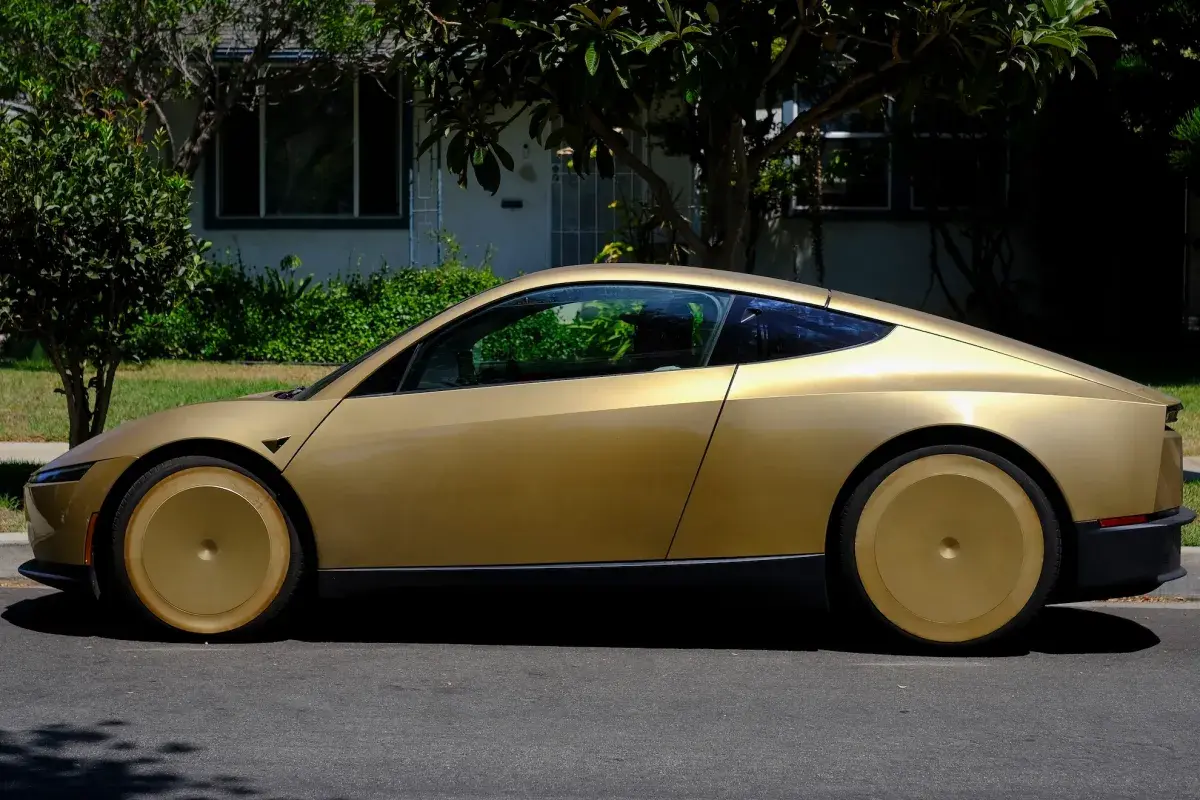
Tesla launched its Cybercab robotaxi service in Austin on Thursday, September 3, 2026. By Friday morning, the U.S. National Highway Traffic Safety Administration had opened a federal probe. The entire sequence from first commercial ride to government investigation took less than 24 hours. The Cybercab is a two-seater with no steering wheel, no brake pedal, no accelerator, and no mirrors. Tesla registered 45 of them in Texas for commercial operation and began ferrying passengers through a new app. It was the first time Elon Musk had put a purpose-built driverless vehicle on public roads for paying customers. The company had been promising it for years.
The Probe: What NHTSA Is Actually Asking
NHTSA's Office of Defects Investigation opened Audit Query AQ26002 covering approximately 1,000 Cybercab vehicles. The agency is not alleging a defect. It is asking a more fundamental question: on what legal basis did Tesla certify this vehicle as compliant with Federal Motor Vehicle Safety Standards (FMVSS)? The FMVSS were written for cars that have drivers. They specify requirements for steering columns, brake pedals, and mirrors, because every previous passenger vehicle had them. Tesla's answer was that those standards simply do not apply to a car with no human controls. NHTSA administrator Jonathan Morrison put the agency's position plainly: "NHTSA fully supports the safe development and deployment of automated vehicles. But as the federal regulator, we need to ensure that all of our laws are followed." The probe does not ground the Cybercab. It asks Tesla to show its work.
The Gamble: Self-Certification vs. the Exemption Route
Under U.S. law, automakers do not need pre-approval from regulators. They self-certify compliance. That system was designed for conventional vehicles. For a car without a steering wheel, two paths exist. Path one: apply to NHTSA for a formal exemption. Zoox, the Amazon-owned robotaxi company, followed this route for years. It obtained a commercial exemption in July 2026, having operated exclusively as a test service since 2022. Waymo, which runs roughly 500,000 fully autonomous rides a week across several cities, worked within existing FMVSS frameworks by retaining some conventional controls.
Path Two: Skip the Queue
Path two: certify directly that the relevant standards do not apply, skip the exemption process entirely, and begin commercial service. That is what Tesla did. The advantage is speed, and one other thing: the exemption route caps production at 2,500 units per year during the exemption period. Tesla VP of vehicle engineering Lars Moravy said the Cybercab is not subject to that cap, precisely because it did not seek an exemption. Three former senior NHTSA officials told Reuters that any disagreement between the agency and Tesla over the self-certification could end up in court. "It does happen from time to time," one of them said, "and NHTSA, importantly, has not always won."
Waymo Has 500,000 Rides a Week. Tesla Had a Quiet Party.
The Cybercab launch was notably low-key. There was no public livestream, no stage presentation. Tesla invited a small group of shareholders and friendly influencers, reportedly under NDA. A new app went live for rides in Austin. Elon Musk posted on X but did not hold a press conference. The contrast with Waymo is striking. Waymo reported more than 500,000 fully autonomous rides per week in its first-quarter 2026 commentary, operating across San Francisco, Los Angeles, Phoenix, and Austin. It has spent years navigating the regulatory process. Tesla spent years making promises, then deployed 45 cars and immediately drew a federal audit. The probe covers 1,000 vehicles because that is the number Tesla had registered or planned to deploy across Texas. As of Friday, only 45 of those were confirmed to be commercially active.
Cybercabs registered in Texas
420
Operating commercially in Austin
45
NHTSA probe covers
approx. 1,000
Tesla stock drop Friday
approx. 6%
Waymo fully autonomous rides per week
500,000+
Time from first ride to federal probe
under 24 hours
A Fifth Probe on Top of Four Others
The Cybercab audit is not Tesla's first engagement with NHTSA. The agency already has an open investigation into Tesla's "Full Self-Driving" software covering 3.2 million vehicles, following a series of crashes in low-visibility conditions including fog, sun glare, and dust. At least nine documented crashes are part of that probe, including one in which a pedestrian was killed. The Cybercab runs comparable FSD software. Earlier this year, crash data showed a Tesla remote operator collided a Robotaxi during a supervised session, a detail that will not help Tesla's case with regulators now evaluating its autonomous certification. Tesla stock fell roughly 6% on Friday to around $353, reversing much of Thursday's gains from the launch event. The market's reading was clear: a celebrated debut had become a regulatory question mark within hours.
What Happens Now
NHTSA can resolve this in three ways. It can conclude Tesla's self-certification was correct and close the probe. It can require Tesla to apply for a formal exemption, effectively pausing commercial service until that process completes. Or it can find the vehicles non-compliant and require modifications, which at minimum means adding manual controls, which rather defeats the product's purpose. The Department of Transportation has proposed updating the FMVSS to explicitly accommodate vehicles without human controls. That rule change is not yet final. Tesla launched before the rule exists. Musk has framed autonomous transportation as Tesla's defining bet. The Cybercab is the physical expression of that bet. Whether Washington agrees it was legally placed is now the question that matters more than any benchmark or demo video.