
Adobe After Narayen
Narayen built it. Chakravarthy has to save it.
On September 3, 2026, Adobe's board announced that Shantanu Narayen will step down as chief executive on December 1, ending an 18-year run that turned a boxed-software company into a $200 billion cloud platform. His replacement, Anil Chakravarthy, inherits record revenue, 850 million monthly active users, and a share price that has shed 18% in 2026 alone on investor fears that artificial intelligence will make Photoshop optional.
20x in 18 years
Narayen took the top job in December 2007, when Adobe was still largely a boxed-software business. He made two bets that defined the next decade. The first was the pivot to subscriptions: Creative Cloud launched in 2013, replacing one-time licence sales with recurring monthly revenue. The second was a push into enterprise marketing software, culminating in the $4.75 billion purchase of Marketo in 2018 and the $1.68 billion purchase of Workfront in 2020. The results were measurable. Adobe's stock rose roughly 20 times under Narayen, a 24% compound annual growth rate sustained for 17 years. The company crossed $100 billion in market capitalisation in 2018 and earned its first Fortune 500 listing the same year.
Then the floor fell away
Adobe fell 25% in 2024, another 21% in 2025, and a further 18% in 2026. The peak market cap had exceeded $300 billion. By the time Narayen's departure was announced, the company traded around $273, inside a 52-week range of $190 to $371. Three years of compounding losses had erased what had taken a decade to build.
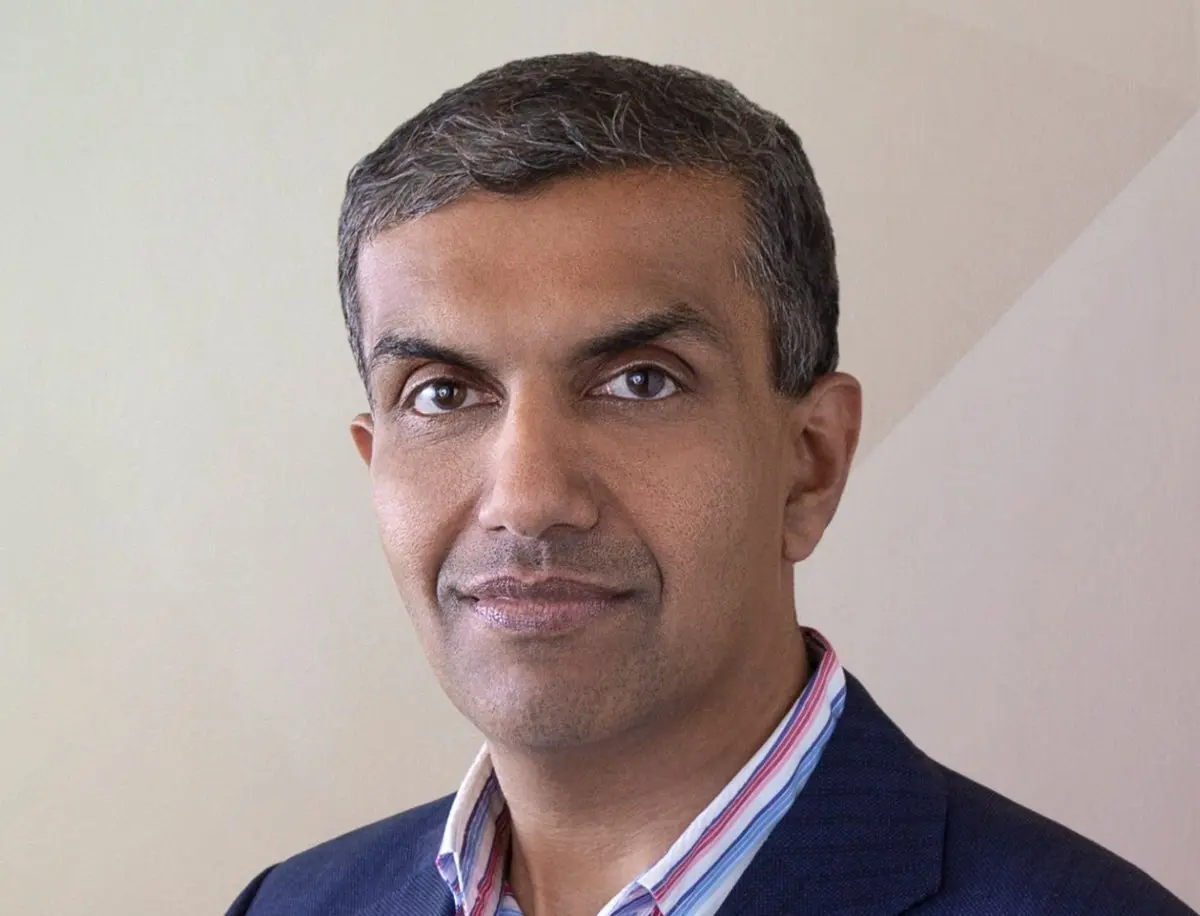
Narayen tenure as CEO
Dec 2007 to Dec 2026 (18 years)
Stock appreciation under Narayen
approx. 20x (24% CAGR)
ADBE stock decline, 2024
-25%
ADBE stock decline, 2025
-21%
ADBE stock decline, 2026 YTD
-18%
ADBE 52-week range
$190 to $371
Record numbers that the market does not believe
The paradox of Adobe's current moment is that the financial results are genuinely strong. Q2 FY2026 revenue came in at $6.62 billion, up 13% year-over-year and a record for any quarter in the company's history. Non-GAAP earnings per share were $5.96, up 18% and ahead of analyst estimates. Full-year revenue guidance was raised to $26.5 to $26.6 billion. AI is part of that record. Adobe's Firefly model has generated more than 24 billion assets since launch, and AI-first annual recurring revenue tripled to more than $500 million. Monthly active users across Creative Cloud, Acrobat, Express, and Firefly reached 850 million, up 17% in a year. The free tier grew from 50 million to more than 90 million users as Adobe pushed into a freemium model to expand its base before competitors could.
The price question
What the market doubts is whether any of those numbers will hold. The fear is structural: if a free or cheap AI tool can generate a polished image in 30 seconds, the argument for paying $55 a month for Photoshop weakens. Anthropic launched Claude Design in April 2026 and the stock fell immediately. Canva, already at 220 million users, added AI generation without raising its price. The question is not whether Adobe can grow. It is whether it can defend what it charges.
Who Chakravarthy is and why the board chose him
Anil Chakravarthy joined Adobe in January 2020, arriving from Informatica where he had served as chief executive for four years. At Adobe he ran the Digital Experience division, which sells marketing automation, data analytics, and content supply chain tools to large enterprises. He was promoted to president in December 2021 and later took on worldwide field operations. The board's reasoning, stated by lead independent director Frank Calderoni, was direct: "Over the last six and a half years, he has transformed and expanded Adobe's Customer Experience Orchestration business through innovation-led growth." That business is the part of Adobe most insulated from the consumer AI threat. Enterprise clients running multi-channel campaign orchestration on Adobe Experience Platform do not cancel because Midjourney exists.
The gap in his brief
The counterargument is that Chakravarthy's expertise is in the enterprise half of the business, not the creative half. Photoshop, Illustrator, and Premiere Pro are the products under competitive pressure, and they are the ones Narayen grew up with. His co-pilot on those products, David Wadhwani, who ran the creativity and productivity division and was once seen as a potential CEO successor, announced he would leave alongside the transition. His departure removes one of the architects of both Firefly and the failed Figma pursuit from the leadership team entirely.
The failed Figma deal and what it cost
The sharpest piece of counterfactual history is the Figma acquisition that never happened. Adobe agreed in September 2022 to buy the design collaboration platform for $20 billion. Regulators in the United States, United Kingdom, and European Union all raised objections. Adobe and Figma mutually terminated the agreement in December 2023, and Adobe paid a $1 billion termination fee. Figma has since filed to go public, with its most recent private valuation above $12 billion. The product is now the dominant tool for UI and product design, the exact segment where Adobe's own tools have lost ground to simpler, browser-based alternatives. Had Adobe absorbed Figma in 2022, the competitive map of creative software today would look entirely different.
What December 1 actually resolves
Narayen's 18-year tenure settled the subscription question. The industry spent the 2010s arguing about whether creatives would pay monthly instead of once. Adobe proved they would. Chakravarthy's era will be defined by a harder version of the same question: will creatives pay monthly for tools that AI can partially replicate for free? Adobe's answer is integration. Firefly is embedded in Photoshop, not sold separately. The $500 million in AI-first ARR suggests some enterprise clients are paying for the AI layer specifically. But the growth rate of 10% is slower than Adobe's historical pace, and the operating margin is compressing from 46% in FY2025 toward 45% in FY2026 as the company invests in model training and free-tier infrastructure. December 1 is a handover date, not a resolution. The thesis Chakravarthy will defend on every earnings call from January onward is the same one the market is currently pricing at a discount.