
Eastbound jet lag: a day-by-day plan
Eastbound pace
about 1 h per day
Westbound pace
about 1.5 h per day
6 time zones east
about 6 days
Melatonin dose range studied
0.5 to 5 mg
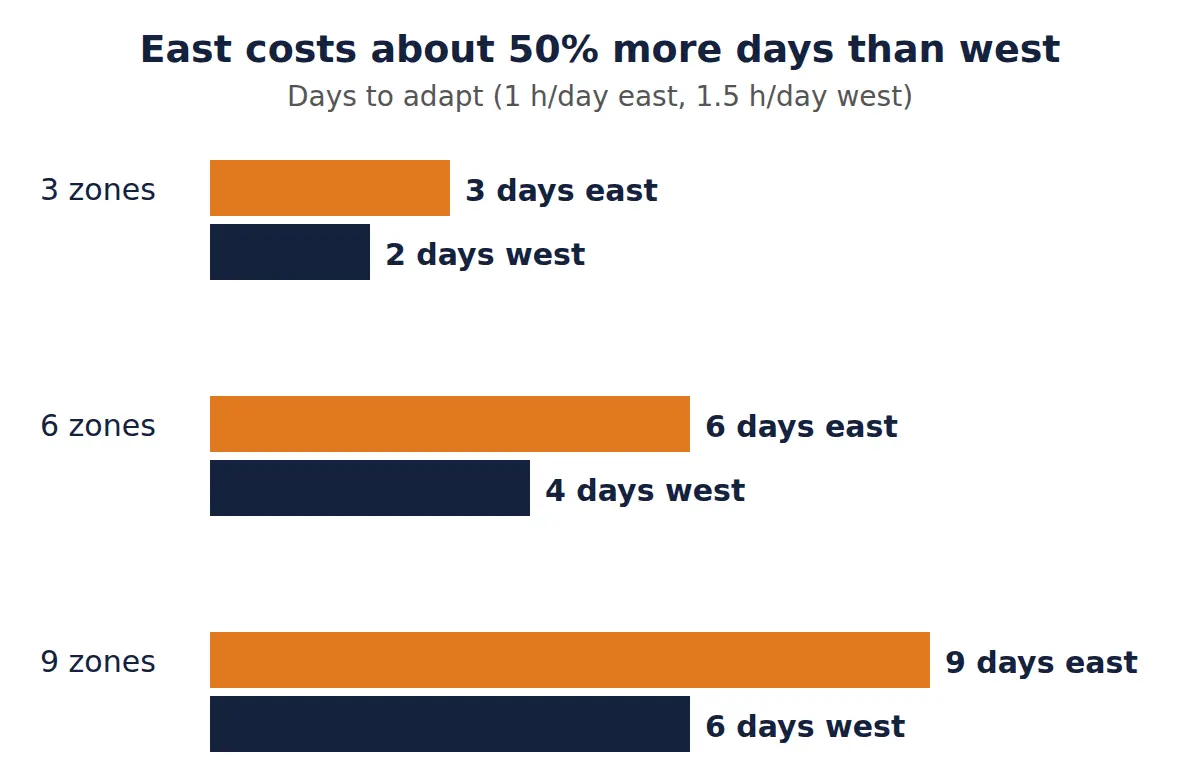
Why flying east is harder
Most people's internal clock runs a little longer than 24 hours. A 1999 study in Science measured an average of 24 hours 11 minutes in healthy volunteers. That makes a later bedtime easy and an earlier one hard. Flying west asks you to stay up later, which suits the clock. Flying east asks you to fall asleep earlier, which works against it. So the same number of time zones costs more days eastbound.
The 1 hour and 1.5 hours per day figures are averages from jet lag guidance, not promises. Age, sleep before the trip and how much daylight you get at the destination all change them.