
10 Fun And Educational Activities For Kids At Home
Keeping children engaged at home is essential for their learning and energy. Fun and educational activities encourage curiosity, creativity, and self-confidence while providing quality family time. These activities can strengthen reading, writing, math, science, and musical skills in a playful way.
1. Scavenger Hunt Game
* Engage kids with a hunt for colors, numbers, shapes, or animals for preschoolers. * For school-aged children, incorporate words, general knowledge, or foreign language clues. * Encourages decision-making, observation, and matching skills.
2. Practice Writing
* Use fun techniques like connecting dots or playdough letters. * Helps children develop writing skills, creativity, and fine motor coordination. * Provides a playful and enjoyable learning experience.
3. Learn The Basics Of Phonics
* Introduce letter sounds through games, matching cards, and alphabet books. * Turn learning into an engaging adventure to develop reading skills. * Repetition enhances literacy knowledge and reading confidence.
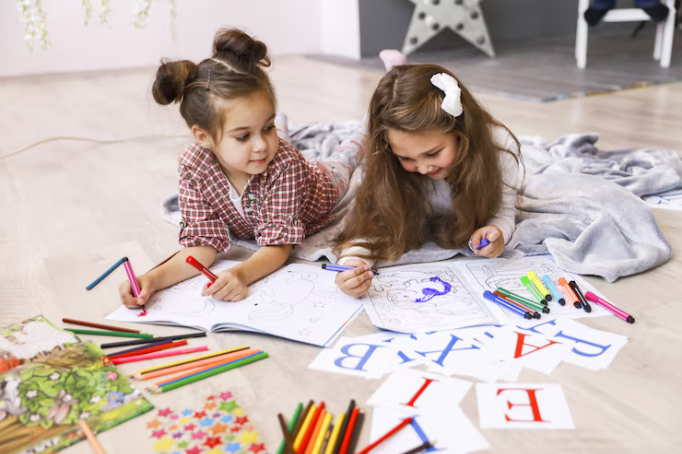
4. Coloring Activities
* Activities include coloring sheets, arranging colorful objects, or collecting toys. * Improves motor skills, patience, concentration, and handwriting. * Supports language development and creativity.
5. Develop Counting Skills
* Start with reciting numbers in order, then count objects in surroundings. * Use rewards and play to make counting fun and meaningful. * Helps children understand numbers, sequencing, and quantity recognition.
6. Learning About Shapes
* Use blocks, toys, and surroundings to teach shapes. * Encourages problem-solving, spatial awareness, and logical thinking. * Introduces concepts of doubling and fitting objects together.
7. Learning About Measurement
* Teach children to compare lengths and heights using objects like shoes or blocks. * Introduces basic measurement concepts and reasoning. * Start with simple comparisons, progressing to tools like rulers or tape measures.
8. Simple Scientific Experiments
* Observe plant growth, create a lava lamp, or explore density with oil and water. * Encourages curiosity, exploration, and self-directed learning. * Hands-on experiments foster creativity and scientific thinking.
9. Math Games
* Create games for counting, fractions, and geometry using blocks or food items. * Engage in hands-on problem-solving and math-related challenges. * Develops confidence, critical thinking, and numerical skills.
10. Musical Challenges
* Musical games improve creativity, coordination, and learning engagement. * Combine educational content with entertainment for effective learning. * Enhances attention, rhythm, and auditory skills.
Conclusion
Fun and educational activities at home help children develop critical thinking, creativity, and confidence. They provide interactive learning experiences that turn education into a delightful journey, not a chore. By combining games, experiments, writing, math, music, and physical activities, children remain energetic, engaged, and curious learners.