
Impressionism
19th-century art movement focused on light, color, and everyday scenes.
Origins in Paris
Impressionism began in late 19th-century France when a group of painters rejected strict academic rules. They organized independent exhibitions after being refused by the official Salon.
Focus on Light
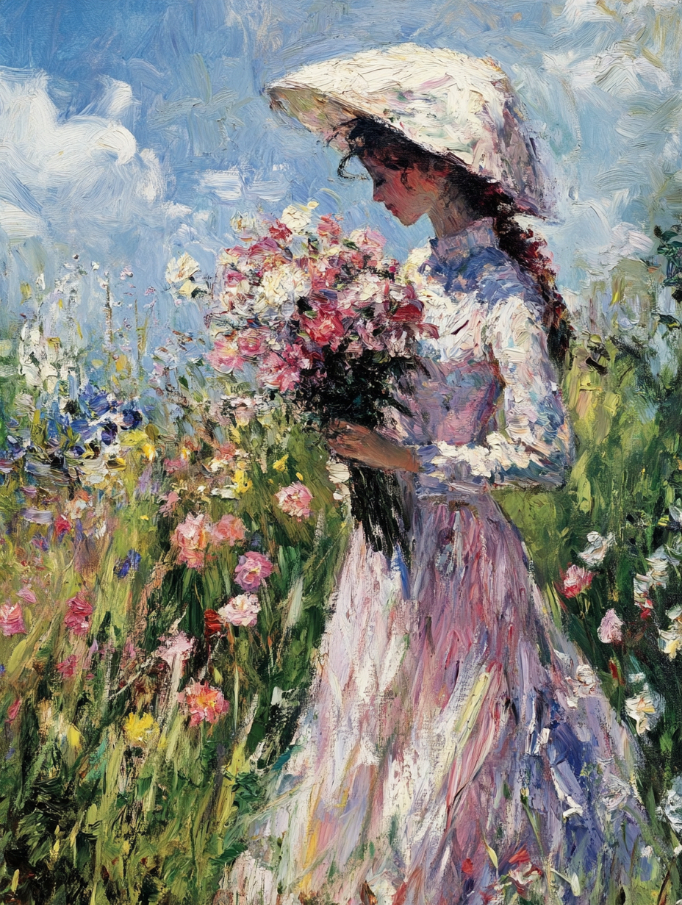
Artists aimed to capture the changing effects of natural light. Instead of precise detail, they painted quick impressions of a moment, often outdoors (en plein air).
Visible Brushstrokes
Paintings feature loose, visible brushwork. Forms are suggested rather than sharply defined, giving movement and immediacy to the scene.
Modern Life
Subjects included cafés, streets, train stations, rivers, and leisure activities. Everyday contemporary life replaced historical or mythological themes.
Color Over Line
Impressionists used bright, unmixed colors placed side by side to let the eye blend them. Shadows were often painted with blues and purples instead of black.
Key Artists
Claude Monet, Pierre-Auguste Renoir, Edgar Degas, Camille Pissarro, Berthe Morisot, and Alfred Sisley were central figures of the movement.
Initial Criticism
The term “Impressionism” came from a critic mocking Monet’s painting “Impression, Sunrise.” The name was adopted by the artists.
Lasting Influence
Impressionism paved the way for Post-Impressionism and modern art movements, shifting focus toward perception and subjective experience.