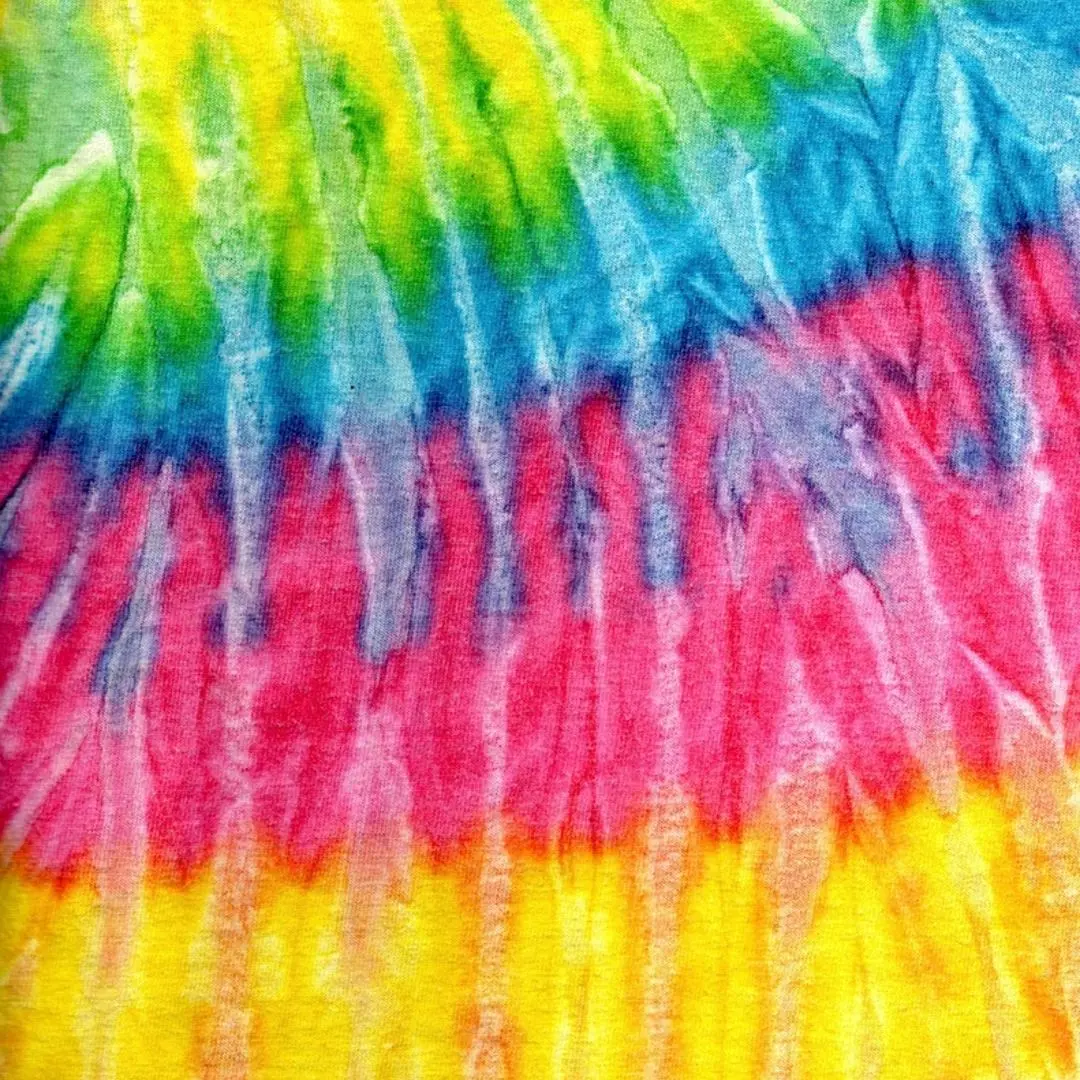
Tie-dye a shirt at home and get the colors right
The dye in your kit may not be the right one for this process
Most tie-dye tutorials skip the step that decides everything before you open the rubber bands: which dye you are using. The dye sold in most craft-store kits is Rit All-Purpose dye, a direct dye. The tutorials that tell you to soak your shirt in soda ash were written for a different product entirely: Procion MX, a fiber-reactive dye. Use the soda ash process with Rit and you will get a pale, muddy result, because soda ash does nothing for direct dyes. The chemistry is simply different. This tutorial explains both, then walks you through the Procion MX process step by step, because that is the one that produces the vivid, washfast colors you are aiming for.
Setup time
30 to 45 minutes (mixing dye and soda ash soak)
Cure time
8 hours minimum at 70F (21C), 24 hours for deepest color
Difficulty
Beginner, no prior experience needed
Estimated cost
$20 to $40 USD for a first batch of 2 to 3 shirts
Minimum fiber content
90 percent cotton or more for vibrant results
Rit All-Purpose vs Procion MX: what actually differs
| Feature | Rit All-Purpose | Procion MX (fiber-reactive) |
|---|---|---|
| Bond type | Hydrogen bond (temporary) | Covalent ether bond (permanent) |
| Needs soda ash? | No. Soda ash does nothing for direct dye. | Yes. Soda ash activates the bond. |
| What it needs instead | Salt (1 tbsp per bottle) plus hot water | Soda ash pre-soak at 60 g per liter |
| Washfastness | Moderate: bleeds in hot water | Excellent: color is bonded to the fiber |
| Vibrancy on cotton | Moderate, muted over time | High and stable after proper cure |
| Fades after 10 washes? | Yes, noticeably | No, if cured correctly |
| Where to buy | Any craft store (Rit brand) | Dharma Trading, Jacquard, ProChem online |
Step 1. Choose the right shirt and pre-wash it
100 percent cotton is the ideal fiber. Rayon, bamboo, and linen also take Procion MX beautifully, as all are cellulose fibers. A 90/10 cotton-polyester blend gives acceptable but slightly muted results. A 50/50 blend will look roughly half as vibrant as pure cotton, because only the cotton half bonds with the dye. 100 percent polyester takes zero color from Procion MX. Machine-wash the shirt once in hot water with a small amount of detergent before dyeing. Any fabric softener, sizing, or finish on the fabric blocks dye uptake. Do not use a dryer sheet. The shirt does not need to be dry before you start.
Step 2. Mix the soda ash soak
Dissolve 60 grams of soda ash (sodium carbonate, also labeled soda ash activator) in 1 liter of warm water, around 95F (35C). One liter is enough to soak three or four adult shirts. Wear rubber gloves and eye protection: soda ash is a strong alkali with a pH of around 11.5 and will irritate eyes and dry skin. Submerge the damp shirt and soak for 20 minutes, stirring occasionally. Remove and wring out firmly. Do NOT rinse out the soda ash. The soda ash stays in the fiber and is what activates the dye bond in later steps.
Step 3. Tie the shirt
While the shirt is still damp from the soda ash soak, tie it. The classic spiral pattern: lay the shirt flat, pinch the center, and twist the fabric around that center point until the whole shirt forms a tight disc. Secure with four rubber bands crossing like a compass, dividing the disc into eight sections. Rubber band tension matters. Too tight and the dye cannot reach the folded fabric underneath, leaving large undyed areas. Too loose and dye bleeds under the band and eliminates the white resist lines entirely. Aim for firm but not crushing tension.
Step 4a. Mix the dye
Fill each squeeze bottle with 240 ml (8 oz) of water at room temperature. Add dye powder: 2 teaspoons (around 6 grams) for a standard color, 4 teaspoons for a darker shade, 8 teaspoons for maximum saturation. Add 1 tablespoon of urea per bottle to keep the fabric moist during the cure. Shake well until the powder is fully dissolved. Do not add soda ash to the dye bottle. Once soda ash enters mixed dye, it starts reacting with water rather than fiber. The bottle becomes unusable after about one hour. The soda ash belongs in the fabric, not in the bottle.
Step 4b. Color sequencing and what turns brown
Procion MX dyes are transparent and mix subtractively. Placing complementary colors adjacent to each other is the most common cause of muddy results. Three pairs to avoid:
Red next to green: bleeds into muddy brown at the join.
Blue next to orange: same result.
Yellow next to purple: same result.
For clean gradients, use analogous colors (blue next to purple next to red) or leave deliberate white gaps of untreated fabric between sections.
Turquoise (Procion Turquoise MX-G) reacts slower than other colors and benefits from a warmer room and a full 24-hour cure. Fuchsia reacts faster than most colors and can dominate neighboring sections if over-applied.
Step 5. Apply the dye
Work in a ventilated area and keep gloves on throughout. Lay the tied shirt on a rack over a tray or bin to catch runoff. Apply dye to each section of the spiral disc. Push the nozzle slightly into the folds to reach the interior layers. Turn the disc over and repeat on the back, aiming dye into the same sections from the other side. If the inside layers stay white, the finished shirt will have pale undyed zones at the center. Sequence: apply lighter colors (yellow, sky blue, pink) before darker ones (navy, forest green, black). Dark colors are more likely to bleed and overpower lighter adjacent sections if applied first. Do not oversaturate. Excess dye that cannot bond to fiber has nowhere to go except onto the rest of the garment during rinsing. A section that is wet and colored throughout is well-saturated; visibly dripping with pooled liquid is too much.
Step 6. Cure the dye
Slide the dyed shirt into a zip-lock bag or wrap it in plastic film. The fabric must stay damp throughout the cure: a dry shirt stops the dye-to-fiber reaction.
Leave it at room temperature for a minimum of 8 hours. 24 hours produces the deepest colors. Temperature affects cure speed directly:
At 70F (21C): allow 24 hours for full bond.
At 80F (27C): 6 to 8 hours is sufficient.
At 90F (32C): 2 hours minimum, but 4 is better.
Do not cure in a cold environment below 65F (18C). The chemical reaction slows dramatically and the colors will be pale and poorly bonded regardless of time.
Step 7. Rinse and wash out
Remove the shirt from the bag while it is still tied. Rinse under cold running water until the water runs nearly clear. Cold water first: hot water at this stage carries unbound dye into the white areas of the shirt and backstains the whole garment. Remove the rubber bands. Continue rinsing under warm, then hot water. The color bleeding you see at this stage is normal: it is unbound dye washing away from the surface. It is not your design degrading. Machine-wash alone on a hot cycle with a small amount of detergent (Synthrapol or similar dyer's detergent is ideal but regular detergent works). Hang or lay flat to dry. The colors are now permanently bonded and stable through repeated hot washes.
Troubleshooting by symptom
| Symptom | Likely cause | Fix |
|---|---|---|
| Colors are pale and washed out | No soda ash, or shirt rinsed before cure | Rework with fresh soda ash soak and new dye. Check shirt is 90+ percent cotton. |
| Muddy brown at color joins | Complementary colors placed adjacent | Leave white gaps between opposite colors. Apply analogous colors only. |
| Large undyed white zones | Rubber bands too tight, or dye did not reach interior layers | Loosen bands slightly. Push nozzle deeper into folds on both sides. |
| White resist lines gone completely | Rubber bands too loose, or dye applied too heavily | Use firmer bands and reduce the amount of dye per section. |
| Colors faded after first wash | Cure too short or too cold | Cure for at least 8 hours above 70F (21C). Keep fabric damp throughout. |
| Colors bleed into each other during rinse | Rinsed in hot water before cold rinse | Always start with cold water while still tied. Build to warm then hot. |
| Color looks nothing like the bottle | Dye splitting or turquoise under-reacted | Expect variation on non-primary colors. Cure turquoise for a full 24 hours. |
| No color at all | Wrong fiber (polyester) or old dye powder | Check fiber content label. Replace powder that has clumped or changed color. |
Soda ash is a strong alkali (pH 11.5) and will irritate eyes on contact. Wear splash-proof eye protection and rubber gloves throughout. Do not inhale dry dye powder or soda ash: work near an open window or wear a dust mask during mixing. Dye garments and equipment permanently: wear old clothes and cover your work surface.