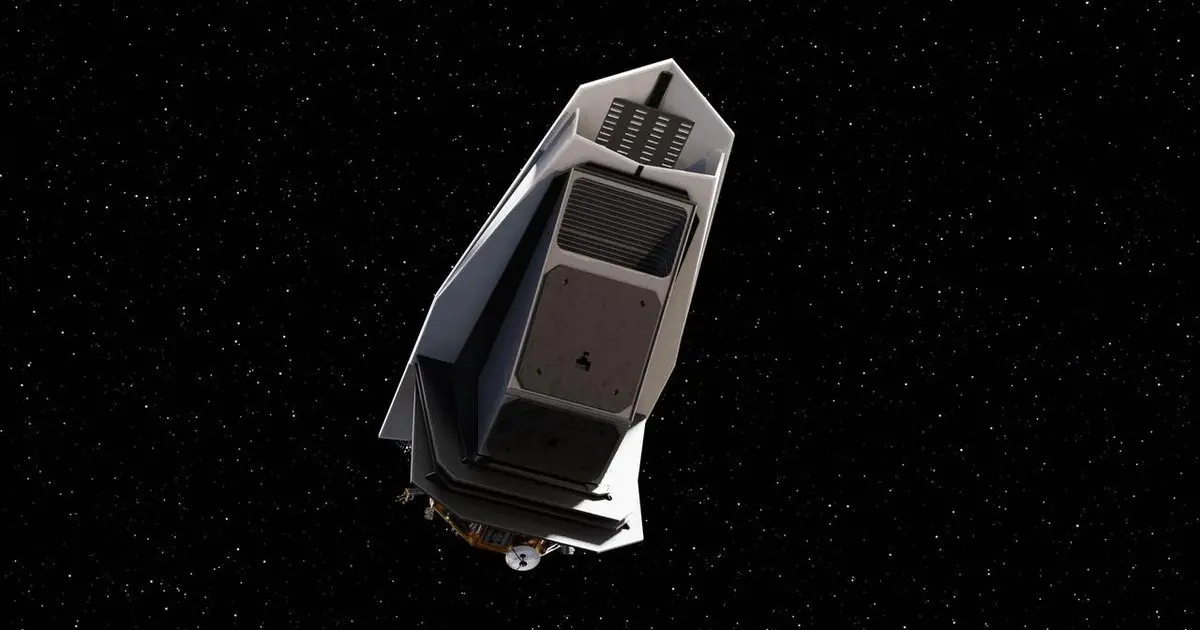
Tianwen-2: Earth's Quasi-Moon Rendezvous
Dayssince Tianwen-2 launched toward Earth's quasi-moon
A quasi-moon with a secret
Kamoooalewa (formally 2016 HO3) is no ordinary asteroid. It is 40 to 100 metres across, roughly the size of a city block, and it has been looping around Earth in a stable companion orbit for at least a century. Astronomers call it a quasi-satellite: not quite a moon, not quite a passing rock, but something in between. What makes it stranger is its composition. Spectral data from the Large Binocular Telescope in Arizona found its surface matches lunar rocks collected by the Apollo missions far better than it matches any known asteroid family. The leading hypothesis: a long-ago impactor hit the Moon and blasted a chunk into this unusual orbit. On July 4 2026, China's Tianwen-2 spacecraft flew within 20 km of it for the first time in history.
Spacecraft
Tianwen-2 (CNSA)
Target
Kamoooalewa (2016 HO3)
Closest approach
July 4 2026, within 20 km
Asteroid size
40 to 100 m across
Distance from Earth
approx 14 million km at flyby
Sample return target
Earth, late 2031
Second target
Comet 311P/PANSTARRS (2034)
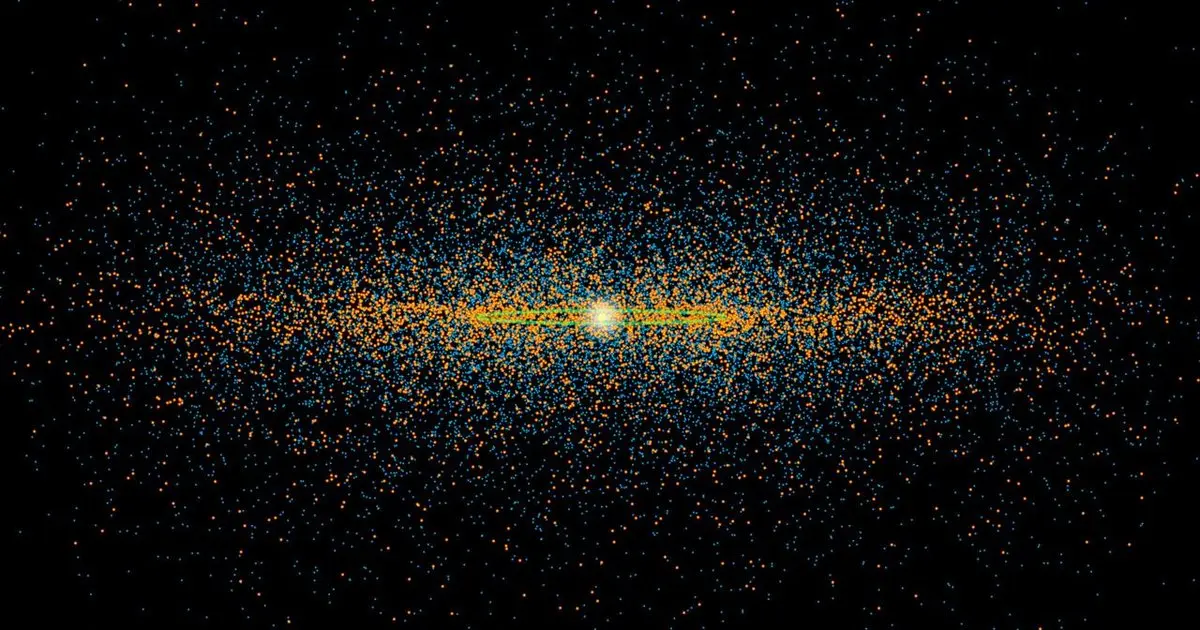
July 4 2026
Discovery: April 2016
How the sample collection will work
Unlike the flat, sandy surface of asteroid Ryugu where Japan's Hayabusa2 touched down, Kamoooalewa is thought to be a rubble pile of loose rock with almost no gravity. Standard touch-and-go sampling would risk the spacecraft drifting into the asteroid. China is testing a novel anchor-and-attach method: Tianwen-2 will extend a collector arm, fire a tether anchor into the surface, and winch itself close enough to gather material without losing control. If it works, it will be the first time this technique has been used on any small body in space.
The lunar fragment hypothesis is not confirmed. Some planetary scientists argue that Kamoooalewa's spectrum could also match certain volcanic asteroid types. Only a returned sample, analysed in a laboratory, will settle the question definitively.
After leaving Kamoooalewa with its samples, Tianwen-2 will not head straight home. The spacecraft is designed for a second act: a rendezvous with the active comet 311P/PANSTARRS in 2034, making it one of very few missions ever to visit two distinct solar system bodies in a single flight.
Sample return timeline: Tianwen-2 departs Kamoooalewa orbit approx 2027. A sample capsule re-enters Earth's atmosphere and lands in Inner Mongolia, late 2031. Laboratory analysis begins immediately. If the lunar-fragment hypothesis is confirmed, it will rewrite what we know about how the Moon formed and how material escapes from large bodies.
"Kamoooalewa is one of the most scientifically intriguing small bodies we know of. If it really is a piece of the Moon in orbit around Earth, that changes our picture of the inner solar system entirely.
"Planetary Society · June 2026