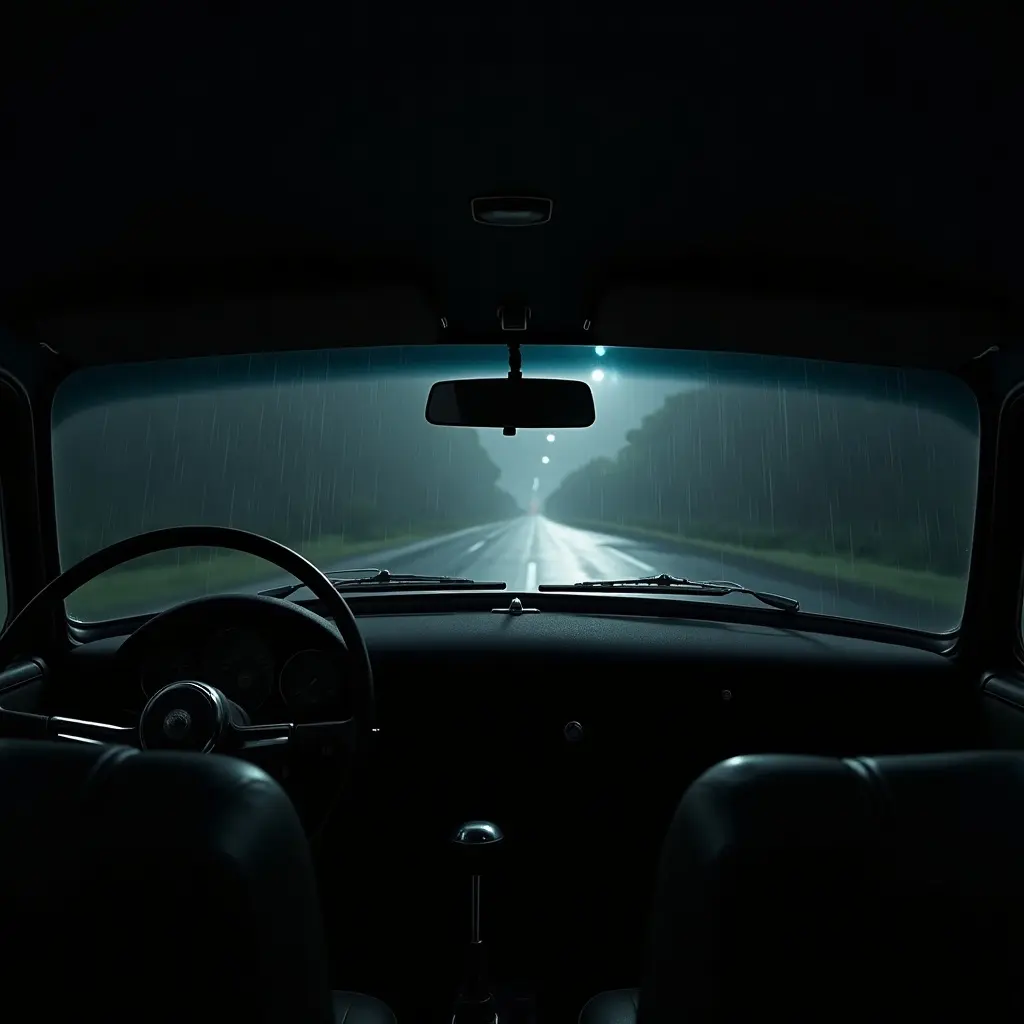
The Vanishing Hitchhiker
The Vanishing Hitchhiker
You stop for a figure on a dark road. They get in. They give you an address. Partway there you look in the mirror and the seat is empty. You go to the address anyway. Someone at the door tells you the person you describe died on that road. Often years ago. Often on that exact date. The story has been collected from archives in the United States, the Philippines, South Africa, Japan and across Europe. No one invented it. No one can say where it began.
The documented versions
The earliest scholarly collection dates to the 1940s, when folklorists began cataloguing American variants. But oral versions existed long before cars. The structure is stable across all of them: a traveller, a picked up stranger, a disappearance, a grieving family at a known address. The supernatural explanation is never confirmed. The mundane one is never satisfying.
"The story appears independently in too many cultures to have a single origin. It grows from something we share.
"Jan Harold Brunvand · The Vanishing Hitchhiker · 1981
Some researchers trace the archetype to pre car folklore about ghostly travellers on horseback, pushing the motif back several centuries.
There are documented cases of people claiming a real encounter. None has been independently verified. The story always arrives secondhand.