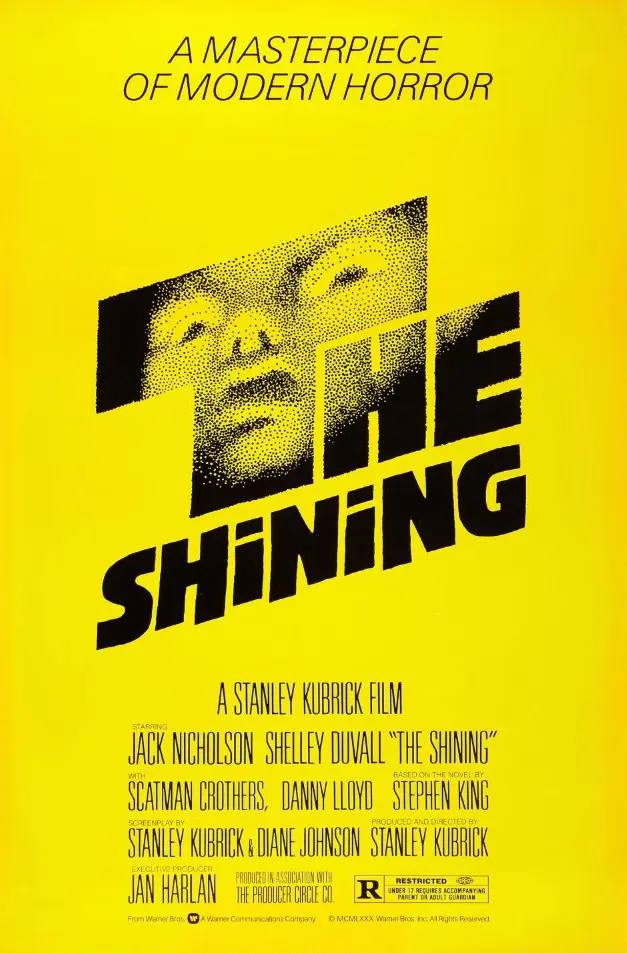
The Shining: A Hotel That Does Not Add Up
The Shining (1980)
Kubrick built a hotel whose geography is impossible, shot it on the new Steadicam, and infuriated the author.
Space As The Source Of Dread
The Overlook was built almost entirely as interiors at Elstree, and Kubrick made the layout deliberately incoherent: a window where there should be rock, a corridor that cannot connect to the room it leads into, furniture that moves between shots. Audiences do not consciously notice, which is exactly why the building feels wrong. Garrett Brown's newly invented Steadicam is what makes it legible, gliding a few inches above the carpet behind a child on a tricycle and through the hedge maze at night. Stephen King disliked the result and has said so for four decades, mainly because Kubrick drops the alcoholism and the redemption and leaves a man who was already like this before he arrived.
Runtime
144 minutes
Director
Stanley Kubrick
Budget
$19 million
Box office
$47.3 million worldwide
Cinematography
John Alcott
Watching The Shining
Pull
/
Movement
"All work and no play makes Jack a dull boy.
"The typewriter · The Shining · 1980
Shelley Duvall was put through an extraordinary number of takes, including a reported hundred and twenty seven on the baseball bat scene, and Kubrick encouraged the crew to isolate her.
Kubrick cut a hospital epilogue after the American premiere, physically removing it from prints already in cinemas, and it has never been officially released.
Reviews were poor and Duvall was nominated for a Razzie. Forty years later it is the most obsessively analysed horror film ever made, with an entire documentary, Room 237, devoted to theories it cannot support. The reason the readings multiply is structural: Kubrick removed the explanations King supplied and left a film full of precise, unexplained detail, which is an invitation nobody has been able to decline.