The Lead in the Ink That Survived Vesuvius
25 times more X-rays absorbed. And nobody had thought to check.
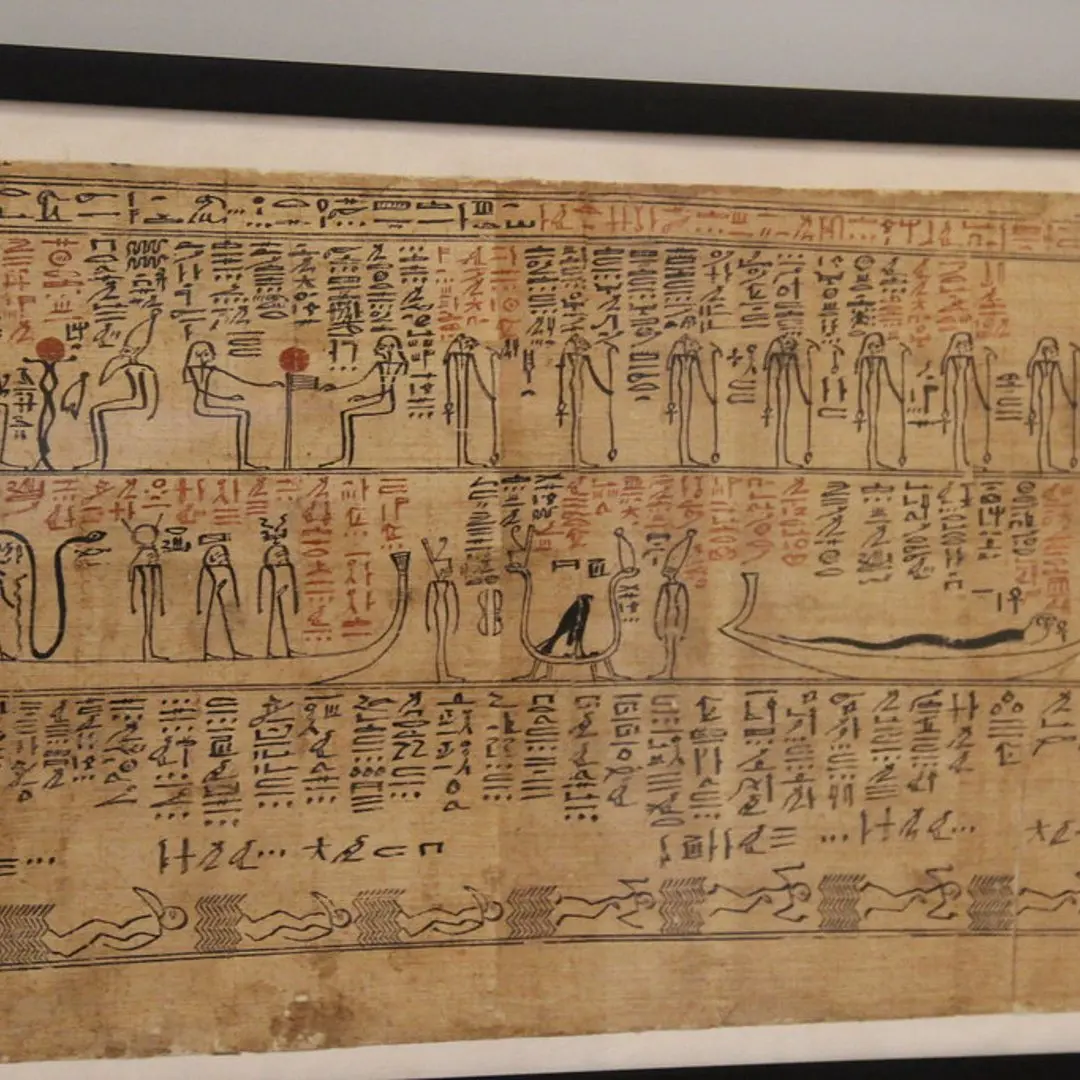
In 79 C.E., Mount Vesuvius buried the city of Herculaneum under superheated volcanic gas. The Villa of the Papyri, an enormous private library on its outskirts, was incinerated. More than 1,800 papyrus scrolls were carbonised, compressed, and sealed for nearly two millennia. They survive today, scattered across collections in Naples, Paris, and Oxford: the only intact library from the ancient world, almost entirely unread. The problem is the ink. Ancient scribes wrote with lampblack, a carbon-based pigment. Carbon on charred papyrus. Under X-ray, the two materials are essentially invisible to each other. Every scanner trained on these scrolls in the past century has strained to find a signal that was never there.
A lead signal changes everything.
A paper published September 16, 2026, in PLOS ONE reframes that problem. Douglas Seiler at UC Berkeley and Jake LaManna at the National Institute of Standards and Technology found that a minority of ancient scribes mixed lead compounds into their ink. Lead absorbs approximately 25 times more X-rays than carbonised papyrus. Where earlier scanners saw nothing, lead-spiked ink blazes.
800 scrolls read in 2,000 years. About 1,000 still sealed.
Scholars estimate roughly 800 of the 1,800 surviving Herculaneum scrolls have been partially or fully read since their rediscovery in 1752, most by physically unrolling them, a process that destroyed many in the attempt. Around 1,000 remain sealed, unopened, and unread since the day Vesuvius hit. The collection belongs primarily to Philodemus of Gadara, an Epicurean philosopher who lived around 100 B.C.E. His works on rhetoric, music theory, and the nature of pleasure dominate the partial readings that exist. But the library almost certainly contains more. Leah Packard-Grams, a UC Berkeley papyrologist who collaborated with the research team, described the stakes.
"The stakes are the largest in the history of Greek literature.
"Leah Packard-Grams · UC Berkeley papyrologist
High school students, Star Wars, and a furnace
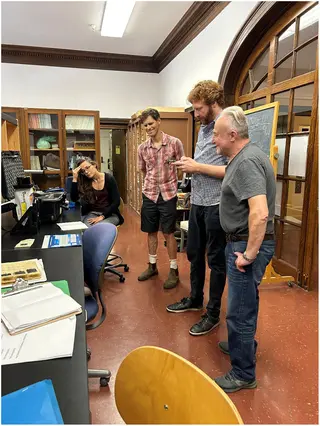
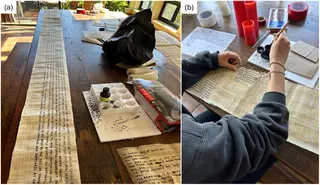
Seiler and his colleagues could not try the technique on real Herculaneum scrolls: they are too rare and too fragile. Instead, the team built a replica. They bought modern Egyptian papyrus, mixed lampblack ink with measured concentrations of lead salt, picked up traditional reed pens, and handed the scrolls to high school students. The students copied out passages from Star Wars, the Bible, and The Outer Limits. The finished scrolls went into an oxygen-free chamber and were heated to conditions matching the Vesuvius pyroclastic surge. What emerged looked indistinguishable from real Herculaneum fragments: black, brittle, illegible.
Letters came back.
The team ran the carbonised replica through a laboratory X-ray CT scanner. At every lead concentration tested, the letters were recoverable. Virtual unrolling software, adapted from the Vesuvius Challenge's open toolkit, reconstructed the written text without physically touching the scroll at all.
Credit: PLOS ONE / Seiler et al.
Cross-section from the X-ray CT scan of the carbonised replica scroll. Lead-containing ink appears as bright zones against the darker charred papyrus layers. Individual letters were recoverable from this signal alone.
A screening tool anyone can carry
The most practical result of the paper is not the synchrotron technique. It is something far cheaper. The team found that a handheld X-ray fluorescence (XRF) device, the kind already used in museums worldwide, can detect lead in a sealed carbonised scroll in minutes, without damaging it. The proposed workflow has two steps: run the handheld XRF across each scroll to flag those with lead. Those go to the front of the queue for CT scanning. Those without lead signal are set aside for different methods. Seiler described the speed.
"If they took these scrolls one by one to a facility, they could find out in a matter of minutes whether or not they had lead in them.
"Douglas Seiler · UC Berkeley · first author
The prior art: AI, $700,000, and a Stoic scroll
This paper does not arrive in a vacuum. In 2023 a crowdfunding competition called the Vesuvius Challenge offered $700,000 to whoever could use AI-assisted virtual unrolling to read four Herculaneum columns. The prize was claimed in 2024: researchers recovered 15 complete columns from one scroll, revealing an Epicurean argument about whether pleasure is found on land or sea. It was the first new Herculaneum text recovered in more than a century. Earlier in 2026, a separate team decoded a fragment of scroll PHerc. 1667, a Stoic text that may date to the second or third century B.C.E. Both breakthroughs used scrolls with enough carbon-ink contrast for AI algorithms to parse. The lead-detection method extends the same pipeline to scrolls those algorithms could never read.

Credit: PLOS ONE / Seiler et al.
The experimental workflow: writing replica scrolls with lead-spiked ink, carbonising them under controlled conditions, then scanning with X-ray CT to confirm individual letters remain recoverable.
What gets unlocked
The question now is what proportion of the 1,000 sealed Herculaneum scrolls contain lead-based ink. If even 10 to 20 percent do, that is 100 to 200 scrolls that could potentially be read without destruction. Works by Aristotle known only as titles. Plays by Sophocles or Euripides of which no line survives. The missing books of Livy's history of Rome. None of that is guaranteed. Lead-based ink was not universal. Seiler, who self-funded the project outside any formal laboratory programme, was direct.
"These are books directly from the ancient world.
"Douglas Seiler · UC Berkeley · first author