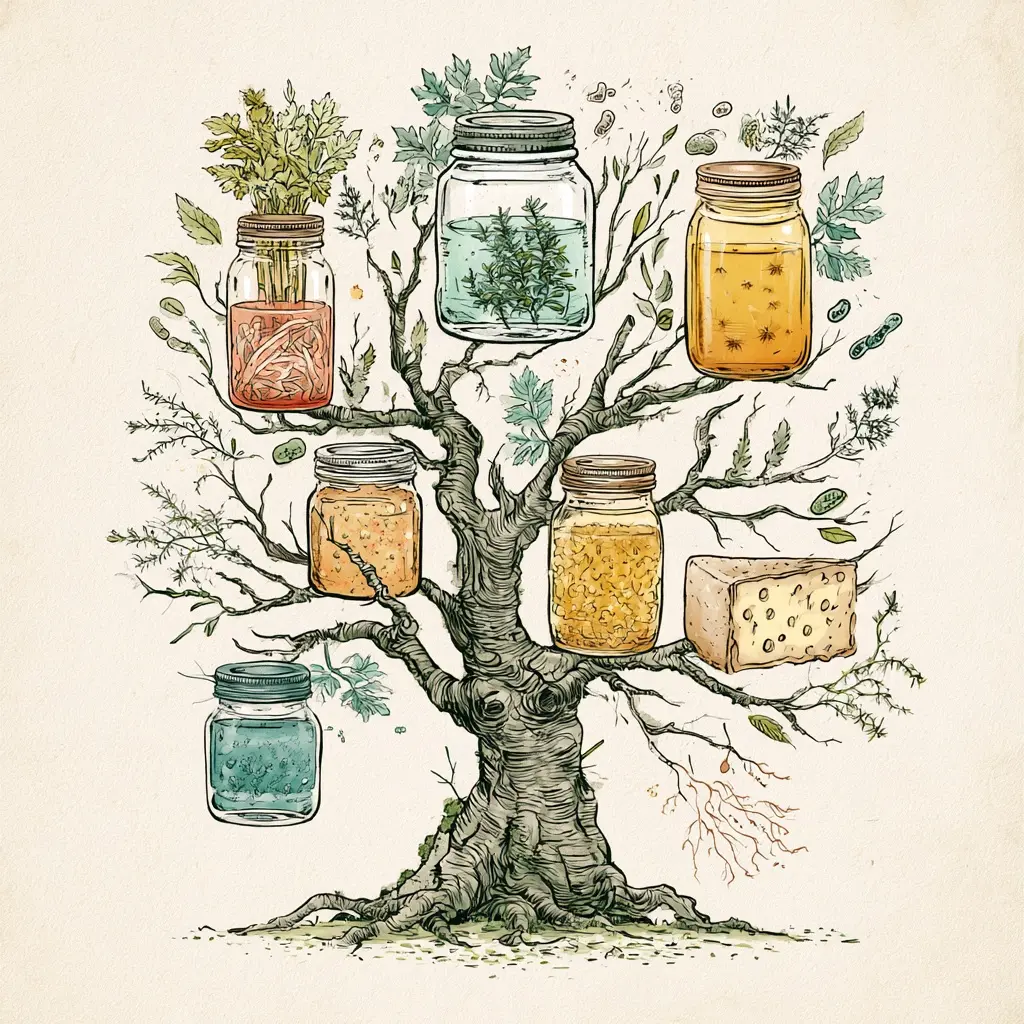
The Fermentation Tree
The Fermentation Tree
Every fermented food on earth is the work of a microbe doing what it must to survive. Sort them not by country or by flavour but by the organism living in the jar and a hidden map appears. Six branches. One tree. Follow whichever one is bubbling in your kitchen right now.
Koji mold
Aspergillus oryzae breaks starch into sugar and protein into savour, the quiet engine behind miso, soy sauce, sake and sweet amazake.
Lactic acid bacteria
Lactobacillus turns sugar into sour with no air at all, building kimchi, sauerkraut, yoghurt and the tang of a sourdough crumb.
Acetic acid bacteria
Acetobacter needs oxygen and finishes what yeast begins, turning alcohol into acid to make vinegar of every kind and a sharp mature kombucha.
Wild yeast
Saccharomyces eats sugar and breathes out gas and alcohol, leavening bread and powering the first rise of almost everything before the bacteria arrive.
Mold ripened
Penicillium and its relatives grow on the outside, ripening blue cheese, brie and dry cured salami into something soft and pungent.
Mixed culture
A kombucha SCOBY or a kefir grain is a whole community where bacteria and yeast trade work and shelter each other through the ferment.
Fastest ferment
yoghurt in 8 hours
Slowest ferment
aged miso in 3 years
Safe brine
2 to 5 percent salt
Comfort zone
18 to 24 C for most
Salt here is not flavour. It is a gatekeeper. The right brine holds back the microbes you do not want just long enough for the ones you do want to take over.
"Fermentation is everywhere, always. It is an everyday miracle, the path of least resistance for life itself.
"Sandor Katz · The Art of Fermentation