The Cabinet of Dr. Caligari: The Room That Tells Y
The Cabinet of Dr. Caligari (1920)
The film that invented the idea that a set can be a state of mind, then admitted it was unreliable.
Runtime
77 minutes
Director
Robert Wiene
Budget
$12,371
Cinematography
Willy Hameister
Painted Madness
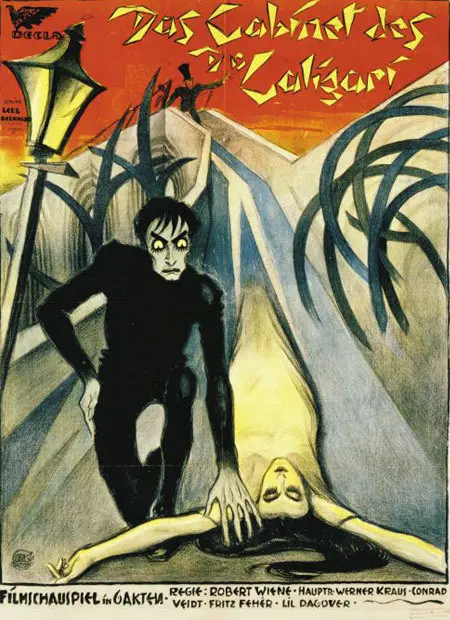
Every wall in this film is a flat painted with the shadows already on it. Doors are trapezoids, windows are shards, streets narrow to nothing. The designers Hermann Warm, Walter Reimann and Walter Roehrig were painters, not architects, and they built a town that could not stand up. Carl Mayer and Hans Janowitz wrote it as a straight attack on authority: a state official who hypnotises a sleepwalker into killing for him. The studio added a framing story that puts the whole tale in the mouth of an asylum inmate, which the writers hated because it lets the authority figure off the hook. The result is stranger than either version intended. You cannot trust the narrator, so you cannot trust the walls, and the film becomes the first great argument that style itself can be evidence.
Watching The Cabinet of Dr. Caligari
Dread
/
Act
"You must become Caligari.
"The written command in the asylum director's diary
Fritz Lang was attached to direct and suggested the framing story before leaving for Die Spinnen, which is how the film's most argued about feature arrived.
Siegfried Kracauer built his 1947 book From Caligari to Hitler on this film, reading German Expressionism as a rehearsal for submission to authority.
Nothing else in 1920 looks like this and almost everything afterwards owes it something. The painted shadows run directly into Universal horror, film noir, the Batman of Tim Burton, the hallways of Dark City and the dream logic of David Lynch. It is also the founding document of the unreliable narrator on screen, which means every twist ending that asks you to rewatch a film with new information is working a seam this one opened.