The Baking Conversions You Actually Need
The single problem with baking conversions
Most recipes list ingredients in cups. Most kitchen scales measure grams. The two tables every baker reaches for (cups to grams and oven temperatures) live on separate pages buried in ads. This page collects all four of the tables you actually look up: ingredient weights, volume measures, oven temperatures, and pan sizes. Bookmark it and stop hunting.
Cups to grams: 12 common baking ingredients
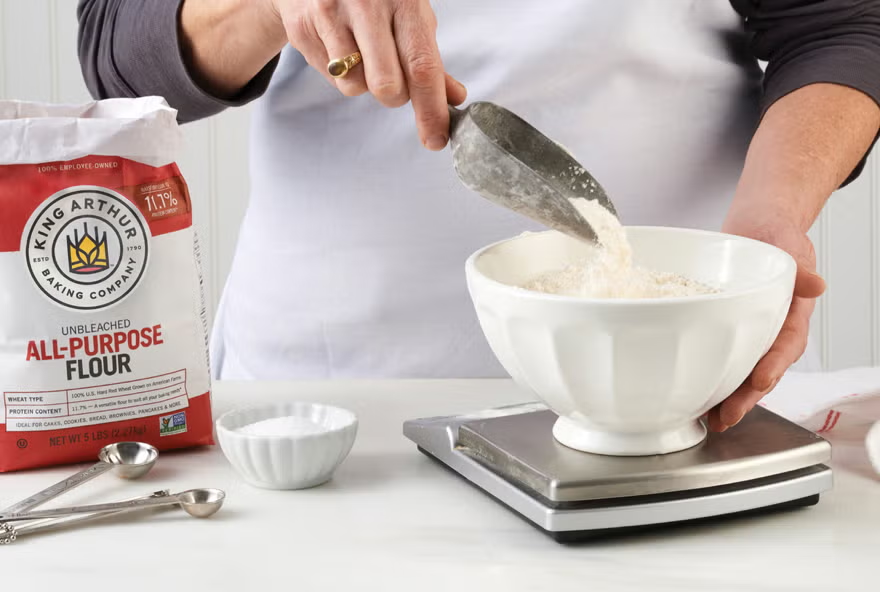
Weights below use the standard spoon-and-level method for dry goods. Scooping straight from the bag packs flour by up to 30 percent more, which is why a scale is always more reliable. Butter weights assume unsalted sticks at room temperature. All values rounded to the nearest gram. Source: King Arthur Baking ingredient weight chart.
All-purpose flour
1 cup = 120 g | 1/2 cup = 60 g | 1/4 cup = 30 g
Bread flour
1 cup = 120 g | 1/2 cup = 60 g | 1/4 cup = 30 g
Cake flour
1 cup = 100 g | 1/2 cup = 50 g | 1/4 cup = 25 g
Whole wheat flour
1 cup = 113 g | 1/2 cup = 57 g | 1/4 cup = 28 g
Granulated sugar
1 cup = 200 g | 1/2 cup = 100 g | 1/4 cup = 50 g
Brown sugar (packed)
1 cup = 213 g | 1/2 cup = 107 g | 1/4 cup = 53 g
Powdered sugar
1 cup = 113 g | 1/2 cup = 57 g | 1/4 cup = 28 g
Butter
1 cup = 227 g | 1/2 cup = 113 g | 1/4 cup = 57 g
Cocoa powder
1 cup = 85 g | 1/2 cup = 43 g | 1/4 cup = 21 g
Rolled oats
1 cup = 90 g | 1/2 cup = 45 g | 1/4 cup = 23 g
Honey
1 cup = 340 g | 1/2 cup = 170 g | 1/4 cup = 85 g
Milk
1 cup = 240 g | 1/2 cup = 120 g | 1/4 cup = 60 g
Volume measures: spoons and cups to millilitres
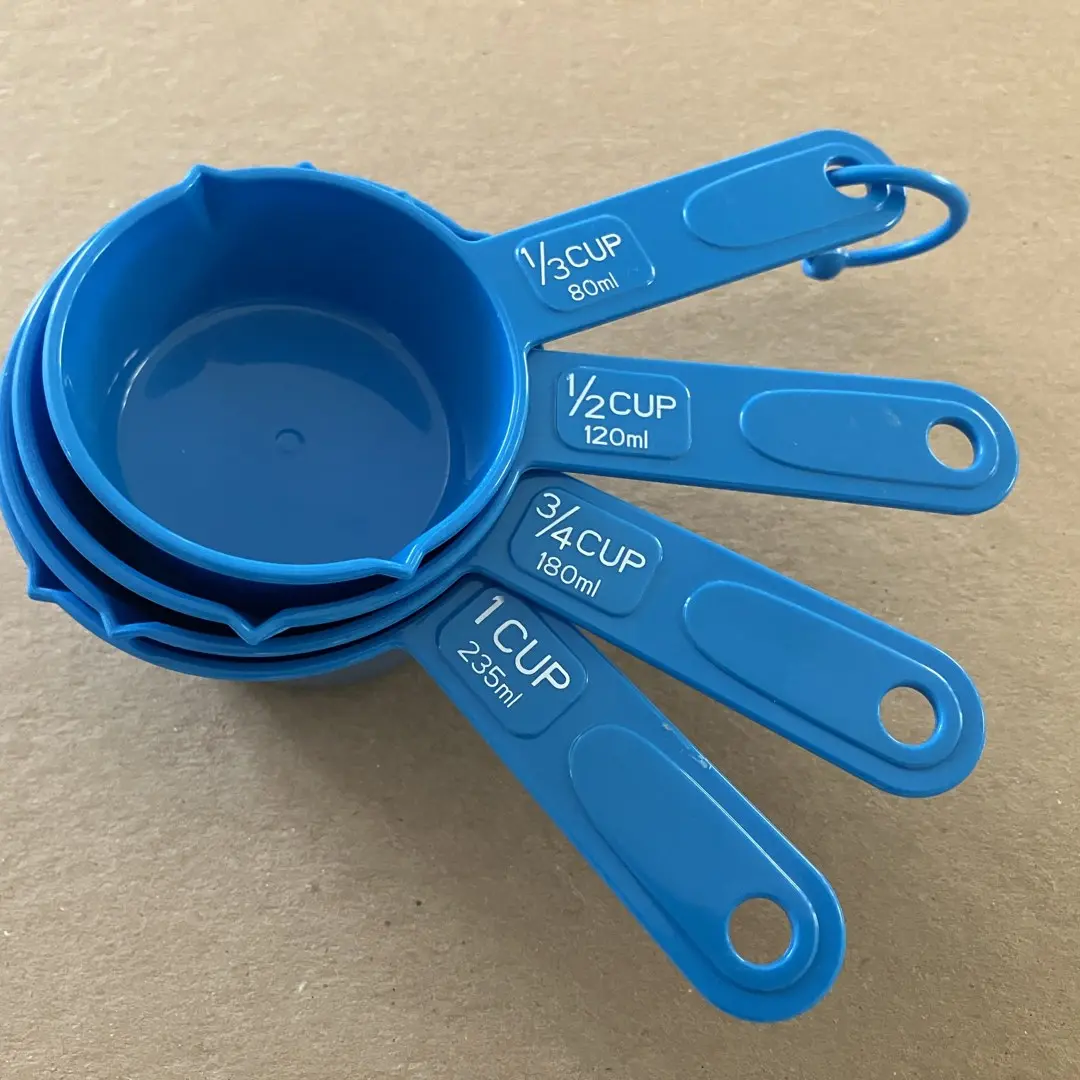
These are fixed by definition and the same worldwide for metric countries. The US tablespoon is 14.79 ml but rounds universally to 15 ml in recipes. One US cup is exactly 236.6 ml; most recipes round to 240 ml with no practical difference.
1 teaspoon (tsp)
5 ml
1 tablespoon (tbsp)
15 ml | 3 teaspoons
1/4 cup
60 ml | 4 tablespoons
1/3 cup
80 ml | 5 tbsp + 1 tsp
1/2 cup
120 ml | 8 tablespoons
2/3 cup
160 ml | 10 tbsp + 2 tsp
3/4 cup
180 ml | 12 tablespoons
1 cup
240 ml | 16 tablespoons
1 pint
480 ml | 2 cups
1 quart
960 ml | 4 cups
Oven temperatures: F, C, Gas Mark and Fan
Fan ovens (convection) run hotter than conventional ovens: reduce the temperature by 20 C (or one Gas Mark) when a recipe specifies a conventional oven. Recipes from British cookbooks use Gas Mark; recipes from US sources use Fahrenheit; European recipes use Celsius. All four columns cover the same ten settings. Source: BBC Good Food temperature guide.
Very low
275 F | 140 C | Gas 1 | Fan 120 C
Low
300 F | 150 C | Gas 2 | Fan 130 C
Warm
325 F | 160 C | Gas 3 | Fan 140 C
Moderate
350 F | 180 C | Gas 4 | Fan 160 C
Moderately hot
375 F | 190 C | Gas 5 | Fan 170 C
Hot
400 F | 200 C | Gas 6 | Fan 180 C
Very hot
425 F | 220 C | Gas 7 | Fan 200 C
Extremely hot
450 F | 230 C | Gas 8 | Fan 210 C
The most-used setting in baking is 350 F / 180 C / Gas 4. For a fan oven that means 160 C. If your recipe was written for a conventional oven and you have a fan oven, always drop by 20 C or your cakes will brown before the centre sets.
Pan sizes: volume and metric equivalents
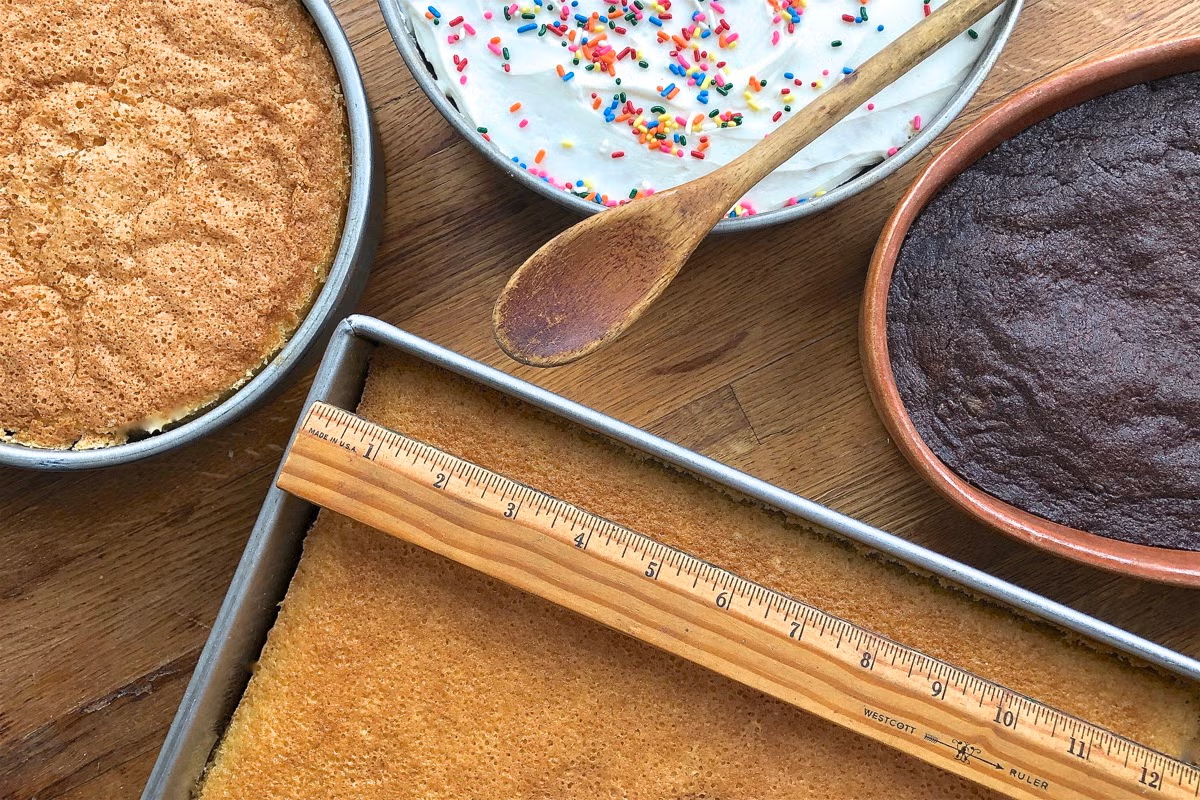
Pan substitutions are decided by volume, not shape. An 8-inch square and a 9-inch round hold the same batter (about 8 cups / 1.9 L) and swap cleanly. Moving to a larger pan makes a thinner bake with a shorter cook time; moving to a smaller pan makes a thicker bake with a longer cook time. Adjust by 10 to 15 minutes and test early. Source: King Arthur Baking alternative pan sizes guide.
8 x 8 in square
20 x 20 cm | 8 cups / 1.9 L | brownies, bars
9 x 9 in square
23 x 23 cm | 10 cups / 2.4 L | cakes, bars
9 x 13 in rectangle
23 x 33 cm | 14 cups / 3.3 L | sheet cakes, traybakes
8.5 x 4.5 in loaf
22 x 11 cm | 6 cups / 1.4 L | quick breads
9 x 5 in loaf
23 x 13 cm | 8 cups / 1.9 L | sandwich loaves
8 in round
20 cm | 6 cups / 1.4 L | layer cakes
9 in round
23 cm | 8 cups / 1.9 L | layer cakes
9 in springform
23 cm | 10 cups / 2.4 L | cheesecakes, tortes
10 in springform
25 cm | 12 cups / 2.8 L | cheesecakes, tortes
12-cup Bundt
25 cm | 12 cups / 2.8 L | Bundt cakes, ring cakes
Do not substitute a regular round pan for a springform when making cheesecake. The springform is deeper and releases cleanly. A standard 9-inch round is only 1.5 inches deep versus the springform's 2.75 inches, so the batter overflows and removal is destructive.