The $450M Bet: AI's Next Data Center Is in Orbit
$450 Million, Zero Planning Permits, No Water Required
On August 21, 2026, Starcloud announced it had raised $250 million in a Series A extension, at a $2.3 billion valuation, to build data centers in orbit. NVIDIA and Cisco joined the round. Manhattan West led it. Total funding since the company was founded in 2024: $450 million. The pitch is direct. On Earth, AI data centers face interconnection queues stretching past 2030, community opposition in 42 states, and public approval below 15 percent. In low Earth orbit, there is no permitting process, no water for cooling, and the sun never switches off. Starcloud CEO Philip Johnston put it plainly: "Last November we put the first NVIDIA H100 in orbit. Today this fresh capital empowers us to build the infrastructure to launch many more of NVIDIA's most advanced GPUs into space."
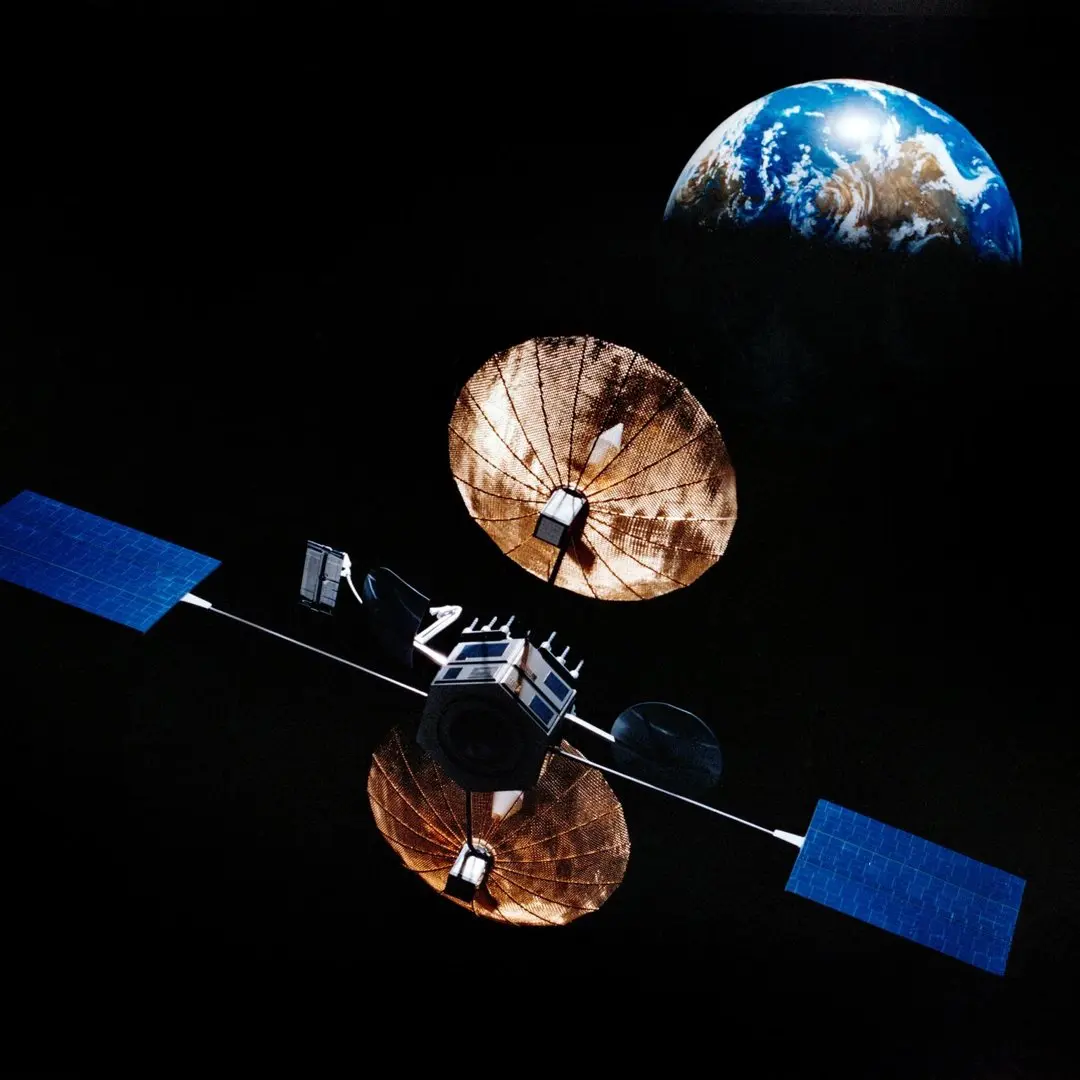
Credit: NASA. Artist concept of a satellite in orbit above Earth (1981). \
All NASA imagery is in the public domain.
The H100 Already Up There, Running Gemini
Starcloud-1 launched in November 2025 aboard a SpaceX rocket, carrying an NVIDIA H100 GPU, the same class of chip that fills terrestrial AI data halls. It was the first time a full data center GPU (not an edge processor) flew in orbit. The company used it to train an AI model in space and to run a version of Google Gemini on orbit. By February 2026, multiple orbital data center operators were simultaneously running production workloads in space for the first time in history. Starcloud-2, scheduled for October 2026, adds several H100 chips and integrates Blackwell architecture. The larger Starcloud-3 is slated to fly on SpaceX Starship once that rocket reaches its advertised cadence. The eventual vision: a fleet of 88,000 satellites providing 20 gigawatts of orbital computing capacity. Jensen Huang, NVIDIA's CEO, told investors the economics were "poor today but the category is worth pursuing." NVIDIA put $25 million into the round.
""The economics are poor today but the category is worth pursuing." Jensen Huang, NVIDIA CEO
"Steph15th of September 2026

Total Starcloud funding raised
$450M (since 2024)
Latest round valuation
$2.3 billion (Aug 2026)
First GPU in orbit
NVIDIA H100, November 2025
Eventual satellite fleet target
88,000 satellites
Target orbital computing capacity
20 gigawatts
Starcloud-2 launch
October 2026
The Case For: Power at Near-Zero Cost
Starcloud projects that a single 40-megawatt orbital cluster costs roughly $8.2 million to operate over ten years. The equivalent terrestrial infrastructure costs approximately $167 million. The claimed energy cost: $0.005 per kilowatt-hour. Wholesale terrestrial electricity runs between $0.05 and $0.10 per kilowatt-hour. The mechanism is solar. An orbital data center runs on uninterrupted sunlight, with no atmosphere blocking it, no night cycle, and no competing load. Waste heat radiates to the cold of space rather than requiring water-cooled towers or air handling units. No permitting. No grid interconnection queue. No local opposition.

The Case Against: 4x the Cost, Brutal Heat Rejection
Independent analysts are not persuaded by the headline numbers. SemiAnalysis modeled the full stack in June 2026: space compute costs $8.64 per GPU-hour today against $2.37 for an equivalent terrestrial B300-class cluster, a 4x premium. The gap narrows to roughly 30 percent by the early 2030s and to parity only around 2040, and only if Starship's launch costs keep falling as SpaceX promises. Varda Space Industries calculates orbital compute at approximately 3x terrestrial cost per watt. The World Economic Forum described the engineering design spiral as a "death by a thousand cuts": pack GPUs densely and heat concentrates faster than radiators can handle; spread them out and interconnects and shielding mass balloon.
The ISS Radiator Problem, Scaled to AI
The International Space Station's thermal control system rejects up to 70 kilowatts across 422 square metres of ammonia-loop radiators. That is about 166 watts per square metre, well below the theoretical maximum, and the ISS is not running AI training workloads. Dylan Taylor, CEO of Voyager Technologies, called cooling "the fundamental unsolved challenge of the category." Flight data from 2025 and 2026 suggests that power delivery, not cooling, is what throttles the compute hardware currently in orbit. That may reverse as clusters scale. The cooling vs. power debate, as one analyst put it, "will be settled by a handful of falsifiable milestones in 2027, not by better arguments."
The Race Is Already Larger Than One Company
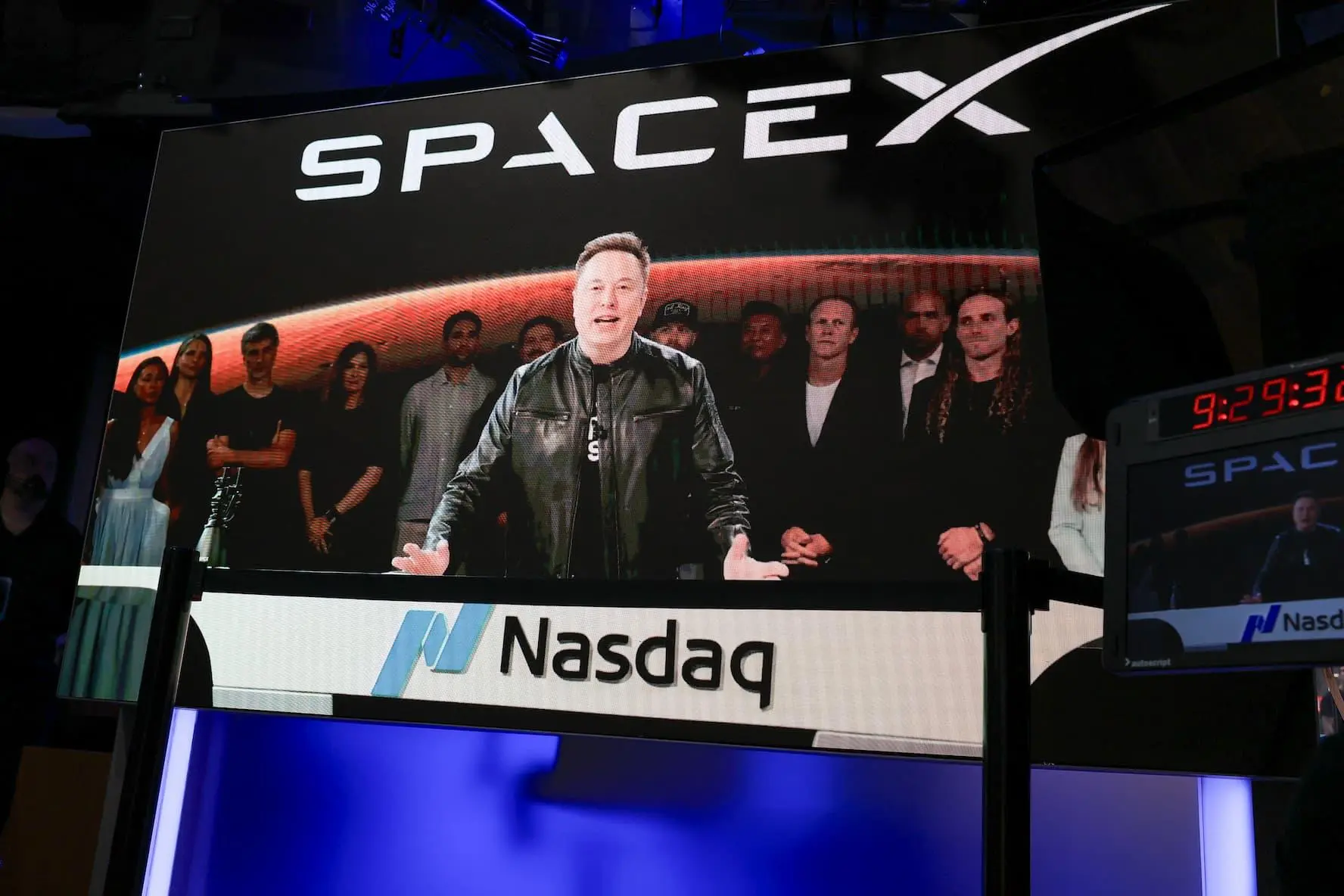
Starcloud is not alone. Axiom Space deployed the first two operational orbital data center nodes in January 2026 via Kepler Communications' optical relay network. Google entered through Project Suncatcher, a collaboration with Planet Labs. SpaceX plans its own AI1 satellites, described as orbital data centers, following its record-breaking IPO. An Atlanta startup called Atomic-6 sells orbital data center packages starting at $575,000 a month. The $450M raised by Starcloud in less than two years is real capital, from credible investors, building hardware that is already in orbit and running production code. The 88,000-satellite constellation is further away. The H100 in orbit is not.