The 2026 Nobel Prizes: All Six Explained
None of the forecasts landed. Here is what did.
The predictions were confident: GLP-1 for medicine, OLEDs for physics, lipid nanoparticles for chemistry. Every one of them was wrong. The 2026 Nobel committees chose a light switch built from algae, a cubic kilometre of Antarctic ice, and the chemistry of why you are made of the right mirror-image molecules. The non-science prizes went to an anti-apartheid lawyer turned world court judge, a Canadian classicist whose books resist every genre label, and two economists who rebuilt macroeconomics with microeconomic foundations.
Medicine: the algae protein that gave neuroscience a remote control
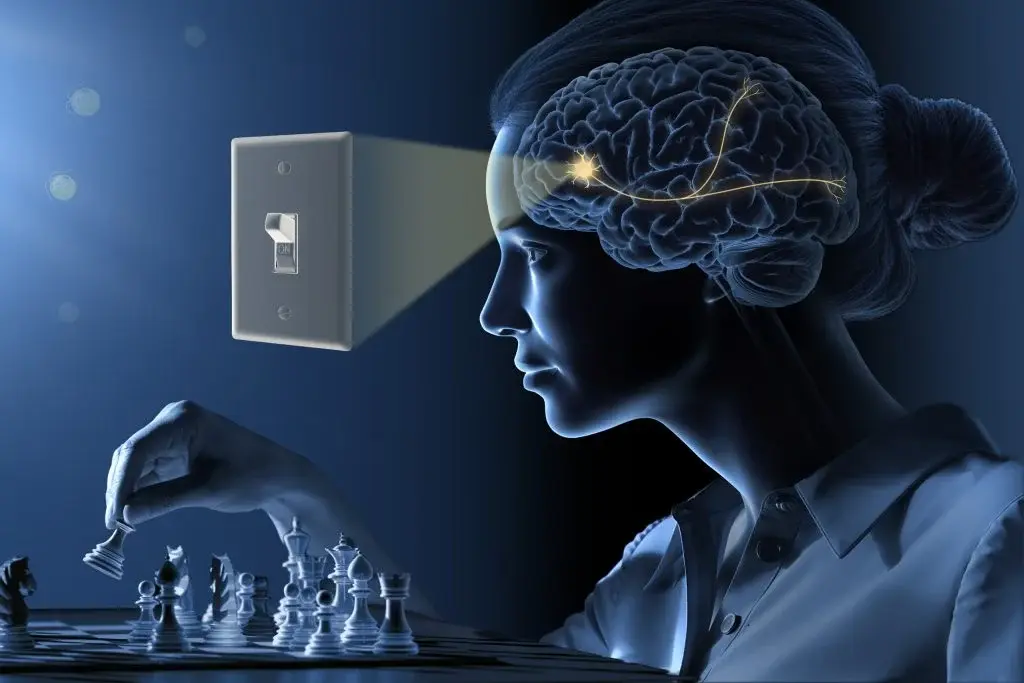
Karl Deisseroth (Stanford), Peter Hegemann (Humboldt University Berlin), and Georg Nagel (University of Wurzburg) won "for their discoveries concerning light-gated ion channels and optogenetics." The story starts with a single-celled green alga called Chlamydomonas. It can swim toward light even though it has no brain, no nerves, no eyes. Hegemann found that a single protein in its membrane, channelrhodopsin, acts as both a light sensor and an ion channel: when blue light hits it, the channel opens and lets a current flow in milliseconds. Nagel confirmed this by injecting the gene into frog eggs and watching the channel open and close on cue. Deisseroth then asked the neuroscientist's question: can we put this protein into a mammalian neuron and switch it on or off with light? In 2005, his lab published the answer: yes. A single gene delivery and a fibre-optic cable the width of a human hair, and the neuron fires or silences on command.
Optogenetics transformed neuroscience into a causal science
Before optogenetics, researchers could watch brain circuits activate but could not prove which circuit caused a memory, a fear response, or a craving. With optogenetics, they can. It has since been used to trace the neural basis of Parkinson's tremors, anxiety, and addiction, and early clinical trials are testing it in restoring vision to people with inherited blindness.
Physics: a billion tonnes of Antarctic ice as a neutrino telescope
Francis Halzen (University of Wisconsin-Madison) won alone "for decisive contributions to the IceCube Neutrino Observatory and the discovery of high-energy neutrinos of astrophysical origin." In 1988, he proposed building a neutrino detector not in a tank of water but in the glacial ice at the South Pole. Neutrinos carry no charge, have almost no mass, and pass through planets as though they do not exist. That is what makes them valuable: a high-energy neutrino travelling billions of light-years arrives at Earth pointing straight back to its source, undistorted by magnetic fields, gravity, or dust. IceCube, completed in 2011, buries 5,160 optical sensors in one cubic kilometre of clear ice between 1.4 and 2.4 kilometres down. When a neutrino collides with an atomic nucleus, it produces a charged particle that emits a faint cone of blue light. The sensors catch that flash and reconstruct the neutrino's direction and energy.
IceCube opened a third window on the universe
In 2013 it detected the first neutrinos from outside the Milky Way. In 2022 it traced a high-energy signal back to a specific galaxy, Messier 77, 47 million light-years away. In 2023, it produced the first image of the Milky Way in neutrino light. The Nobel Committee called it "a new observation window on the high-energy universe," alongside light and gravitational waves.
Chemistry: why every living thing uses the same mirror image
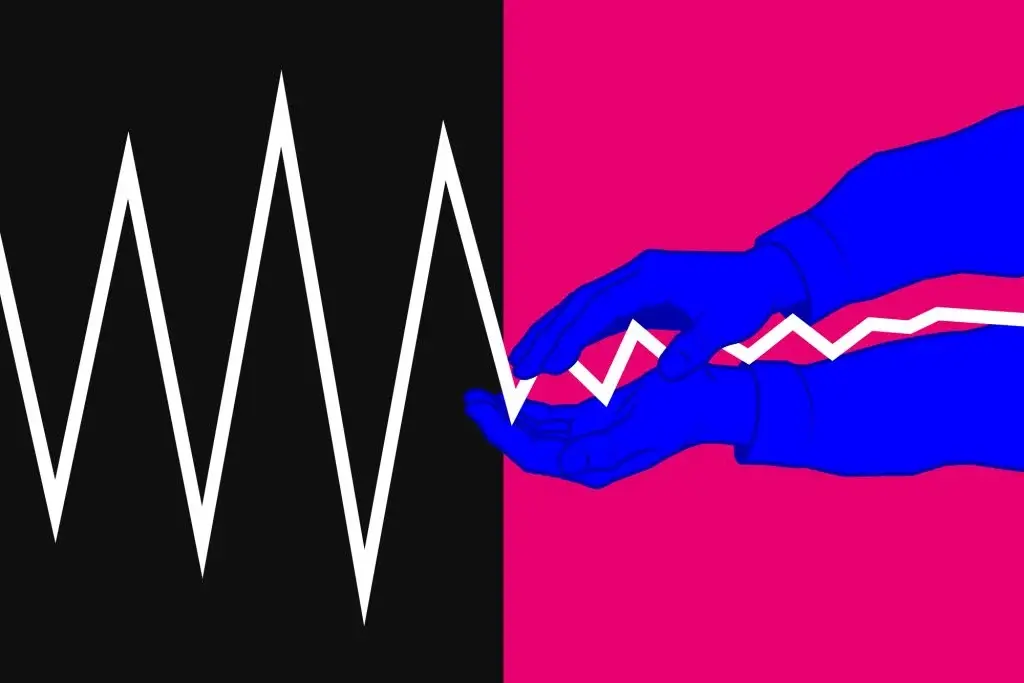
Henri B. Kagan (Universite Paris-Sud) and Kenso Soai (Tokyo University of Science) won "for the discovery of non-linear effects and autocatalysis in asymmetric organic synthesis." The problem they solved is one of the oldest puzzles in chemistry. Many molecules come in two mirror-image forms. Life uses only one mirror image of each amino acid and one mirror image of each DNA sugar. A prebiotic Earth with no starting bias would have produced both mirror images in equal amounts. Kagan discovered in the 1980s and 1990s that tiny imbalances can be amplified dramatically by asymmetric catalysts through what he called non-linear effects. A catalyst with only 10 percent excess of one mirror image can produce a product with 90 percent excess. The amplification is geometric.
The Soai reaction: a product that catalyses its own mirror dominance
Soai found the extreme case: an asymmetric autocatalytic reaction where the product acts as its own catalyst, and each cycle amplifies the imbalance exponentially. Starting from a mixture with a barely measurable excess (as small as 0.00001 percent), the Soai reaction produces a product that is almost entirely one mirror image. It is the closest any laboratory has come to showing how biological homochirality could have emerged spontaneously on early Earth. Beyond origins, the practical impact is enormous: the right mirror image of a drug is therapeutic; the wrong one is inert, toxic, or simply wasted. Asymmetric synthesis based on Kagan's non-linear effects now underlies the manufacture of a large fraction of all pharmaceutical compounds in production.
Medicine (Oct 5)
Deisseroth, Hegemann, Nagel: optogenetics
Physics (Oct 6)
Halzen: IceCube neutrino observatory
Chemistry (Oct 7)
Kagan, Soai: asymmetric autocatalysis
Literature (Oct 8)
Anne Carson: poetry and classical tradition
Peace (Oct 9)
Navanethem Pillay: international law
Economics (Oct 12)
Hall, Woodford: macroeconomic stabilization
Ceremony
December 10, 2026, Stockholm and Oslo
Literature: the poet who writes in a form no one has a name for
Anne Carson (Canadian, born 1950) won "for her bold and inventive oeuvre that, in playful dialogue with the classical tradition, has created new forms for contemporary literature." Carson is a professor of classics who writes books that have been called novels in verse, lyric essays, and philosophical poetry, and none of those descriptions is wrong or complete. Autobiography of Red (1998) retells the myth of Geryon and Herakles as a coming-of-age story in verse with footnotes. Nox (2010) is an accordion-folded book translating a Catullus poem into a meditation on her brother's death. The Swedish Academy chose the word "playful." Carson treats Sappho, Catullus, and Stesichoros not as monuments to paraphrase but as living voices to argue with and set in collision with contemporary grief and desire. She has received the Griffin Prize, the T.S. Eliot Prize, and the MacArthur Fellowship. Wrong Norma (2024) won the National Book Critics Circle Award.
Peace: the lawyer from Durban who helped define genocide
Navanethem "Navi" Pillay (South African, born 1941) won "for her efforts to promote peace and international law." She grew up under apartheid in Durban, became the first woman to open a law firm in the province of Natal in 1967, and spent her early career defending political prisoners including ANC members. She was appointed to the UN International Criminal Tribunal for Rwanda in 1995. In 1998, in a judgment she helped write, the Tribunal ruled that rape and sexual violence can constitute genocide when committed with intent to destroy a protected group. That ruling changed international criminal law. She later served as a judge at the International Criminal Court (2003 to 2008) and as UN High Commissioner for Human Rights (2008 to 2014). At 85, she still sits on the International Court of Justice in the Myanmar genocide case. When her prize was announced, she dedicated it to "all of the survivors of international crimes."
Economics: rebuilding the Keynesian model from the household up
Robert E. Hall (Stanford, born 1943) and Michael Woodford (Columbia, born 1955) won "for developing new macroeconomic models that have significantly improved our ability to implement effective stabilization policy." For most of the 20th century, stabilization policy used statistical relationships between aggregate variables. The Lucas Critique of 1976 showed those relationships break down when policy changes, because people adjust their behaviour in response to policy. Hall and Woodford answered that critique by rebuilding macroeconomics on microeconomic foundations.
How their models changed central banking
Hall built models of household consumption: how households smooth spending when income is uncertain, why recessions reduce spending by more than income falls. Woodford built models of price-setting that ground monetary policy in expectations of future interest rates rather than the money supply. His 2003 book Interest and Prices became the theoretical foundation for the forward-guidance practices now used by the Federal Reserve and most major central banks. Together their work gave policymakers a stable theory for why stimulus and rate changes affect output and inflation, rather than correlations that unravel when tested.
December 10 in Stockholm: six laureates, one banquet
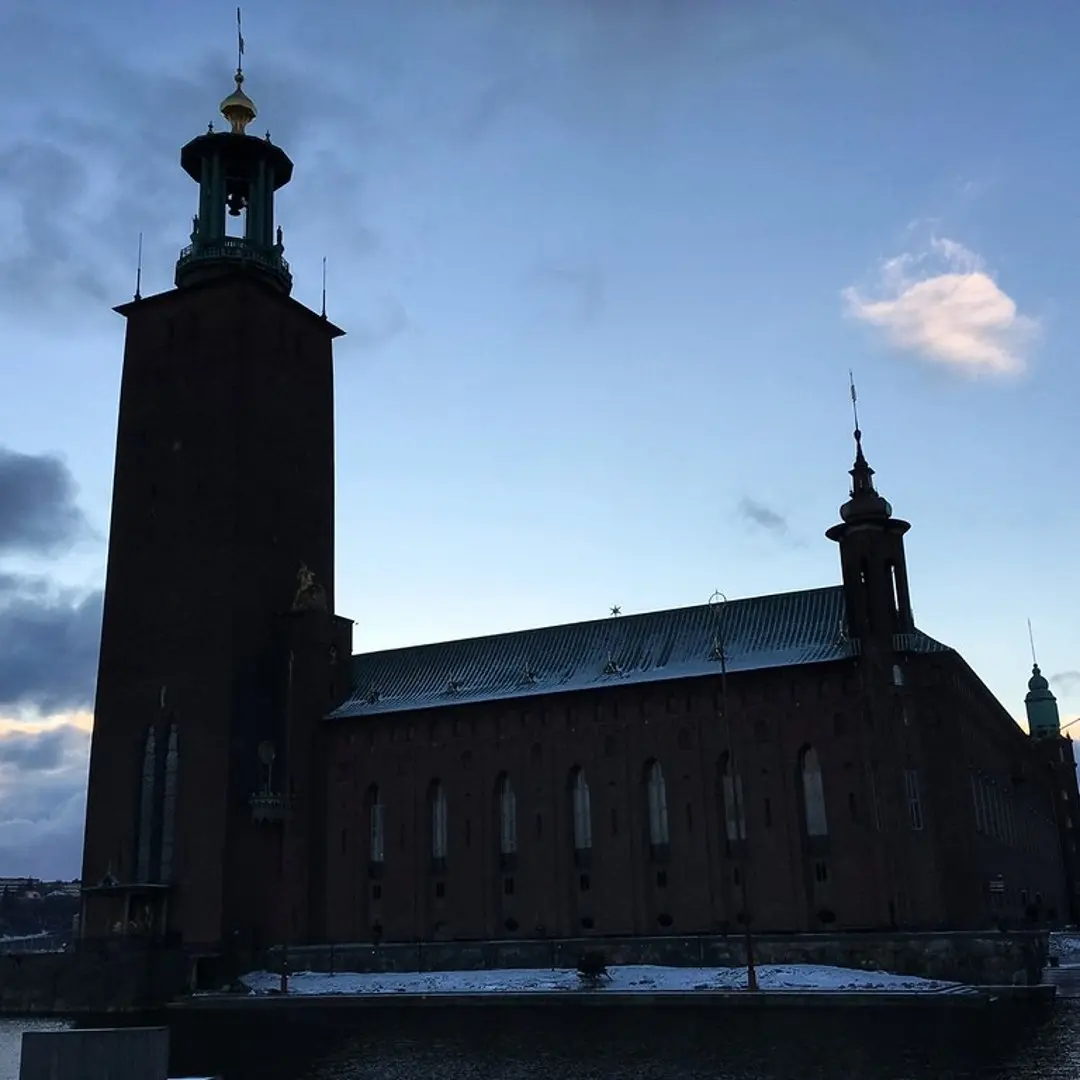
The prizes are announced in Stockholm (science and literature) and Oslo (peace) in early October, but the ceremony is one event. Laureates receive a gold medal and a diploma on December 10, the anniversary of Alfred Nobel's death in 1895. The Nobel banquet follows in Stockholm City Hall, under the gold mosaic ceiling of the Golden Hall, where every laureate has dined since 1930. All six prizes carry a reward of 12 million Swedish kronor, roughly 1.1 million euros.