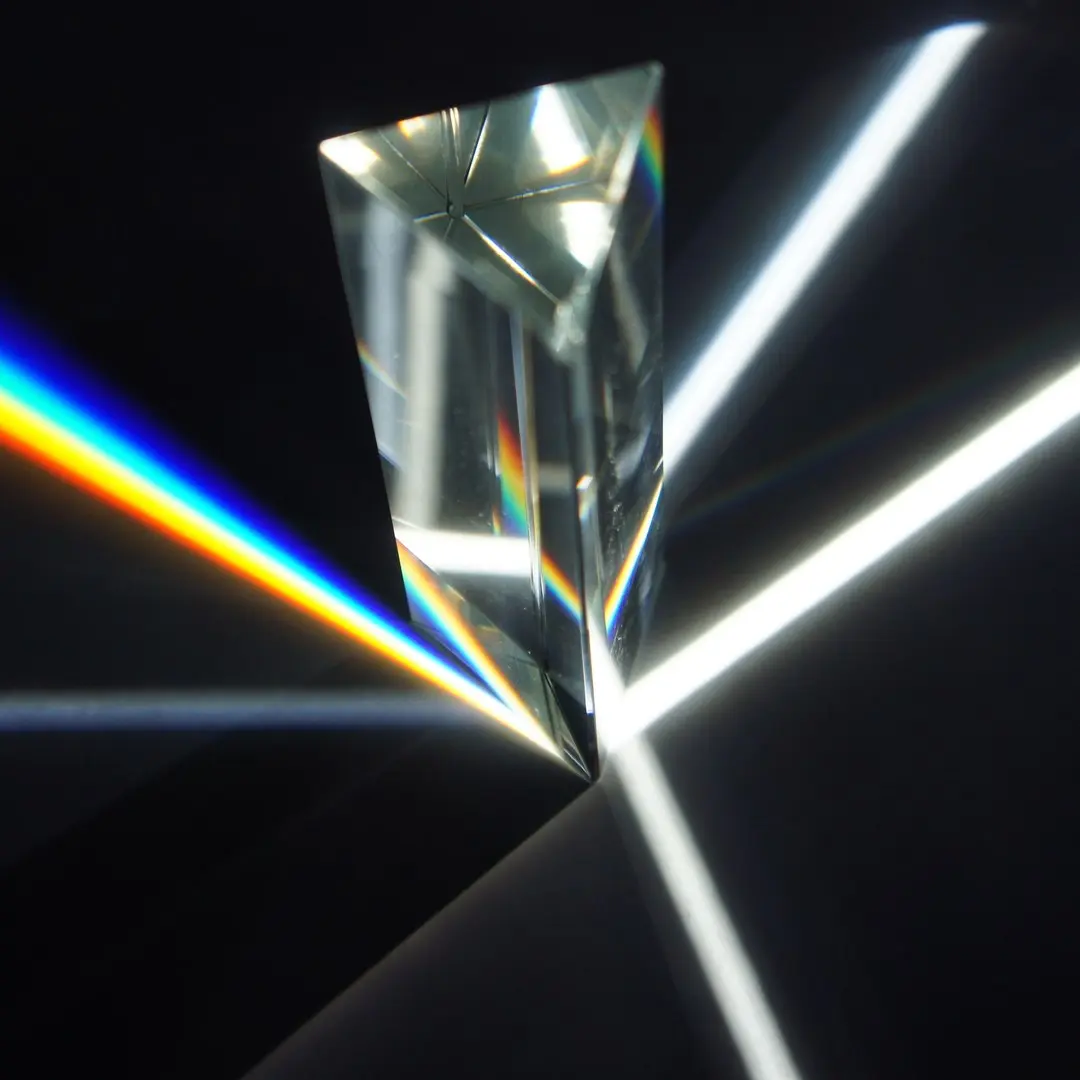
Sunlight Generates Quantum Entanglement
Quantum Entanglement No Longer Needs a Laser
For seven decades, generating quantum entanglement in a lab required a laser. That assumption fell on August 7, 2026. Researchers at the University of Ottawa and the Max Planck Institute for the Science of Light published a paper in *Optica* showing they had produced quantum-entangled photons using nothing but focused sunlight, the first time this has been demonstrated at outdoor scale, with quality comparable to established laser systems. The result matters because lasers are power-hungry and bulky. Every satellite or ground station in a future quantum network needs to generate entanglement on demand. If sunlight can do that job in space, where it is free and abundant, the engineering constraint changes completely.
How They Did It: Concentrating Chaos Into Quantum Precision
Quantum entanglement had seemed to require laser light because lasers are coherent: their photons march in lock-step. Sunlight is the opposite, a chaotic, broadband jumble. Lead author Cheng Li and his supervisors, Robert Boyd at the University of Ottawa and Hanieh Fattahi at the Max Planck Institute, showed that coherence is not actually what matters for entanglement generation. Their setup used a cone-shaped all-glass solar concentrator, Fattahi's team's key hardware contribution, which funnelled sunlight collected across 1.4 square metres through a hair-width optical fibre into a nonlinear crystal. Inside the crystal, a process called spontaneous parametric down-conversion (SPDC) split individual photons into pairs. Those pairs came out quantum entangled. The result: 94 percent fidelity with a perfectly entangled state, and correlations that violated Bell's inequality, the gold-standard test that rules out any classical explanation. Some senior researchers had publicly doubted pho
Solar collector area
1.4 square metres
Entanglement fidelity achieved
94%
Prior laser power required for SPDC
kilowatts, cryogenic systems
Bell inequality violated
yes, classical physics ruled out
Paper published
August 7, 2026 (Optica 13, 1508-1514)
"This technology could one day enable satellites to create secure encryption keys using the sunlight already abundant in space, reducing the need for onboard lasers and much of the supporting hardware.
"Cheng Li
Why Satellites Are the Real Prize
The quantum internet, a global network using entanglement to transmit information that cannot be eavesdropped on without detection, requires nodes that can generate and share entangled photons across thousands of kilometres. Satellites are the only practical relay for intercontinental distances, but current designs depend on high-power lasers and cryogenic cooling equipment that is heavy, power-intensive, and expensive to launch. A sunlight-powered entanglement source removes most of that overhead. In low Earth orbit, a satellite receives roughly 1.3 kilowatts per square metre of direct sunlight continuously for half of each orbit. That is more than enough to run a concentrator like the one Li and Fattahi built, with no fuel cost and no laser lifetime to manage. The team cautions this is a proof of principle. Photon generation brightness and entanglement quality both need improvement before a deployable system is realistic. The next step is adapting the solar concentrator to other no