Starship Flight 14: The First Orbital Try
260 Launches Ended. One Is About to Begin.
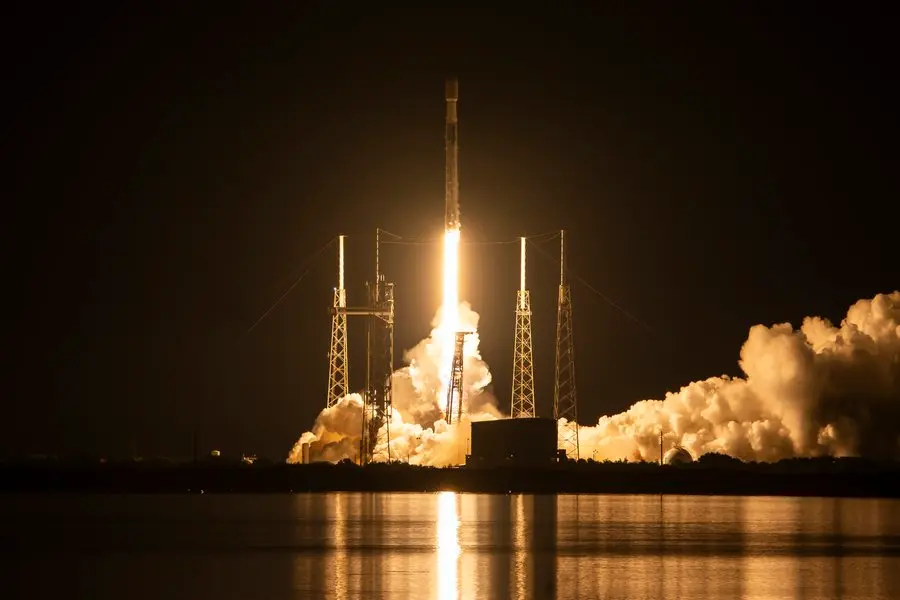
On August 25, 2026, a Falcon 9 lifted off from Space Launch Complex 40 at Cape Canaveral at 5:33 a.m. ET, carrying 29 Starlink satellites. The booster, B1067, had flown 37 times, a fleet record. The rocket landed on the droneship A Shortfall of Gravitas eight and a half minutes later, as it had dozens of times before. Then SpaceX VP of Launch Kiko Dontchev posted on X: "This morning's mission from pad 40 was the last planned Falcon 9 Starlink launch from Florida. From here on, Starlink missions out of Florida will fly on Starship." That closed a seven-year chapter. In those years, Falcon 9 flew approximately 260 Starlink missions from the Cape, building the largest satellite constellation in history. The next chapter is scheduled to open on September 18, 2026, from Starbase, South Texas, when Ship 41 and Booster 21 attempt what thirteen previous Starship flights could not: reach orbit and deploy real, revenue-generating satellites.
Thirteen Flights, Zero Orbits
Every Starship flight before Flight 14 followed the same arc: a high, fast climb; stage separation; a controlled descent back into the atmosphere; and a splashdown in the Indian Ocean or a catch back at Starbase. Spectacular, technically demanding, and deliberately suborbital. The ship never completed a full circuit of the Earth. Flight 13, on July 24, 2026, carried 20 production Starlink V3 satellites. They re-entered with the ship because the mission was never designed to reach orbit. Those satellites were test articles that burned up over the Indian Ocean. Flight 14 changes the equation. SpaceX's FCC filing, submitted August 31, 2026, is the first Starship regulatory document to use the phrase "orbital second stage." For the first time, the plan is to complete an orbit and release the payload into stable low Earth orbit, where it will stay.
Why Starlink V3 Needs Starship
The Starlink V3 satellite does not fit on a Falcon 9 in any useful quantity. Each unit weighs approximately 2,000 kilograms, more than three times the mass of the current V2 Mini generation, and its long flat form factor takes up most of a Starship payload bay. A Falcon 9 fairing is simply too small. That means the next-generation constellation cannot be built at scale without Starship flying operationally. Each V3 satellite is rated for roughly 1 terabit per second of downlink capacity, compared to far less for the current generation. Twenty V3 units on a single flight represents about 20 Tbps of new network capacity, if they reach orbit and begin operating. SpaceX CFO Bret Johnsen confirmed during the company's first-ever public earnings call on August 4, 2026 (SpaceX listed on the Nasdaq in June under ticker SPCX) that Flight 14 will generate revenue, making it the program's first commercially productive mission.
Previous Starship orbital attempts
0 of 13
Starlink V3 satellites on board
approx. 20
Rated downlink per V3 satellite
1 Tbps
V3 satellite mass vs V2 Mini
approx. 3x heavier
Starlink constellation satellites in orbit
11,093
Target launch window
Sept 18, 12:15 UTC
Booster Catch: Not This Time
During a Q2 2026 earnings call in August, Elon Musk suggested Flight 14 might attempt to catch the upper stage (Ship 41) with the Mechazilla tower arms at Starbase, the same arms that have now caught the Super Heavy booster multiple times. On August 20 he walked that back: the ship catch would come "in a few months." Flight 14 will target a splashdown for the ship. The ground hardware is ready. Booster 21 completed a full 33-engine static fire on August 28. Ship 41 completed a six-engine test the week before. The FAA airspace advisory filed by SpaceX on September 11 lists a two-hour window on September 18 starting at 12:15 UTC.
What a Working Starship Unlocks
If Flight 14 deploys its satellites into stable orbit, a cascade follows. The Starship launch tower at LC-39A at Kennedy Space Center in Florida, under construction for most of 2026, would become the East Coast Starship pad. SpaceX COO Gwynne Shotwell has named late October or early November 2026 as the target for Flight 15, the first Starship launch from Florida. Vandenberg, which continued flying Falcon 9 Starlink missions and will keep doing so, stays as the West Coast workhorse. Further out, SpaceX in August formally announced Starbase, Louisiana, a new launch complex on coastal marshland in Vermilion Parish designed for dozens of launches per day once operational, with first launches targeted for 2029. Musk has said Starship could fly at least one mission per day from Florida alone, and possibly more. Falcon 9 flew 100 missions in 2026 before Kiko Dontchev announced its Florida Starlink chapter was done. Starship's chapter has not started yet. September 18 is the audition.