Starship Flight 13: The Lucky One

By Steph3
Scroll to open

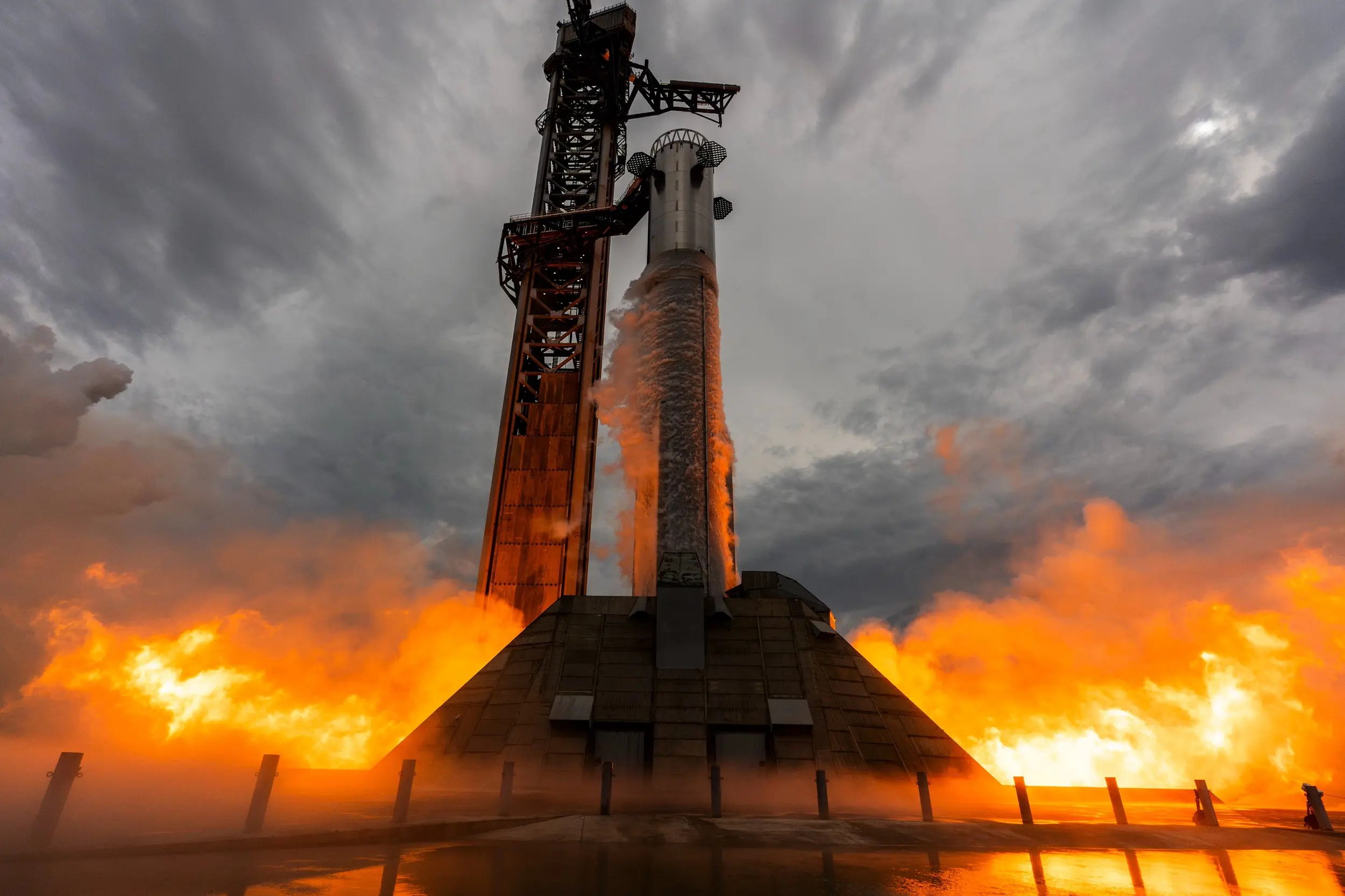
The FAA closed its Flight 12 mishap investigation on July 13, 2026, and cleared SpaceX to proceed. Starship Flight 13 lifts off from Starbase, Texas no earlier than July 16 at 6:45 p.m. EDT. This is the first time Starlink satellites will ever launch aboard the world's most powerful rocket.

Vehicle height

123 m (403 ft), tallest rocket ever flown

Thrust at liftoff

74.4 MN (16.7 million lbf), twice the Saturn V

Starlink V3 satellites aboard

20 (first Starlink on Starship)

Mission duration

approx. 65 minutes (suborbital profile)

Engines (Booster 20)

33 Raptor 3

Successful static fire

July 9, 2026, all 33 engines lit

🚀🌍🔥20.04.2023 – 16.07.2026
20.04.2023Flight 1: First integrated flight test. The vehicle clears the pad but spins out of control 4 minutes in. Automated flight termination destroys it over the Gulf of Mexico. The pad itself is badly damaged. SpaceX calls it a success: "We learned a lot."
20.04.2023
18.11.2023Flight 2: A new water-deluge system protects the pad. The ship and booster separate cleanly for the first time. Ship is lost during reentry; booster explodes during boostback burn. Two firsts achieved.
18.11.2023
14.03.2024Flight 3: Ship reaches space and survives reentry plasma for the first time, before being lost over the Indian Ocean. Booster lost during splashdown attempt.
14.03.2024
06.06.2024Flight 4: Ship survives full reentry and controlled splashdown in the Indian Ocean. Booster survives its splashdown in the Gulf. First full mission success.
06.06.2024
13.10.2024Flight 5: The booster is caught mid-air by the launch tower's mechanical arms, "Mechazilla," in a manoeuvre never before attempted. Ship splashes down precisely.
13.10.2024
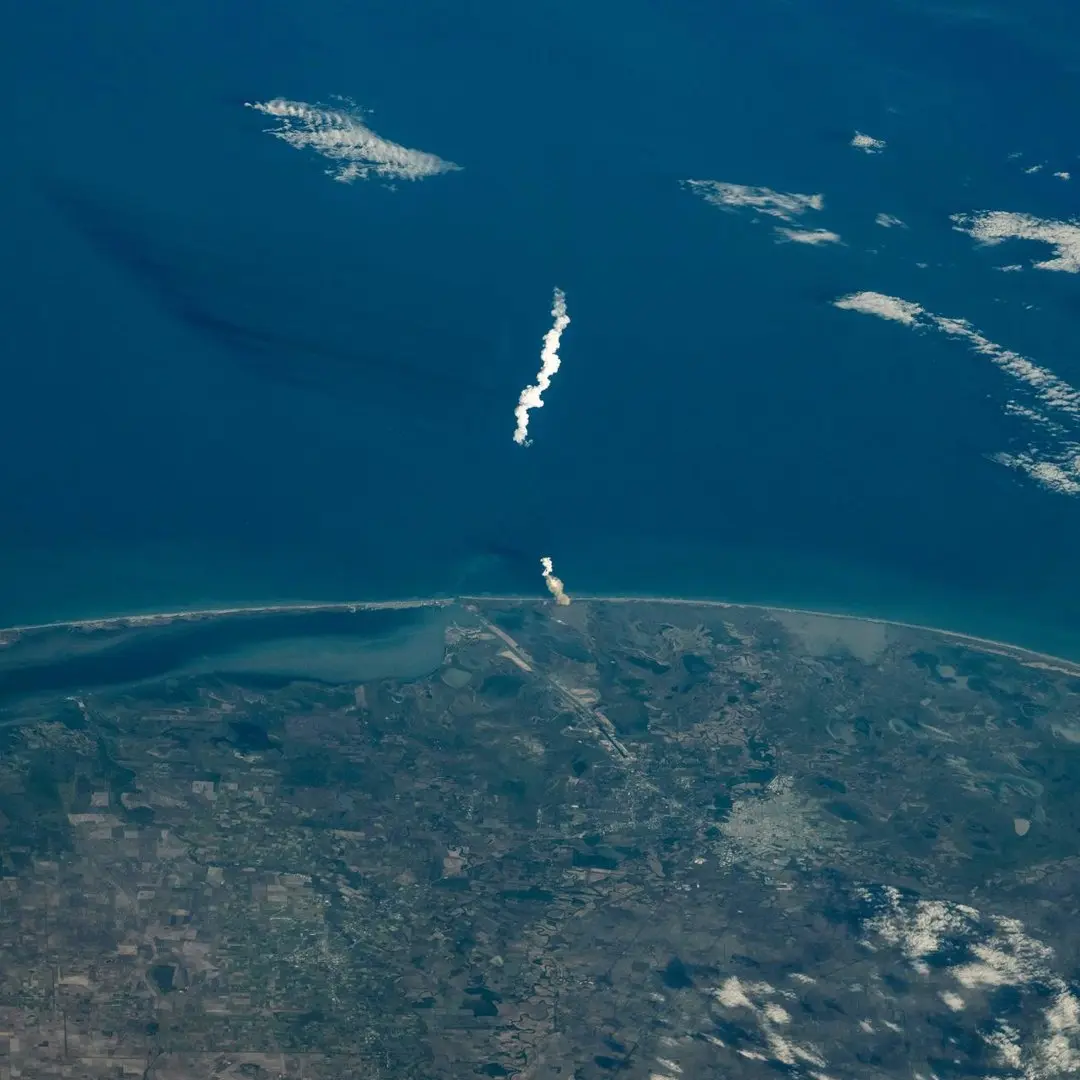
19.11.2024Flight 6: Booster caught again. Ship deploys a payload door and survives reentry a second time, photographed from the ISS as it punches back through the atmosphere.
19.11.2024
16.01.2025Flight 7: Ship suffers a propellant leak and breaks apart over the Caribbean. Debris rains down near Turks and Caicos. A 5-week stand-down follows.
16.01.2025
06.03.2025Flight 8: Ship disintegrates again during reentry, causing brief FAA airspace closures over Florida. SpaceX identifies the root cause as an oxygen/fuel mixing issue in the propellant header tanks.
06.03.2025
27.05.2025Flight 9: First reflight of a previously flown booster. Ship still breaks up during reentry, but a dummy Starlink payload is deployed for the first time, proving the mechanism works.
27.05.2025
13.10.2025Flight 10: Ship survives reentry intact for the first time since Flight 6. Both vehicle halves are recovered. SpaceX declares the basic mission profile validated.
13.10.2025
09.12.2025Flight 11: Full V3 vehicle architecture tested end to end. Booster caught a third time. Ship performs a controlled splashdown in the Indian Ocean.
09.12.2025
22.05.2026Flight 12: Debut of the Starship V3 configuration with Raptor 3 engines. Mission mostly successful, but the booster fails to achieve a soft splashdown due to heat-related engine anomalies and erroneous alarm settings. FAA opens an investigation.
22.05.2026
16.07.2026Flight 13: the FAA clears the anomaly on July 13. Booster 20 attempts a controlled splashdown in the Gulf. Ship 40 deploys 20 Starlink V3 satellites, Starship's first operational payload. Each burns up on the same suborbital arc.
16.07.2026

What to watch for on July 16

11%

All 33 Raptor 3 engines ignite cleanly at T-0

Max-Q structural loads on the new V3 interstage

Hot-staging separation (ship engines light before booster cuts out)

Booster boostback burn and grid-fin descent

Booster controlled splashdown in the Gulf of Mexico (fixed from Flight 12)

Payload door opens in space

20 Starlink V3 satellites deploy cleanly at altitude

Ship survives reentry plasma blackout

Ship splashdown in the Indian Ocean

Why 20 Starlink satellites will burn up on purpose: Flight 13 follows a suborbital arc, so the satellites are not going into orbit. They will extend solar arrays, test inter-satellite lasers, and scan Starship's heat shield with onboard cameras before burning up about 20 minutes after deployment. Six are painted white in patches to simulate missing tiles and serve as visible imaging targets.

[icon:info] The V3 leap Block 3 Raptor engines produce around 280 tonnes of thrust each, up from the original 200 tonnes, with dramatically simplified plumbing. The interstage is now integrated directly into the booster structure, shaving weight and improving separation dynamics. Three grid fins replace the previous four, reducing drag.

[icon:star] What comes next If Flight 13 succeeds, SpaceX intends rapid reuse. Booster 20 could reflown within weeks. Ship payloads will increase toward the full 100-150 tonne-to-orbit target. NASA's Artemis III mission, which will use a Starship variant to land humans on the Moon, is scheduled for 2027.

"

Starship's pace of iteration is what allows us to reach orbit and beyond. Every flight teaches us what the next one needs to be.

"

Elon Musk