Solar Cells Hit 35.5%: Record, No Factory Yet
35.5%: The Solar World Record With No Factory Behind It
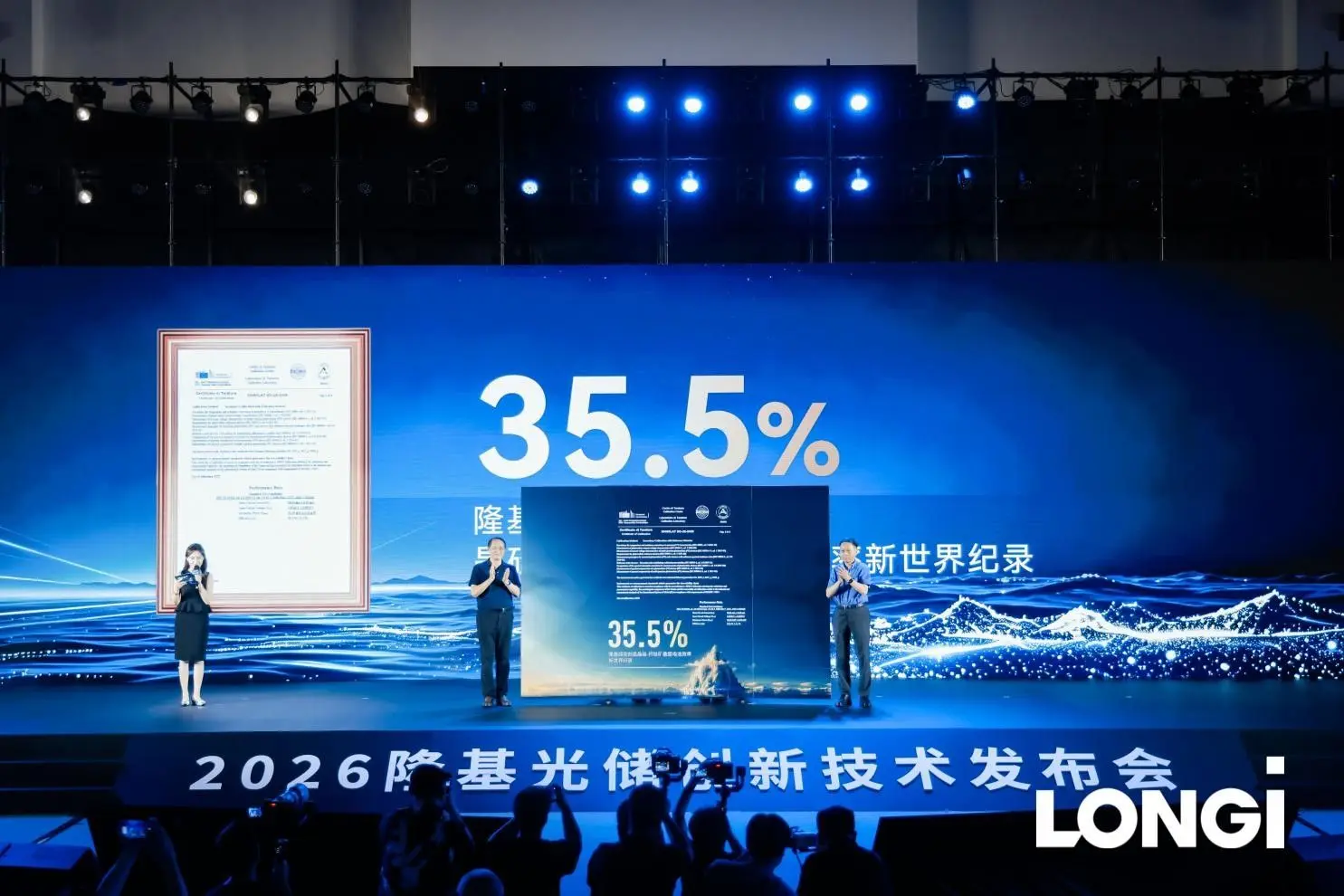
On July 14, 2026, Chinese manufacturer LONGi announced a power conversion efficiency of 35.5% for its perovskite-silicon tandem solar cell, certified by the European Solar Test Installation (ESTI) in Italy. That is the highest efficiency ever recorded for this class of cell, up from its own previous best of 34.85% set in April 2025 and certified by the U.S. National Renewable Energy Laboratory (NREL). A standard commercial silicon panel today converts roughly 22 to 24% of sunlight into electricity. LONGi's lab device is now at 35.5%. The gap between those two numbers is the entire story of where solar is heading, and how slowly it is getting there. What made the July announcement unusual was not the number. It was the admission that came with it. In June 2026, three weeks before announcing the record, LONGi stated it had "no active mass-production plan" for the technology. A company holds the world record in its category and cannot yet build enough of it to sell.
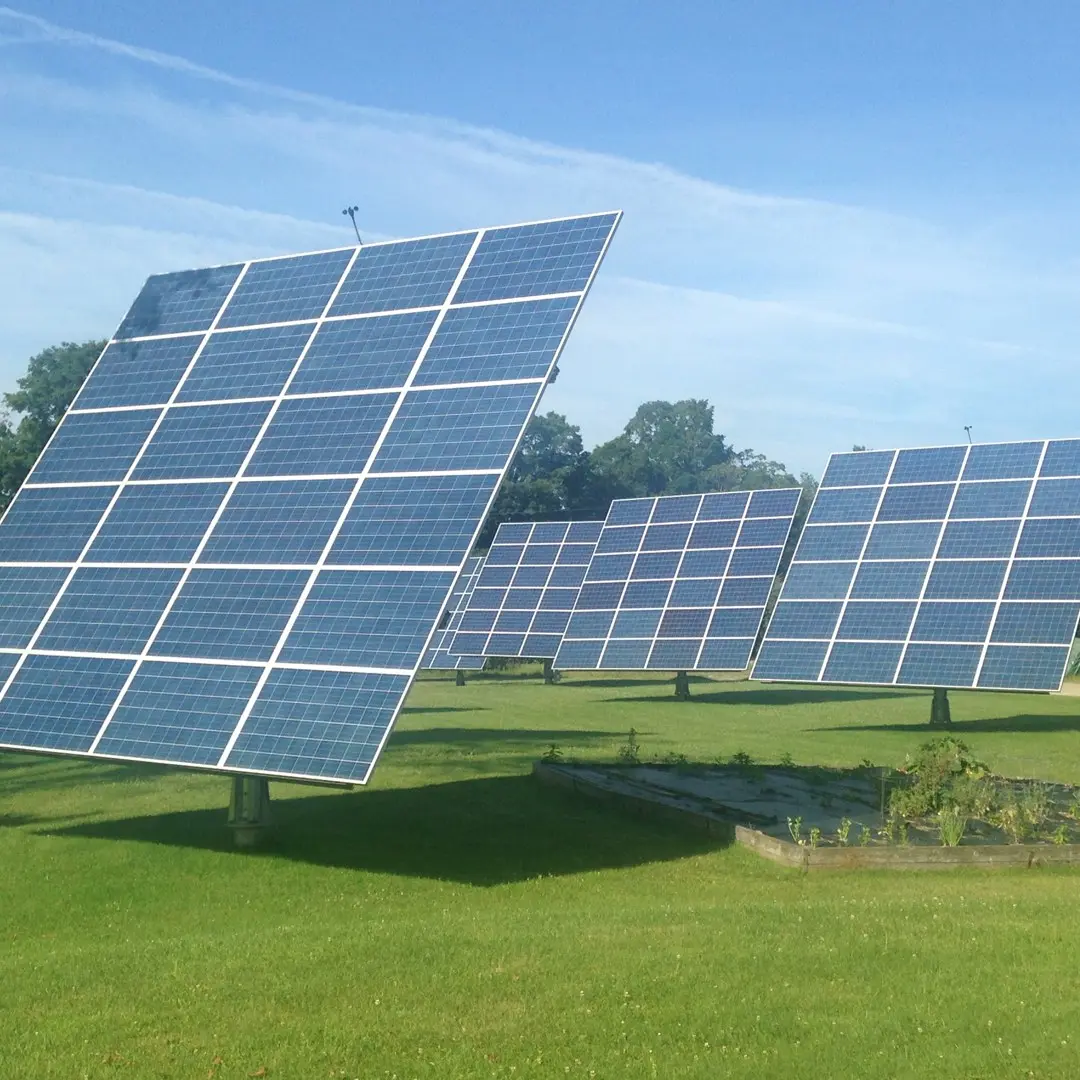
A utility-scale solar array.
The cells visible here are conventional crystalline silicon, peaking at around 24% efficiency in mass production. LONGi's laboratory tandem cell is now at 35.5%, but the gap between a lab record and a production module is measured in years, not months.
Why Stacking Two Cells Changes the Physics
A single-junction solar cell, the kind in every panel on every rooftop, obeys the Shockley-Queisser limit: roughly 33.7% is the theoretical maximum for a single semiconductor absorbing sunlight. Physics draws the ceiling. A tandem cell stacks two junctions. LONGi's device places a perovskite layer on top of a crystalline silicon layer. Perovskite absorbs the high-energy blue and green photons near the top. Silicon catches the lower-energy red and infrared light that passes straight through. Two layers harvesting two bands of the spectrum push the theoretical ceiling to around 43%, well above what a single layer can ever reach. The silicon component is identical in concept to cells already in mass production. The perovskite layer on top is where the gains come from, and where the manufacturing problems live: moisture sensitivity, lead content, yield losses at scale, and long-term stability data that simply does not exist yet for a 20-year product.
November 2023 (NREL)
33.9%
June 2024 (NREL)
34.6%
April 2025 (NREL)
34.85%
July 2026 (ESTI)
35.5%
Theoretical limit (tandem)
43%
Single-junction limit (Shockley-Queisser)
33.7%
Commercial silicon modules today
22 to 24%
Times LONGi has set a PV world record since 2021
21

Two Weeks Later, the Plan Changed
LONGi's public position on commercialisation shifted rapidly after the July 14 announcement. On July 29, the company filed for environmental impact assessment approval for what it called its "Novel Crystalline Silicon-Perovskite Tandem Solar Cell Technology and Equipment Industrialisation Project." The filing confirmed a planned investment of 204 million yuan (roughly 28 million U.S. dollars) to build a 100 MW pilot production line in Xixian New Area, Shaanxi Province.
100 MW vs. a Gigafactory
100 MW is a pilot, not a factory. A modern silicon cell gigafactory runs at ten to twenty times that scale. But the filing marks the moment the technology moves from pure R&D into the phase where real capital and real tooling are committed. The company that said "no active mass-production plan" in June had filed paperwork for a production line by August. The honest reading is that the two statements are compatible. A pilot validates whether the lab process survives at production scale. If the 100 MW line holds 32% or better in volume, and if stability tests pass IEC 61215 and 61730 certification, a full commercial rollout becomes credible. If the numbers drop or the encapsulation fails, the record remains a record and the timeline extends again.
""One generation in mass production, one in development, and one in reserve." LONGi R&D philosophy, stated at the July 2026 Solar and Storage Innovation Technology Conference
"Steph1st of October 2026

The 8% That Changes the Industry's Economics
The difference between 24% and 35% is not just bragging rights. A panel that converts 35% of incoming light instead of 24% generates the same electricity in roughly two-thirds of the roof space, or more power from the same land. For utility-scale projects where land cost, transmission distance, and installation labour dominate the bill, that efficiency gap translates into substantial cost differences per megawatt-hour delivered. Oxford PV, a British tandem cell company, is shipping commercial modules at around 26 to 28% and planning to scale. LONGi is at 35.5% in the lab with a 100 MW pilot in planning. The commercialisation gap between the two positions is likely two to four years, with stability testing the primary gate.
The Question the Pilot Has to Answer
Twenty years of reliable performance data, the standard the industry requires before pension funds commit capital, does not exist yet for perovskite tandem cells. It cannot exist yet. The technology is not old enough. LONGi's record is real. The product is not ready. Both can be true simultaneously. The question for the next three years is whether the 100 MW pilot line closes the gap between them, or surfaces the manufacturing problems that lab records by design never have to face.