Shoot your first roll of film
Three things. That is all you need.
You need a camera, a roll of film, and a lab. Every beginner guide buries that under twenty camera comparisons and a chemistry lesson. This one does not. Below is the shortest path from zero to holding your first developed photos: five steps, real prices from October 2026, and a clear note on what roll one will actually look like.
Time from camera to photos
About 3 to 5 days total
Total cost for first roll
Around $40 USD at current prices
Difficulty
Beginner. No darkroom, no chemistry.
Format
35mm (the most common, the cheapest to develop)
Step 1. Buy the right first camera
Skip the Instagram rabbit hole. Three used 35mm cameras work for nearly every beginner, and all three are available on eBay, Facebook Marketplace, or a local camera shop for under $100. The Canon AE-1 Program gives you automatic exposure with full manual override, a huge lens selection, and a shutter speed dial you can see without squinting. Expect $60 to $90 for a working copy with a 50mm lens. The Olympus OM-10 is lighter, just as capable, and usually $30 to $50. The Pentax K1000 is all-mechanical, needs no battery to fire the shutter, and teaches exposure instinctively. Budget $50 to $80. One rule when buying used: ask the seller to fire the shutter on each speed and confirm the light seals are not crumbling. A CLA (clean, lube, adjust) from a repair shop runs $50 to $80 and is worth it for any camera over 30 years old.
Step 2. Pick your film
Start with ISO 400 color negative film. ISO 400 works in bright sun, open shade, and most indoor daylight. It is the most forgiving stock for beginners. Kodak UltraMax 400 costs around $10 per 36-exposure roll and is available at most camera shops. Kodak Gold 200 is slightly cheaper at $9 a roll and beautiful in sunlight, but struggles indoors. Ilford HP5 Plus 400 is the go-to for black and white: extremely forgiving, easy to develop, and produces classic grain that looks intentional rather than accidental. Buy one roll to start. Do not buy five stocks and then wonder which one caused the look you got. One roll, shoot it all, get it developed, learn from the results.
Step 3. Load the camera and shoot
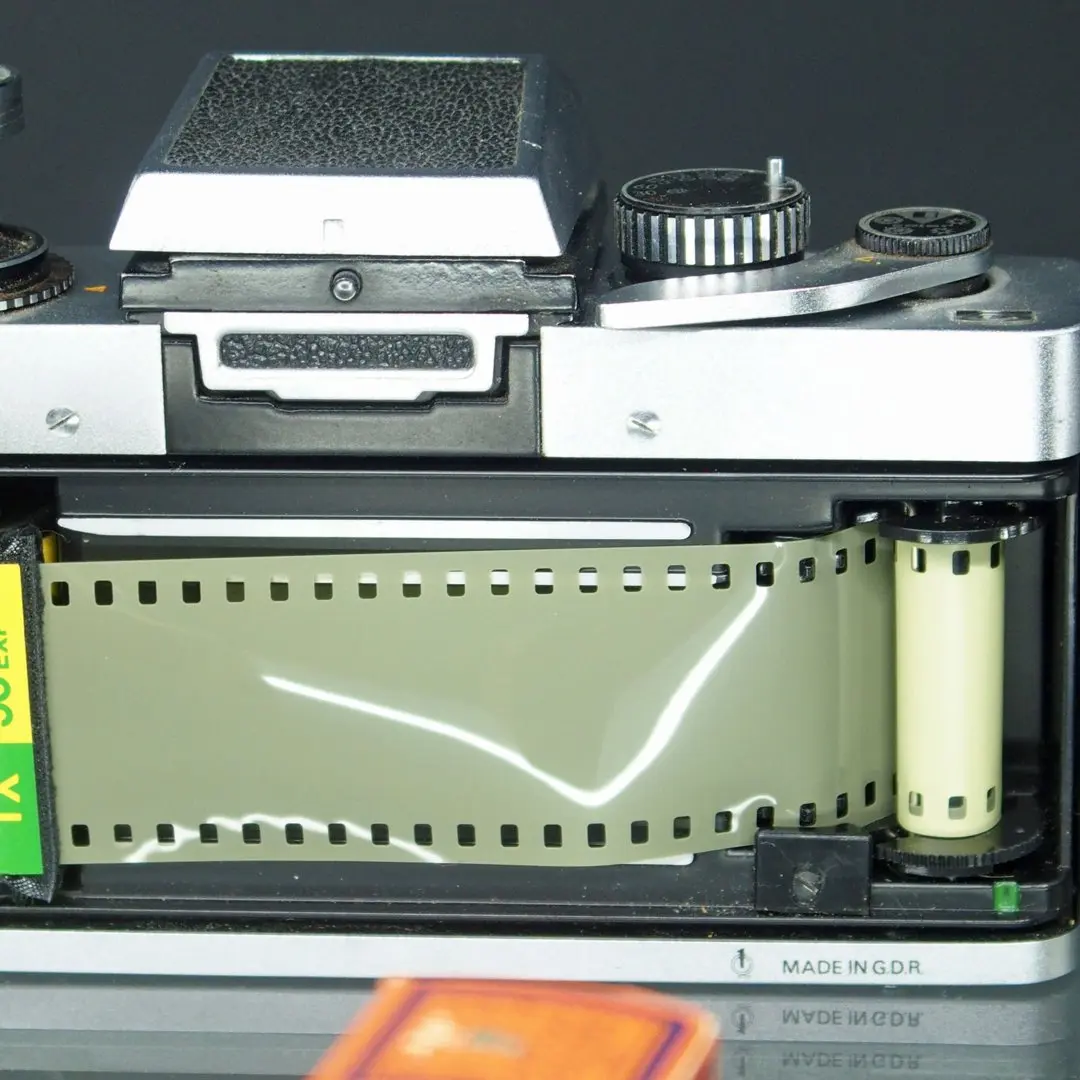
Open the camera back (usually a latch on the left side), drop the film canister into the left chamber, and pull the leader strip across to the take-up spool on the right. Close the back, advance twice until the frame counter reads 1. The rewind knob test: before you close the back fully, gently try to turn the rewind knob in its natural direction. If the film is threaded correctly, it will resist. If it spins freely, the film is not engaged and you will shoot 36 blank frames. After loading, shoot the whole roll in one outing if possible. Deliberate practice on a single subject (street, friends, a park) gives you 36 comparable shots to learn from rather than 6 shots across six months. Expose for the shadows. Color negative film handles overexposure gracefully but struggles with underexposure. When in doubt, open the aperture one stop wider than the meter says.
Step 4. Get it developed
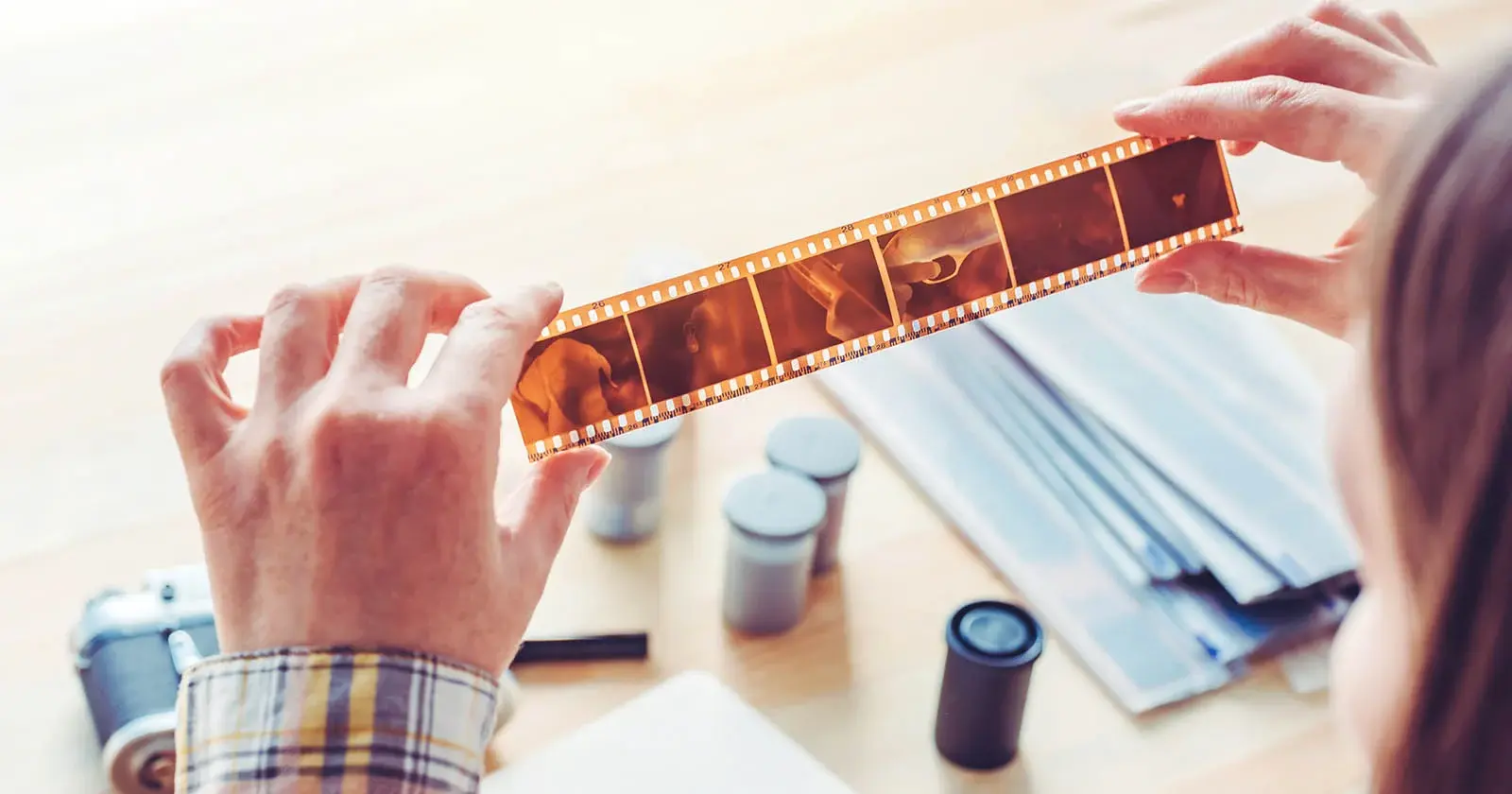
You do not need to find a darkroom. You need a lab. In 2026 the median price at a US professional lab is $19 per roll for develop plus a standard web resolution scan, which is enough to post online and print up to 8x10 inches. Three reliable mail-in options: The Darkroom charges $13 per roll and includes a free prepaid mailer. Indie Film Lab charges $21 per roll and does per-frame color correction on a Frontier scanner. Miller's Lab charges $8 per roll with 48-hour turnaround. Turnaround is typically 3 to 10 business days by post. Do not send your first roll to a pharmacy chain. CVS and Walgreens process color film but do not return negatives, and inconsistency is high. A professional lab returns your negatives in archival sleeves alongside a download link for your scans.
Camera (used, with lens)
$50 to $90
One roll of Kodak UltraMax 400
$10
Develop and scan (professional lab)
$13 to $21
Total for first roll
Around $35 to $40 all in
Developing turnaround (mail-in)
3 to 10 business days
The most common beginner mistake is advancing the film without checking the rewind knob. If the knob does not resist when you turn it, open the back in a dark room, rethread, and try again. A blank roll is the most expensive lesson in film photography.
Roll one is a calibration roll, not a portfolio. Expect some frames too dark, some with a horizon tilted 10 degrees, and at least one accidental double exposure. That is normal. The value is seeing which decisions produced which results, then adjusting on roll two.