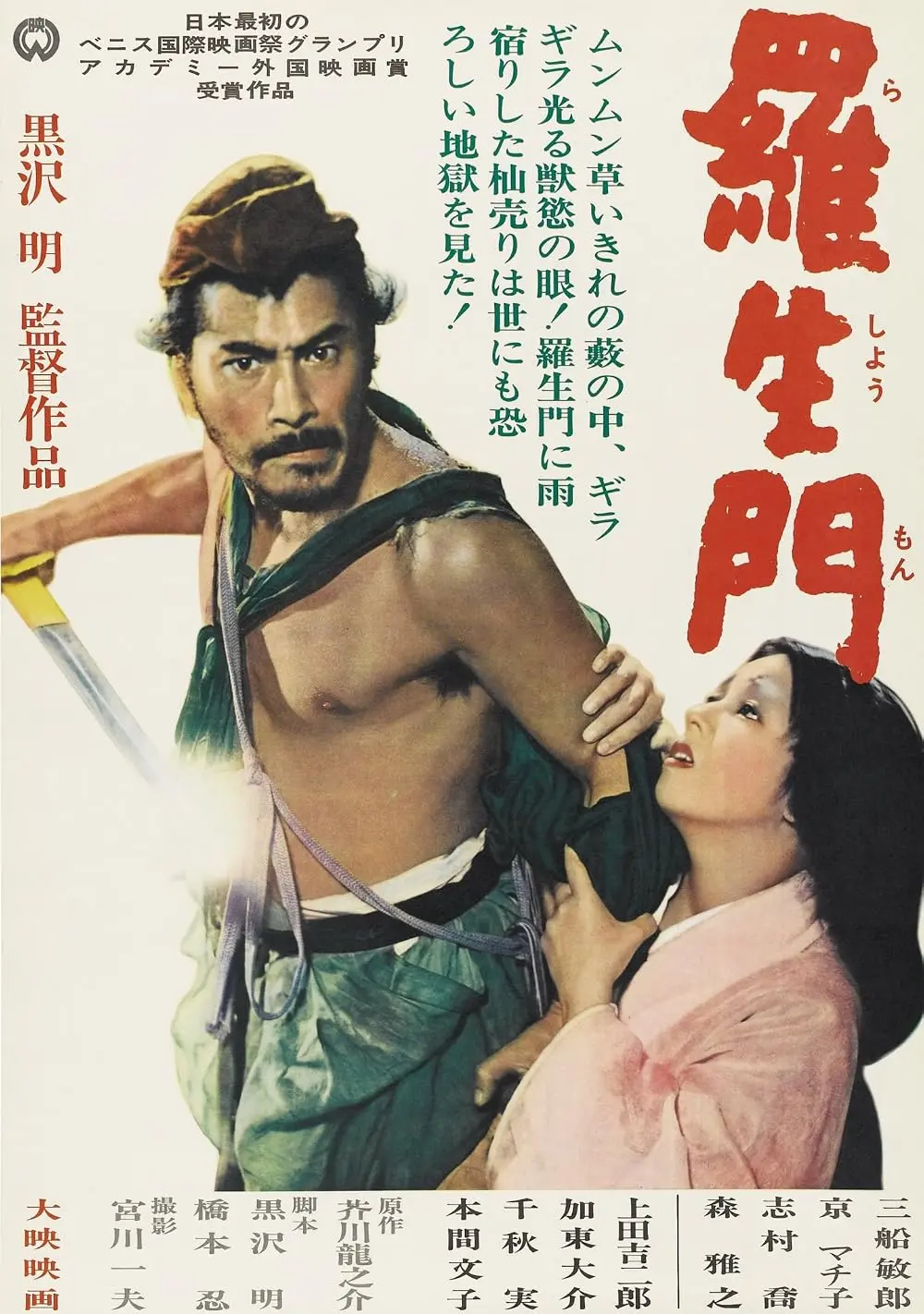
Rashomon: Four Accounts And No Verdict
Rashomon (1950)
The film that gave its name to the problem of testimony, and opened Japanese cinema to the rest of the world.
Runtime
88 minutes
Director
Akira Kurosawa
Budget
$140,000
Cinematography
Kazuo Miyagawa
The Same Crime Four Times
A bandit, a samurai's wife, the dead samurai speaking through a medium and a woodcutter all describe the same afternoon in a forest, and no two accounts agree on who did what or why. Kurosawa does not offer a key. Each version is shot with full conviction, which means the audience is required to believe four incompatible things and then notice that every teller has arranged the facts to make themselves bearable. Kazuo Miyagawa pointed the camera directly at the sun through the canopy, something cameramen were told never to do, and the flickering light through leaves became the visual signature of the film. The framing story sits three men under a ruined gate in torrential rain, arguing about whether anything anyone says can be trusted.
Watching Rashomon
Register
/
Reel
"It is human to lie. Most of the time we cannot even be honest with ourselves.
"The commoner under the gate · Rashomon · 1950
Miyagawa shot directly into the sun using mirrors to bounce light back into the forest, a technique the industry considered impossible until this film did it.
The Golden Lion at Venice in 1951 was awarded without Daiei even entering the film seriously, and it created the Western market for Japanese cinema overnight.
The word Rashomon now does duty in law, psychology and journalism for any situation where witnesses contradict each other irreconcilably, which is a strange fate for a film that is not actually relativist. Kurosawa gives the last word to an act of ordinary decency in the rain, and the woodcutter's final account is the one the film quietly trusts. The structure has been borrowed everywhere, from courtroom dramas to The Last Duel, usually without the gate and the rain that make it bearable.