Polo Hits 892 Mbar. Only Patricia Was Ever Worse.
892 Millibars. The Pacific Has Never Seen Worse. Almost.
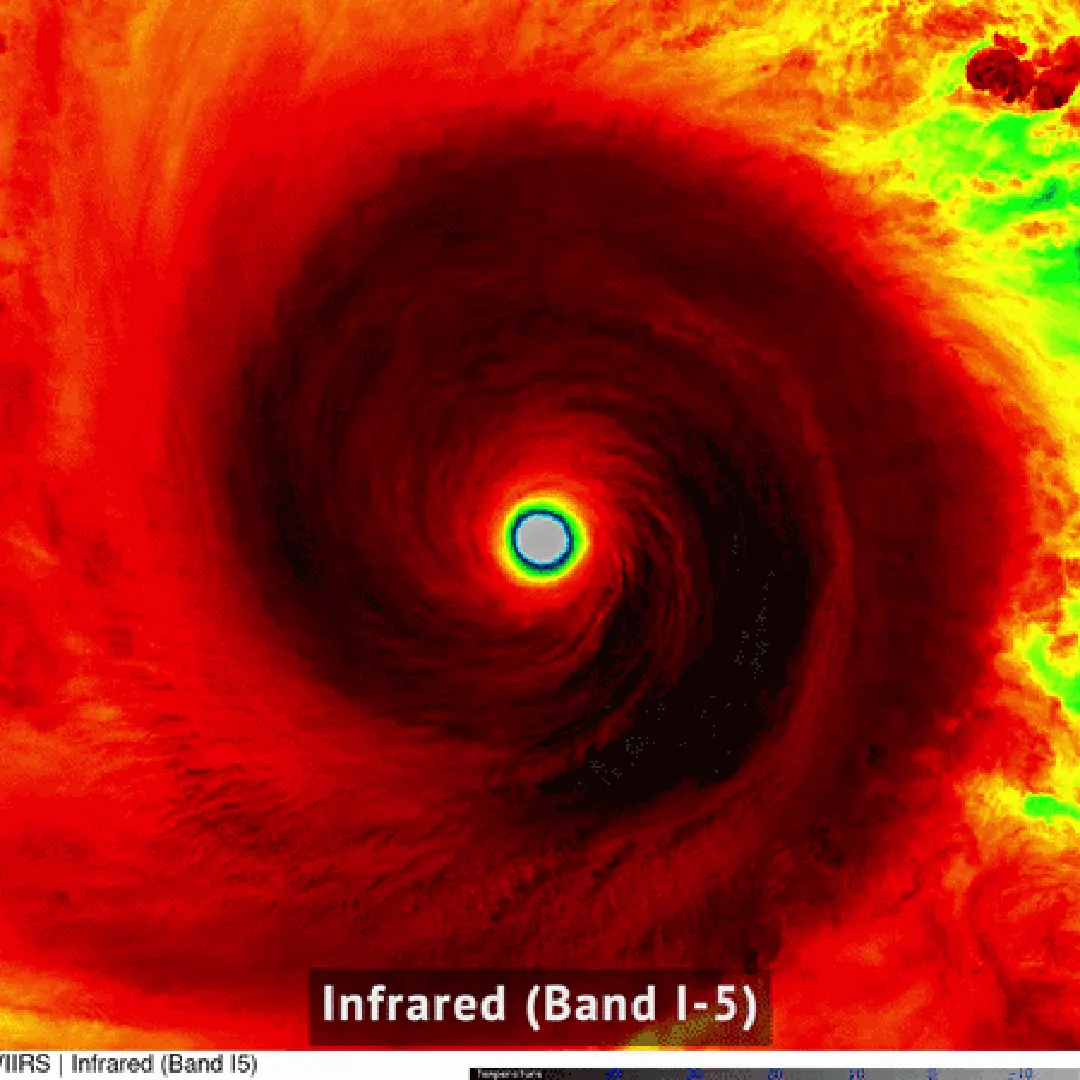
On September 22, Hurricane Polo reached a central pressure of 892 millibars with maximum sustained winds of 180 mph. It is the second most intense Pacific hurricane ever recorded. The record belongs to Hurricane Patricia in October 2015, which bottomed out at 872 millibars with 215 mph winds. The gap between them is only 20 millibars. No other storm in the basin comes close to either. Polo also became the third Category 5 hurricane of the 2026 Pacific season, after Genevieve and Lowell. Only three previous seasons have ever produced three Category 5s in the eastern or central Pacific: 1994, 2002, and 2018.
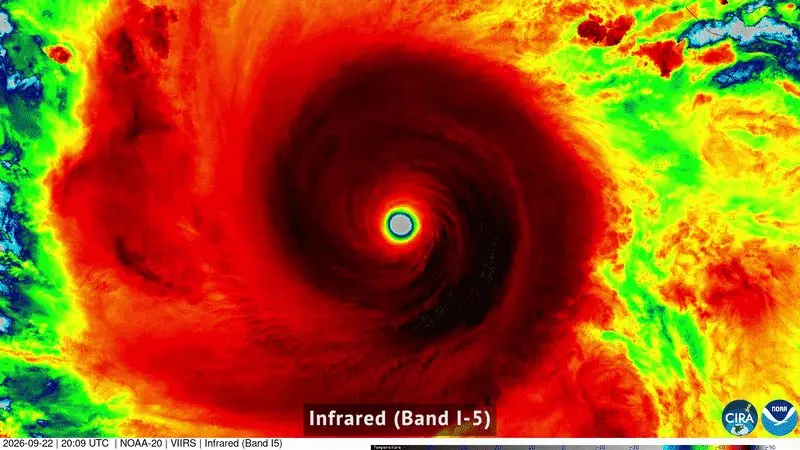
Credit: NOAA NESDIS / NOAA-20 satellite, VIIRS instrument, September 22 2026.
Infrared and visible imagery captured Hurricane Polo at peak intensity as a Category 5 storm. The compact, well-defined eye is visible at centre, surrounded by the dense eyewall that drove the record pressure reading.

35 mph to 160 mph in 39 Hours. Forecasters Said They Had Never Seen It.
Polo formed as a tropical depression on September 20. Within 39 hours it had reached Category 5 status, a pace that the National Hurricane Center's own forecasters called "truly remarkable." The intensification rate of roughly 90 knots in 24 hours ranks as the third fastest ever recorded in the eastern Pacific, behind only Hurricane Patricia. The central pressure dropped 82 millibars in 22 hours. The engine behind it: sea surface temperatures near 31 degrees Celsius, roughly three degrees Fahrenheit above normal, in conditions the NHC described as "ideal." Atmospheric scientist Shel Winkley noted those above-normal water temperatures were made "at least 200 times more likely" by heat-trapping pollution. The SHIPS rapid intensification model showed probabilities of Category 3 strength within 48 hours that NHC forecaster Eric Blake described as "as high as I have ever seen them."
"This is one of the strongest storms ever in the Pacific Basin.
"Kristen L. Corbosiero · Professor of Atmospheric Science · University at Albany
Peak sustained winds
180 mph (290 km/h)
Minimum central pressure
892 mbar (second lowest Pacific on record)
Patricia's record (2015)
872 mbar, 215 mph
Time from tropical depression to Category 5
39 hours (record for basin)
24-hour pressure drop at peak
82 millibars
Category 5 storms in 2026 Pacific season
3 (Genevieve, Lowell, Polo)
Seasons ever with 3 Cat 5s in eastern Pacific
4 (1994, 2002, 2018, 2026)
Cat 2 at Landfall. Two Dead. A Second Landfall Still Ahead.
Polo weakened significantly after its record peak, as increasing wind shear eroded the tight eyewall. By September 28 it had fallen to Category 3, then Category 2. Early on September 29 it made landfall just south of Las Barrancas, Baja California Sur, with maximum sustained winds of 110 mph, about 130 km north of Cabo San Lazaro and 115 km south of Mulege. Two children died in Jalisco state after their home was swept away before landfall, and their parents remain missing. A young woman was swept away by strong currents at Puerto Vallarta. Polo is expected to make a second landfall over mainland Sonora, still at hurricane strength. Six to 12 inches of rain are forecast across Baja California Sur, raising the risk of mudslides in the mountains above sparsely populated coastal towns.

Southern California Has Already Been Hit Once This Month.
Hurricane Marie struck Southern California two weeks before Polo. In Long Beach it ripped away a stretch of boardwalk and damaged the foundations of more than a dozen beachside homes. City crews are still making emergency repairs with 3,000-pound sandbags. Polo's surge is now arriving. The National Weather Service has issued a beach hazard warning for elevated surf and strong rip currents, forecasting waves up to five feet and tides up to seven feet along the Peninsula, peaking Monday and Tuesday mornings. Long Beach closed beaches along the Peninsula. Officials relocated sea turtle eggs from two Orange County nests to the Aquarium of the Pacific after biologists judged the nests could not survive the incoming swell. The coastline that took Marie is bracing for the same conditions a second time.
