Once Upon a Time in the West: Fourteen Minutes Bef
Once Upon a Time in the West (1968)
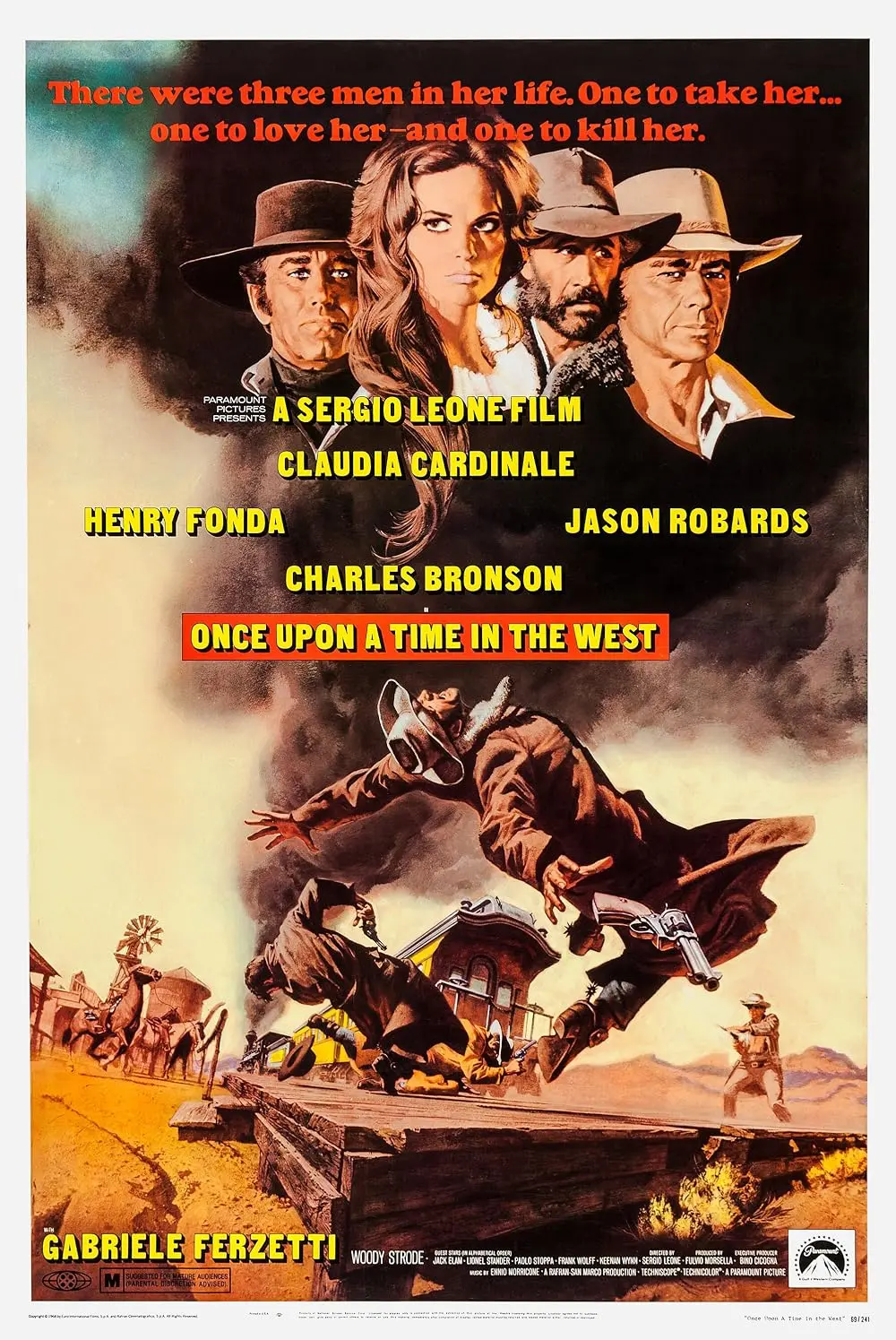
Leone cast Henry Fonda as the villain and opened with three men waiting at a railway halt for a quarter of an hour.
Runtime
165 minutes
Director
Sergio Leone
Budget
$5 million
Box office
$5.4 million worldwide
Cinematography
Tonino Delli Colli
The Railway Is The Plot
Underneath the revenge story is a property transaction. A dying railroad baron needs a specific parcel of land with water on it, a gunman clears the family off it, and a widow inherits the deeds. Everything else, the harmonica, the duster coats, the standoffs, is arranged around that. Leone slows the Western down to the point where waiting becomes the action: a windmill creaking, a fly in a gun barrel, water dripping onto a hat brim, all for fourteen minutes before the first line of dialogue. The masterstroke is casting. Henry Fonda had played decent Americans for thirty years, and Leone puts him in blue contact lenses and reveals him, in his first close up, shooting a child.
Watching Once Upon a Time in the West
Weight
/
Act
"People scare better when they're dying.
"Frank · Once Upon a Time in the West · 1968
Morricone wrote the score before the shoot and Leone played it on set through loudspeakers, staging the action to the music, which is why the film's rhythms feel operatic rather than dramatic.
Paramount cut roughly twenty minutes for the American release, including the reveal of the harmonica, and the film flopped there while running for years in Paris.
The story was outlined by Sergio Donati with Dario Argento and Bernardo Bertolucci, two young critics who filled it with quotations from the Westerns they loved, so almost every scene is a deliberate echo of Ford, Hawks or Zinnemann. The result is both the last serious classical Western and a commentary on the genre, and its influence on Tarantino, on Kill Bill and The Hateful Eight, is close to total.