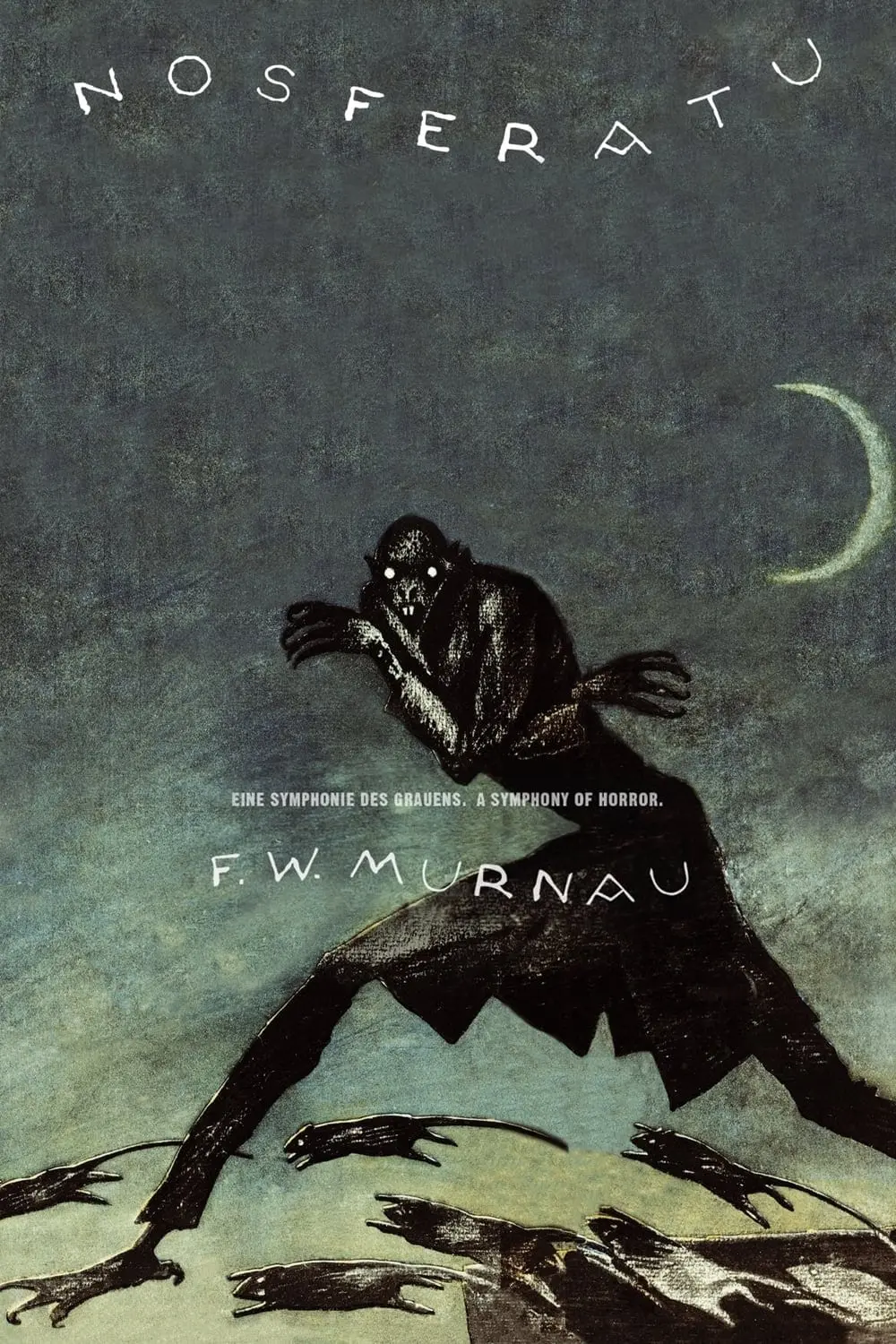
Nosferatu: The Film A Court Ordered Destroyed
Nosferatu (1922)
An unauthorised Dracula that lost in court, was sentenced to be burned, and outlived everyone involved.
Runtime
94 minutes
Director
F. W. Murnau
Country
Germany
Cinematography
Günther Krampf
Location As Infection
Murnau could not get the rights to Dracula, so he changed the names and made it anyway. Bram Stoker's widow sued, won, and a German court ordered every copy destroyed in 1925. The film survives because prints had already scattered across Europe and America, which is the first thing to know about it. The second is that Murnau took his camera outside. Where Caligari painted its shadows on flats, Nosferatu was shot in real Baltic towns, real Carpathian passes and real daylight, so the horror arrives in ordinary places. Orlok is not a seducer in evening dress. He is a rat faced carrier of plague, played by Max Schreck with long fingers and no charm at all, and the film treats him less as a monster than as an epidemic with a will.
Watching Nosferatu
Unease
/
Part
"Blood is life.
"The vampire book in Hutter's bedroom
Max Schreck's performance was so committed that a 2000 film, Shadow of the Vampire, built an entire fiction on the idea that he was the real thing.
Murnau shot the shadow climbing the staircase as a separate hand animated effect, which is why the silhouette moves with a will of its own.
The court ruling makes Nosferatu the most instructive survival story in film history: an ordered erasure that failed because copies were already in the world. Everything the vampire film became is visible here first, from the rat as omen to the sunrise as weapon, a rule Stoker never wrote and cinema has kept ever since. Werner Herzog remade it with Klaus Kinski in 1979 and Robert Eggers again in 2024, both of them treating the 1922 film as scripture rather than source.