Neurobots: The Living Robots With Nervous Systems
Research institution
Tufts University and the Wyss Institute at Harvard
Published
Advanced Science, 20 February 2026
Neurobot lifespan
approximately 10 days
Gene editing used
zero (nervous system is entirely self-assembled)
Predecessor organisms
xenobots (2020) and anthrobots (2022)
Movement patterns
spiral paths, complex direction changes, never identical
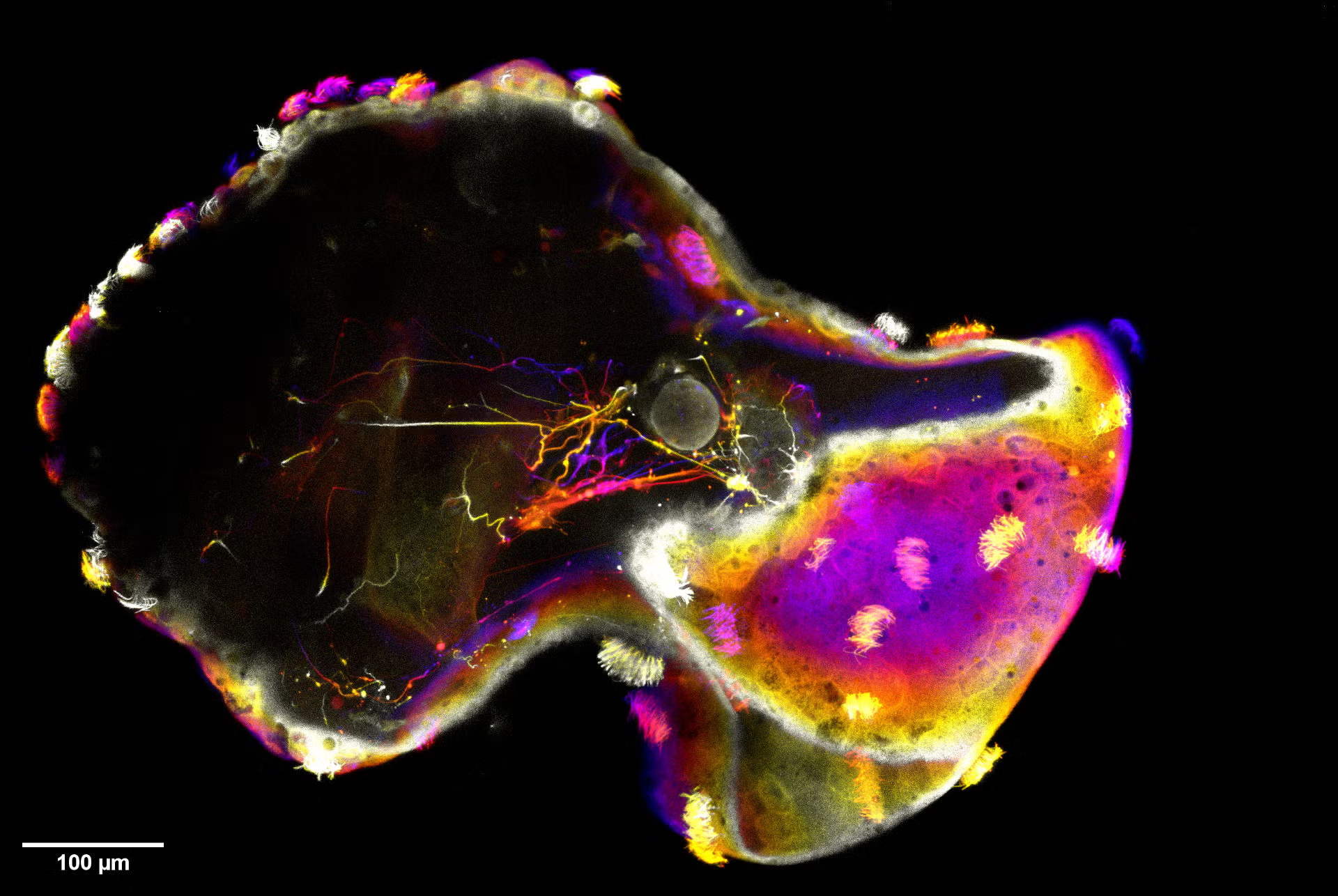
What neurobots ARE Neurobots are entirely biological. Built from frog embryonic skin cells and neuronal precursor cells, they are self-powered, self-assembled, and capable of moving through water on their own. They trace spiral paths and reverse direction in complex patterns that vary from specimen to specimen. The nervous system that drives this behaviour grew spontaneously: no genetic modification, no external wiring, no surgery.
What neurobots are NOT Neurobots are not the robots of science fiction. They are not mechanical, not electronic, not immortal, and not dangerous: they degrade within roughly ten days and cannot survive outside a controlled lab environment. They are also not yet made from human cells. They are proof that a nervous system can self-organise in a novel biological context that evolution never produced, which is the point of the whole experiment.
"Can a nervous system develop at all in a completely novel context that is not the product of millions of years of natural selection ... ? We now have a partial answer. It can. And it does things we did not predict.
"Michael Levin · Tufts University · February 2026
Three Doors That Neurobots Unlock
Medicine. A living organism that can grow its own sensory and motor circuits could one day navigate tissue, detect damage, and deliver a targeted drug without a GPS signal or a battery. Neurobots point toward biological machines that adapt to their environment the same way a body does. Neuroscience. Watching neurons wire themselves in an organism that has never existed before tells researchers things about how nervous systems self-organise that would be nearly impossible to learn from studying brains shaped by 500 million years of vertebrate evolution. It is a blank-slate nervous system in a controllable organism. Philosophy of mind. The neurobots display movement patterns that resemble exploration and avoidance behaviours. They have not been programmed to explore or avoid anything. At what point, the researchers ask, does complexity of behaviour become something that deserves a more careful word than "machine"?