MMX: Japan's Mission to Bring Home Phobos
The mission nobody knew they were waiting for
Phobos, the larger of Mars's two moons, orbits closer to its planet than any moon in the solar system: just 6,000 kilometres above the Martian surface. It is also one of the strangest objects in space. Nobody agrees what it is. Is Phobos a captured asteroid from the outer solar system, dragged in by Mars's gravity billions of years ago? Or is it debris left over from a giant collision, the same kind of impact that created our own Moon? The answer is locked inside its rock. Japan's Martian Moons eXploration spacecraft, known as MMX, is going to get that rock.
Launch window
Late 2026, Tanegashima
Destination
Phobos (Mars moon 1)
Mars arrival
Approx. late 2027
Time at Phobos
About 3 years in orbit
Sample target
At least 10 grams of Phobos soil
Earth return
Japanese fiscal year 2031
Mission lead
JAXA (Japan Aerospace Exploration Agency)
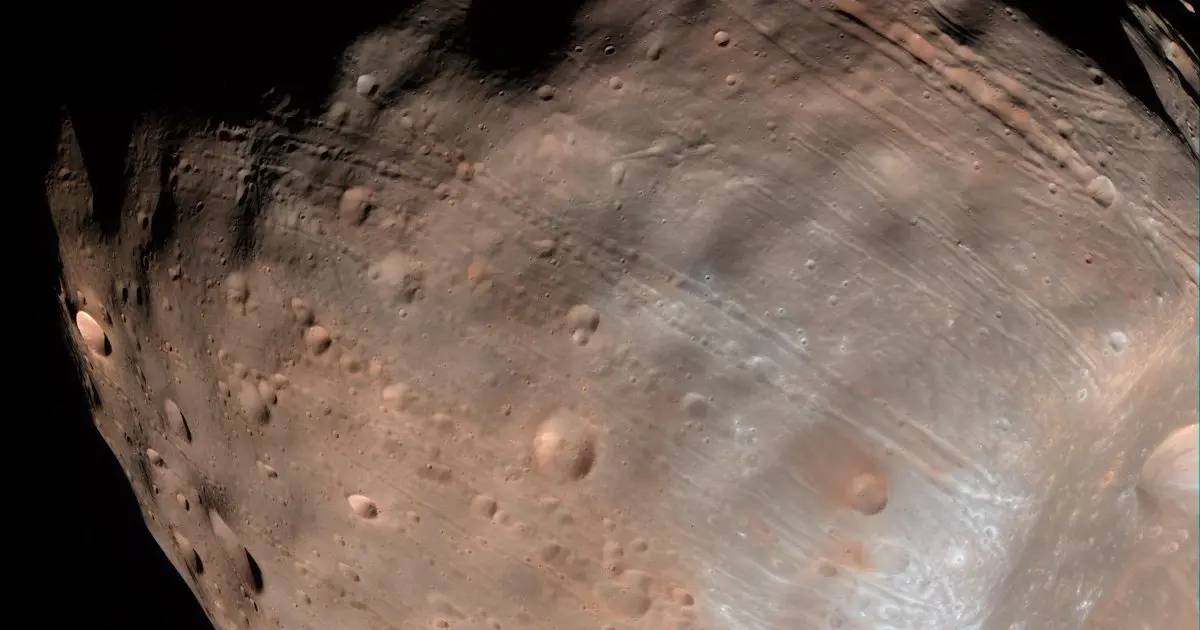
Phobos up close
Photographed by NASA's HiRISE camera, this enhanced-colour view shows the grooves that score Phobos's surface. MMX will land here, press a coring tool two centimetres into this rock, and take it home.
The IDEFIX rover is a joint creation of France's CNES and Germany's DLR. About the size of a shoebox, it will drive across Phobos in gravity 1,800 times weaker than Earth's. A single gentle push could send it drifting off the surface entirely.
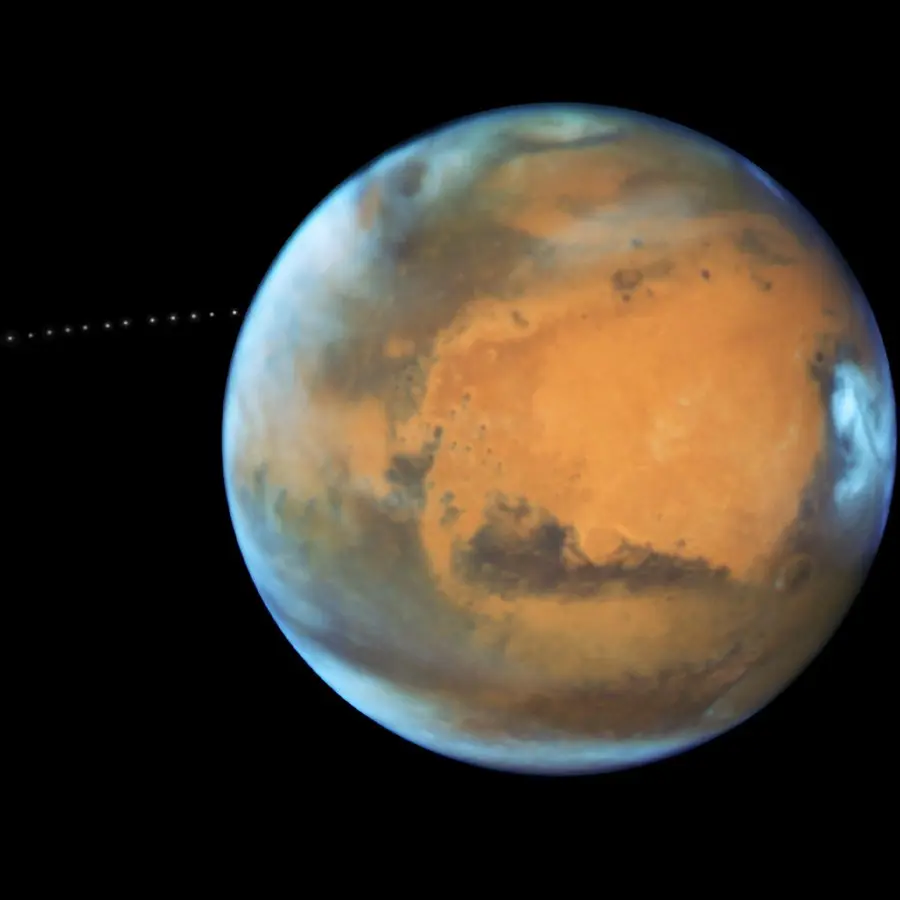
Mars and its wandering moon
This Hubble Space Telescope image shows Mars with Phobos visible as a dotted trail at left, its orbit so tight and fast that it completes three full loops around Mars every single Earth day.
Why Phobos matters to science
- Settle the captured asteroid vs giant impact debate once and for all
- Determine whether Mars ever had liquid water by reading the chemistry of Phobos material
- Understand the early solar system by dating pristine material from 4 billion years ago
- Test whether Phobos contains organic compounds from asteroid impacts
- Prove round-trip technology for future crewed Mars missions
"The Martian moons are a kind of cosmic archive. Whatever happened in the early solar system left its mark on Phobos. We are going to read that archive and bring it home.
"JAXA MMX mission overview
MMX carries NASA's MEGANE instrument, a neutron and gamma-ray spectrometer whose name means eyeglasses in Japanese. It will map the chemical composition of Phobos's surface from orbit before the spacecraft ever touches down.