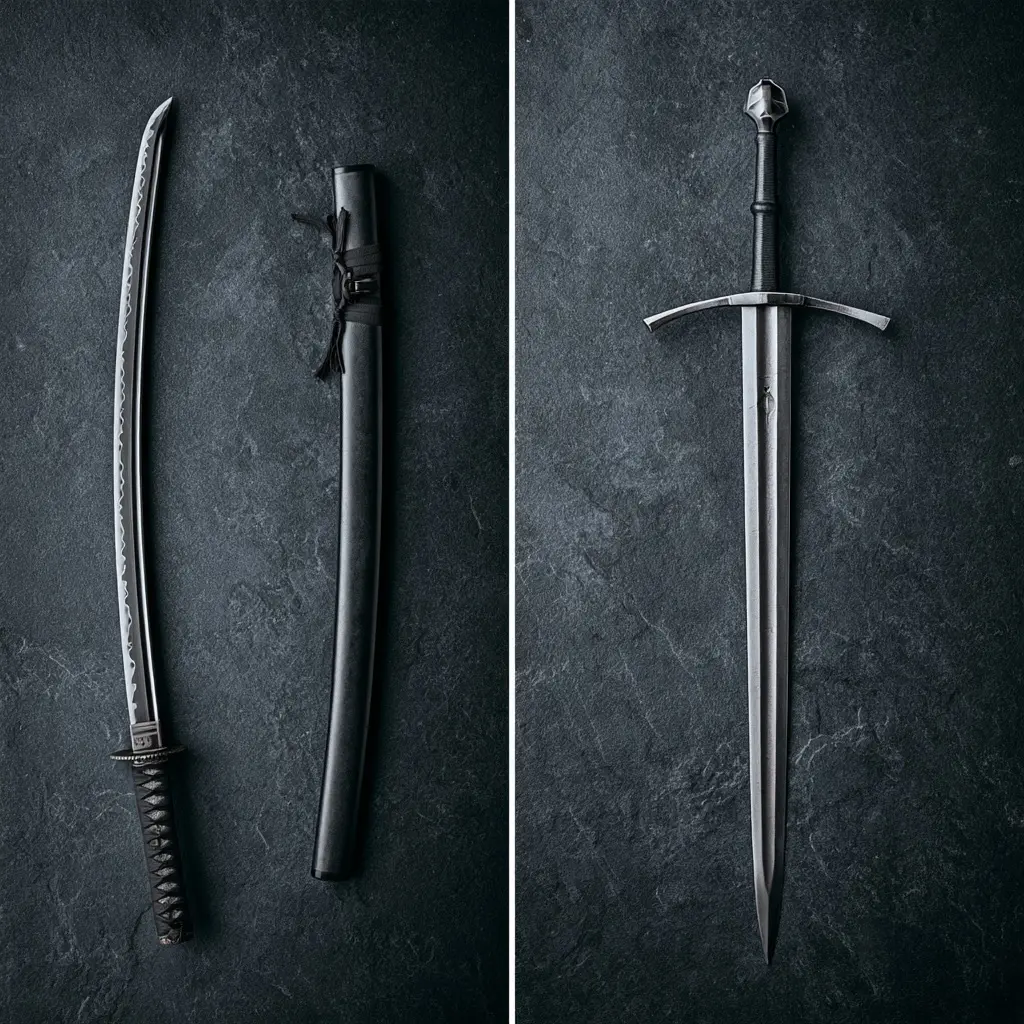
Katana vs Longsword: A Forging Comparison
Katana vs Longsword
Two swords, two continents, two answers to the same question of how to put an edge on a battlefield. One is a single edged curve of folded steel made to cut on the draw. The other is a straight double edged cross built to thrust, cut and half sword in armour. This is the comparison, side by side, with no winner declared.
Blade length
70 cm vs 90 cm
Typical weight
1.2 kg vs 1.4 kg
Edge
single curved vs double straight
Steel
folded tamahagane vs crucible bloom
The katana
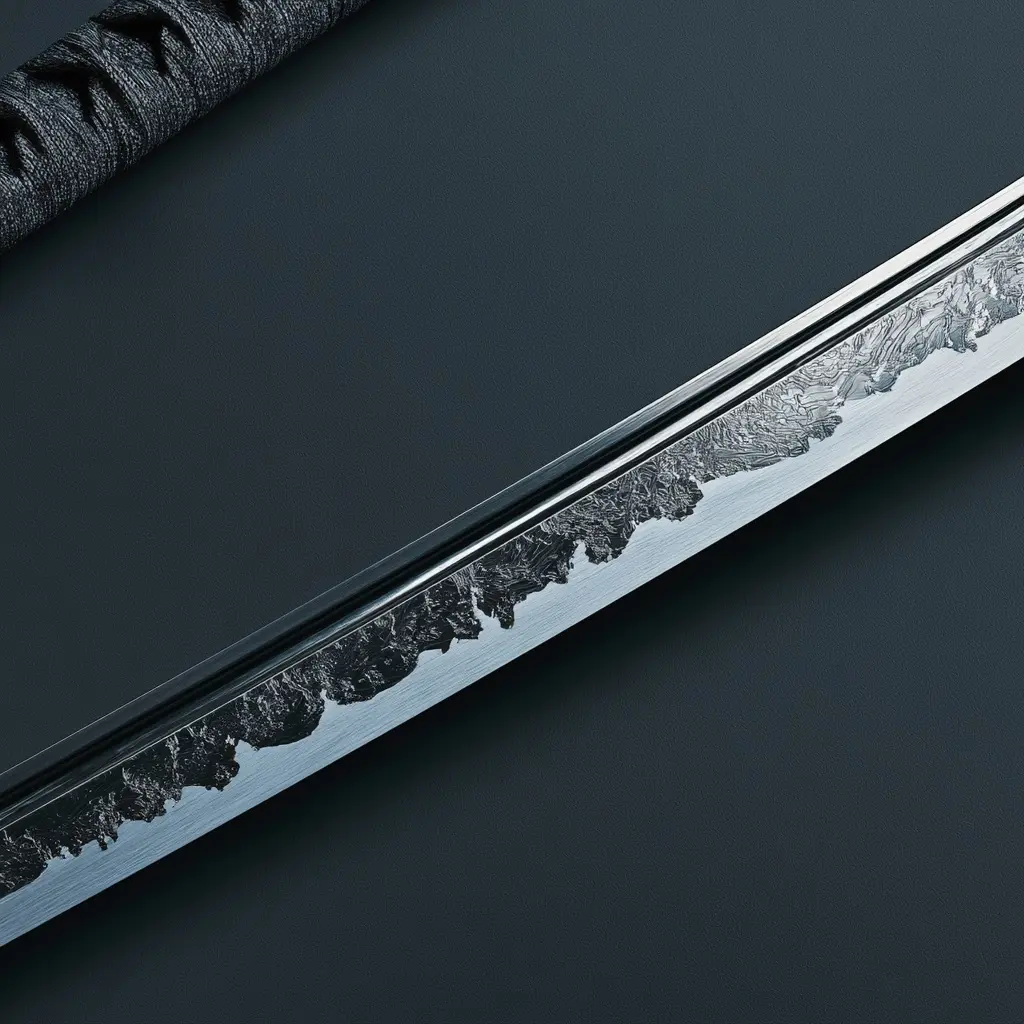
Forged from tamahagane smelted in a tatara furnace, folded to even the carbon, then clay tempered so the spine stays soft while the edge hardens into a visible hamon line.
The longsword
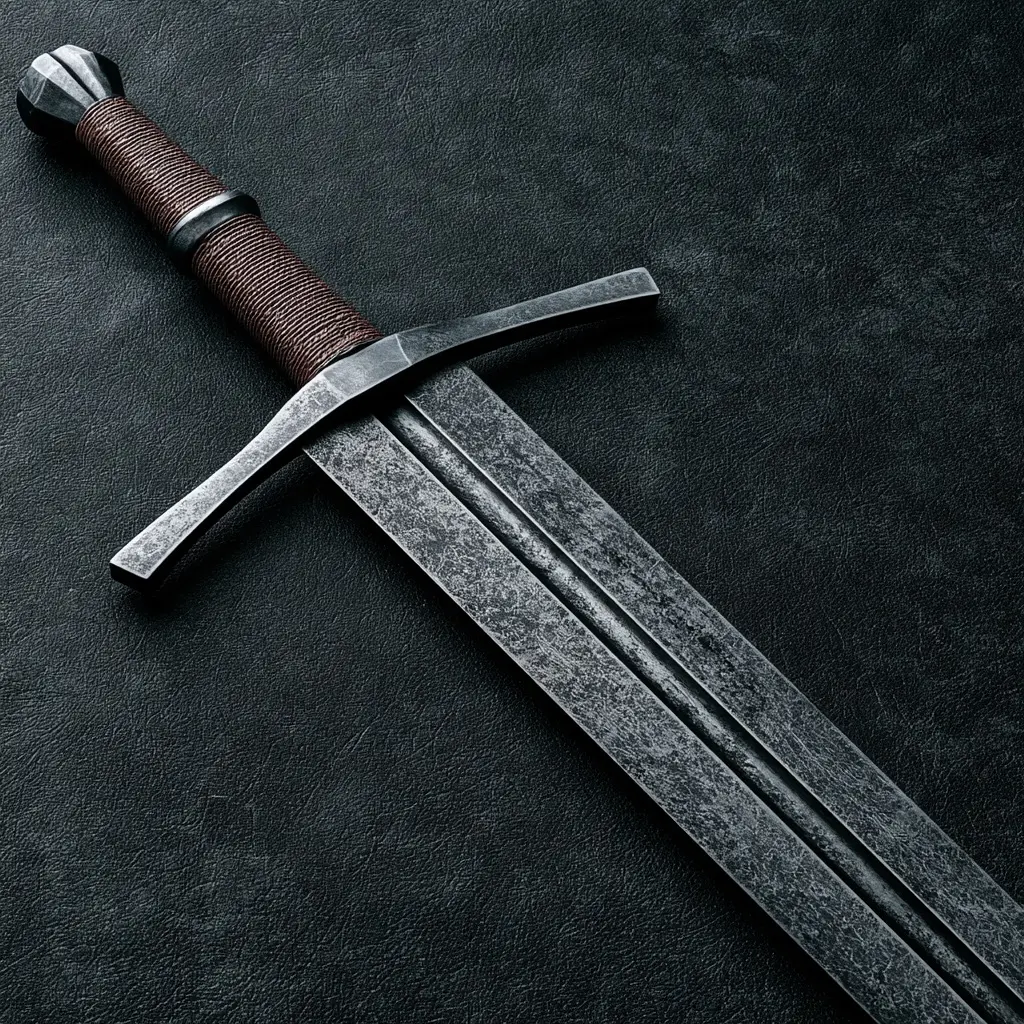
Forged from a single billet of crucible or bloomery steel, drawn out straight, then hardened and balanced around a wide central fuller that cuts weight without losing stiffness.
The katana wins the first cut. Its curve and single bevel slice cleanly on the draw, which is why so much of its art lives in the speed of the opening move.
The longsword wins the long fight. Two edges, a thrusting point and a cross guard let it grapple, half sword and punch through armour where a slice cannot.
A traditional katana takes roughly three weeks from raw iron sand to finished polish. The bar below is that span.