Kalshi's $22B Bet Just Hit a Wall
Kalshi Raised $22 Billion. Three Months Later, the Courts Said No Twice.
In May 2026, prediction market platform Kalshi closed a $1 billion funding round led by Coatue Management, with Sequoia Capital, Andreessen Horowitz, Morgan Stanley, and ARK Invest all participating. The implied valuation was $22 billion, up from $2 billion eleven months earlier. That is an 11x increase in under a year, built on one central claim: that Kalshi's sports contracts are federally regulated financial derivatives, not gambling, and that federal law therefore blocks every state that tries to treat them otherwise. On September 26, 2026, the 6th U.S. Circuit Court of Appeals disagreed. Unanimously. It was the second such loss in six weeks, following a similar ruling from the 9th Circuit in August. Between those two decisions, the legal foundation of Kalshi's valuation is now in open dispute across the federal court system.
Kalshi valuation June 2025
$2 billion
Kalshi valuation May 2026
$22 billion (11x in 11 months)
Reported next funding target
$40 billion
Monthly trading volume Dec 2024
$226 million
Monthly trading volume June 2026
$29.2 billion (129x in 18 months)
Active traders 2025 start
240,000
Active traders mid-2026
1.2 million
Total 2026 trades to date
$179.4 billion ($128.3B sports)
How Kalshi Actually Works
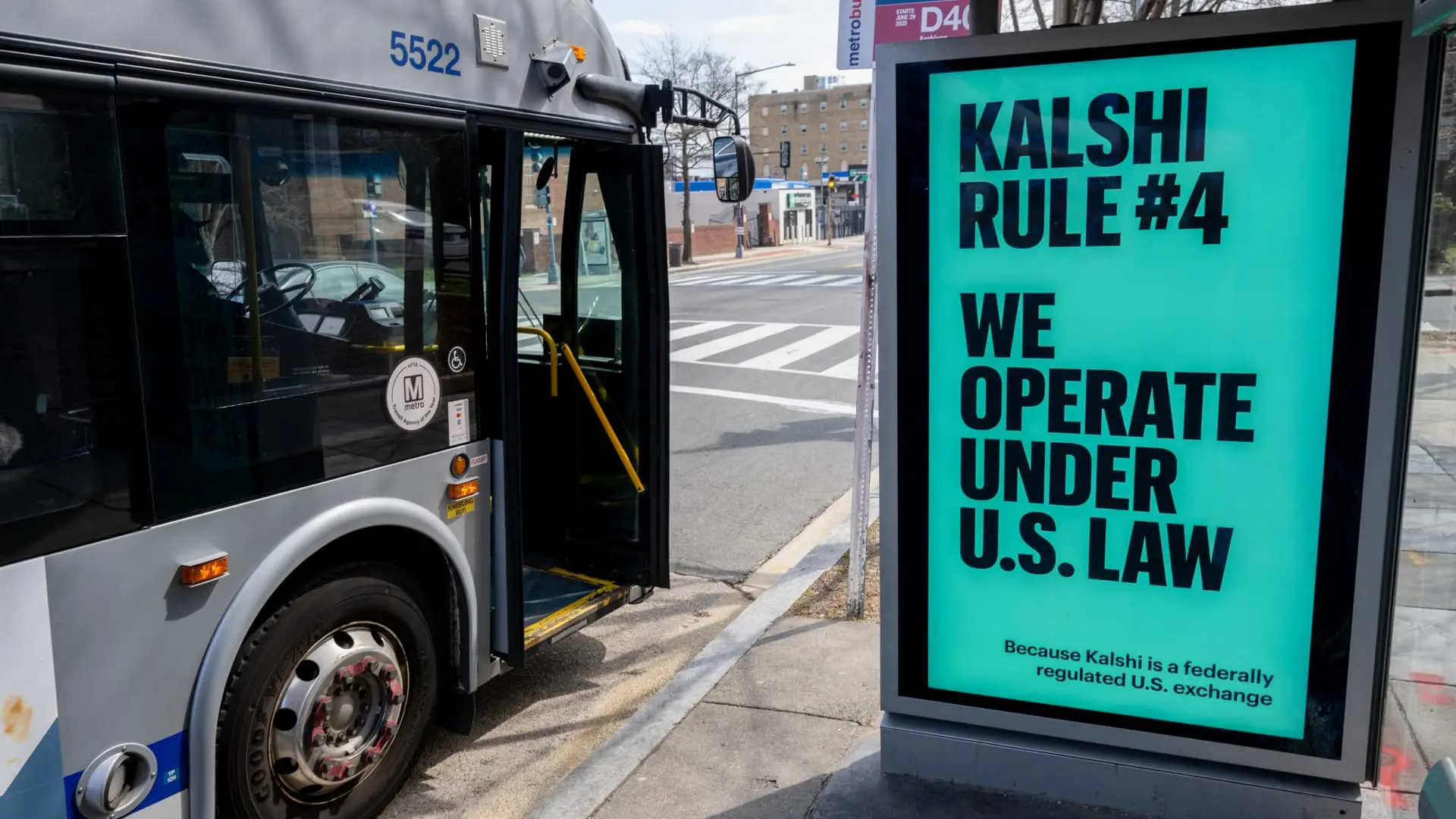
Kalshi is a CFTC-regulated exchange where users trade binary contracts on event outcomes: a team win, an election result, a central bank decision. Each contract pays $1 if the event happens and $0 if it does not. A market price of $0.62 implies a 62% probability. Kalshi's legal argument is that these are "swaps," a type of financial derivative that Dodd-Frank placed under the CFTC's exclusive jurisdiction. If they are swaps, the CFTC owns the regulation and no state can apply its gambling laws to the platform. The CFTC itself backed this view, filing an amicus brief in the 6th Circuit asserting its authority. The problem two appeals courts have now found: sports contracts do not serve the risk-management purpose that defines a swap. A soccer corner-kick contract hedges nothing. In the plain reading of both rulings, it is a bet, and betting is what state gambling laws exist to regulate.
Three Circuits, Three Different Answers
The split is now three-way, and only the Supreme Court can resolve it cleanly. The 3rd Circuit sided with Kalshi 2-1: federal commodities law overrides state gambling statutes. New Jersey cannot regulate Kalshi's sports contracts. The 9th Circuit disagreed: sports contracts are sports betting, and state law applies. Nevada can regulate them. The 6th Circuit agreed with the 9th, unanimously. Judge Julia Smith Gibbons wrote that Kalshi "has not shown that its sports-event contracts satisfy the statutory definition of a swap so as to fall within the scope of the CFTC's exclusive jurisdiction." Even if they were swaps, she added, the Commodity Exchange Act does not preempt state gambling laws. Twenty states now have active litigation over the question. In July, 44 states signed a letter to the CFTC arguing the agency lacks authority to regulate sports-related event contracts at all. The 3rd Circuit case has already been petitioned to the Supreme Court by the losing states.
"The ruling shows exactly why a state-by-state patchwork doesn't work. Courts can't agree on the basics. Markets can't operate when the rules change at every state line, which is why Congress created a single federal regulator with nationwide rules.
"Dani Lever · Kalshi spokesperson · September 26 2026
Trump Supports Kalshi. The Courts Do Not.
President Trump has backed prediction markets publicly, and the CFTC under his administration filed briefs defending its own exclusive jurisdiction. The White House and the regulator are aligned with Kalshi's position. The courts are not. The 9th and 6th Circuit decisions are now binding in their jurisdictions regardless of administration preference. CEO Tarek Mansour told RotoWire after the 9th Circuit ruling: "It added more legal uncertainty than there was before. It's hard to argue with that." Kalshi can still operate nationally. The rulings constrain specific states, not the CFTC license itself. But the $40 billion valuation target assumes legal clarity in all 50 states. What exists instead is a live circuit split, at least 18 months from resolution, and 20 states actively litigating. The gap between the business Kalshi built and the legal environment it needs is the story the courts are now writing.
What the $22 Billion Already Priced In
The valuation was built on real growth: $260 million in fee revenue in 2025, up from $24 million in 2024. Monthly trading volume grew 129x in 18 months. The World Cup alone brought 3 million new users and $1.2 billion on a single event. PitchBook set a base-case enterprise value of $30.4 billion through 2030. The FT reported Kalshi was exploring a round targeting $40 billion, implying $2 billion in annualised revenue at a 20x multiple. Those numbers assume legal clarity in all 50 states. What exists instead is legal certainty in some states and a live circuit split in the rest. Mansour's line: consumer demand "isn't going anywhere," incumbents always litigate before they adapt, federal regulation will eventually prevail. He may be right on all three and still spend 18 months in a state-by-state patchwork while the courts catch up.