Indonesia Burns One Third of Earth's Wildfire CO2
19.7 Million Tonnes in One Week. The Season Has Barely Started.
From September 1 to 7, fires burning across Borneo and Sumatra released 19.7 million metric tonnes of CO2, more than a third of all wildfire emissions on Earth, according to the EU's Copernicus Fire Emissions Watch. Indonesia briefly became the planet's largest national source of wildfire carbon, overtaking Russia at an intensity 273 percent above the country's seasonal average and more than ten times Russia's per square kilometre. That week was not even the worst. In the same seven days in 2015, Indonesia released 21.7 million tonnes. The gap is narrowing.
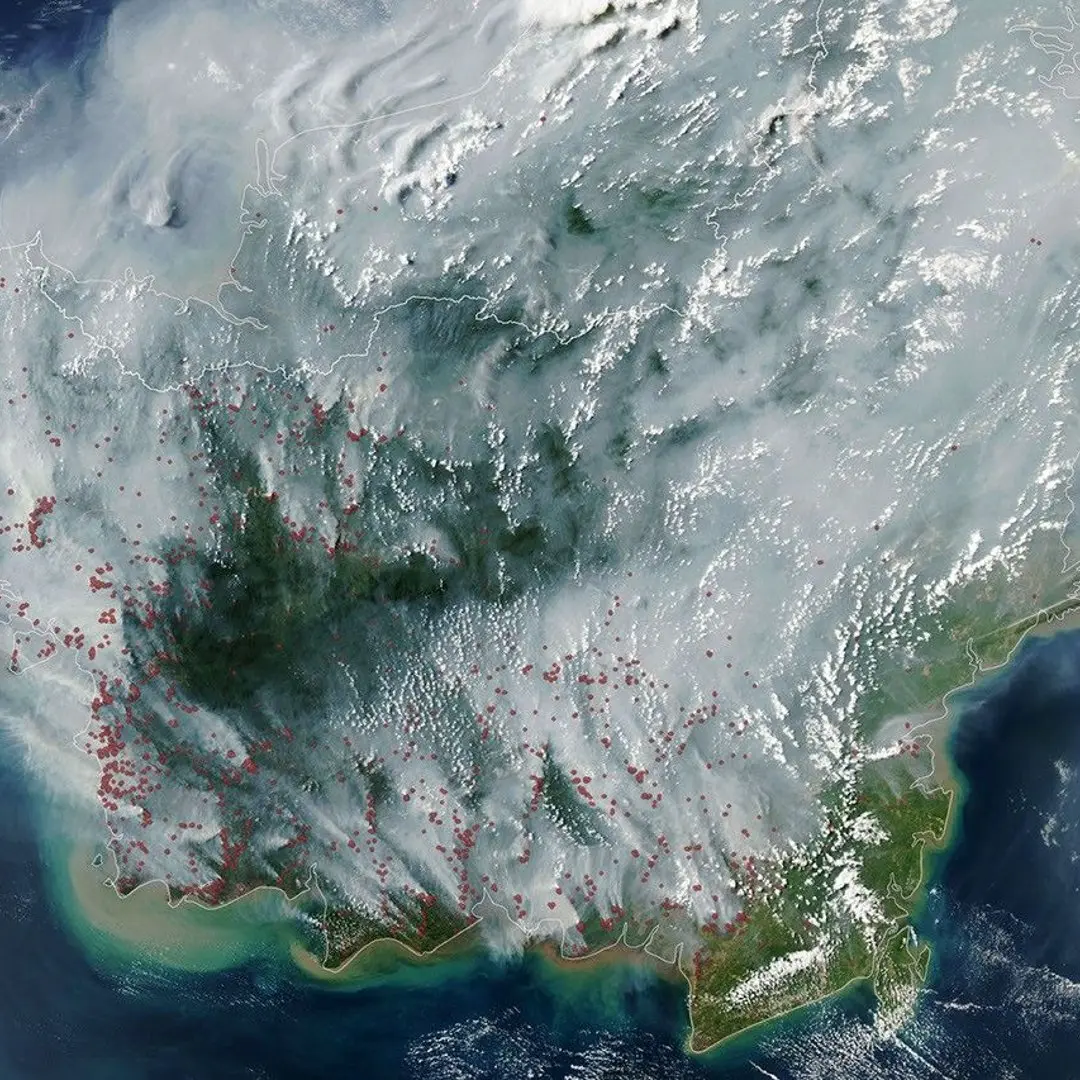
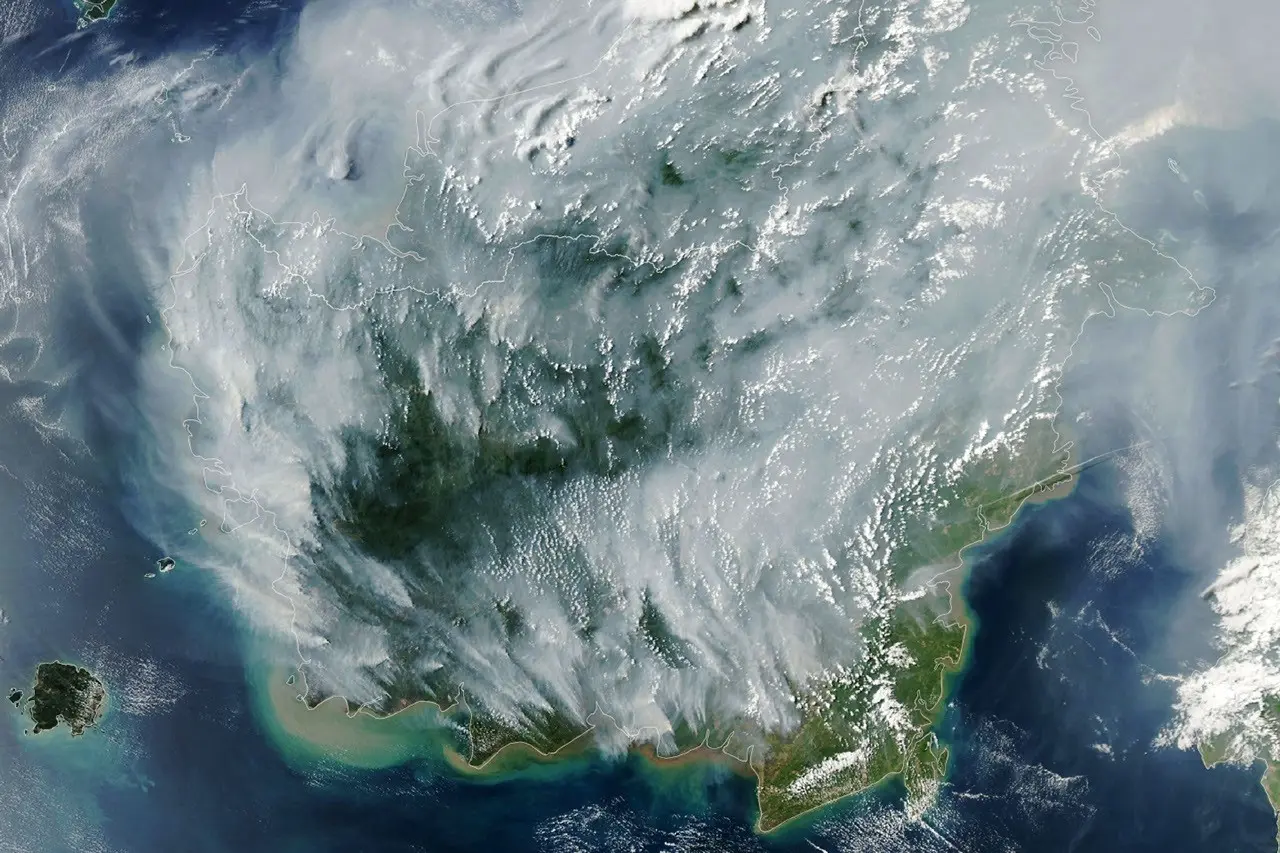
Credit: NASA Earth Observatory. MODIS instrument, Aqua satellite, September 1 \
2026. Red markers show active fire detections across Kalimantan, the Indonesian portion of Borneo. Smoke covers the island and drifts northwest toward Malaysia and Singapore.
On Track to Match the Worst Fire Year This Century.
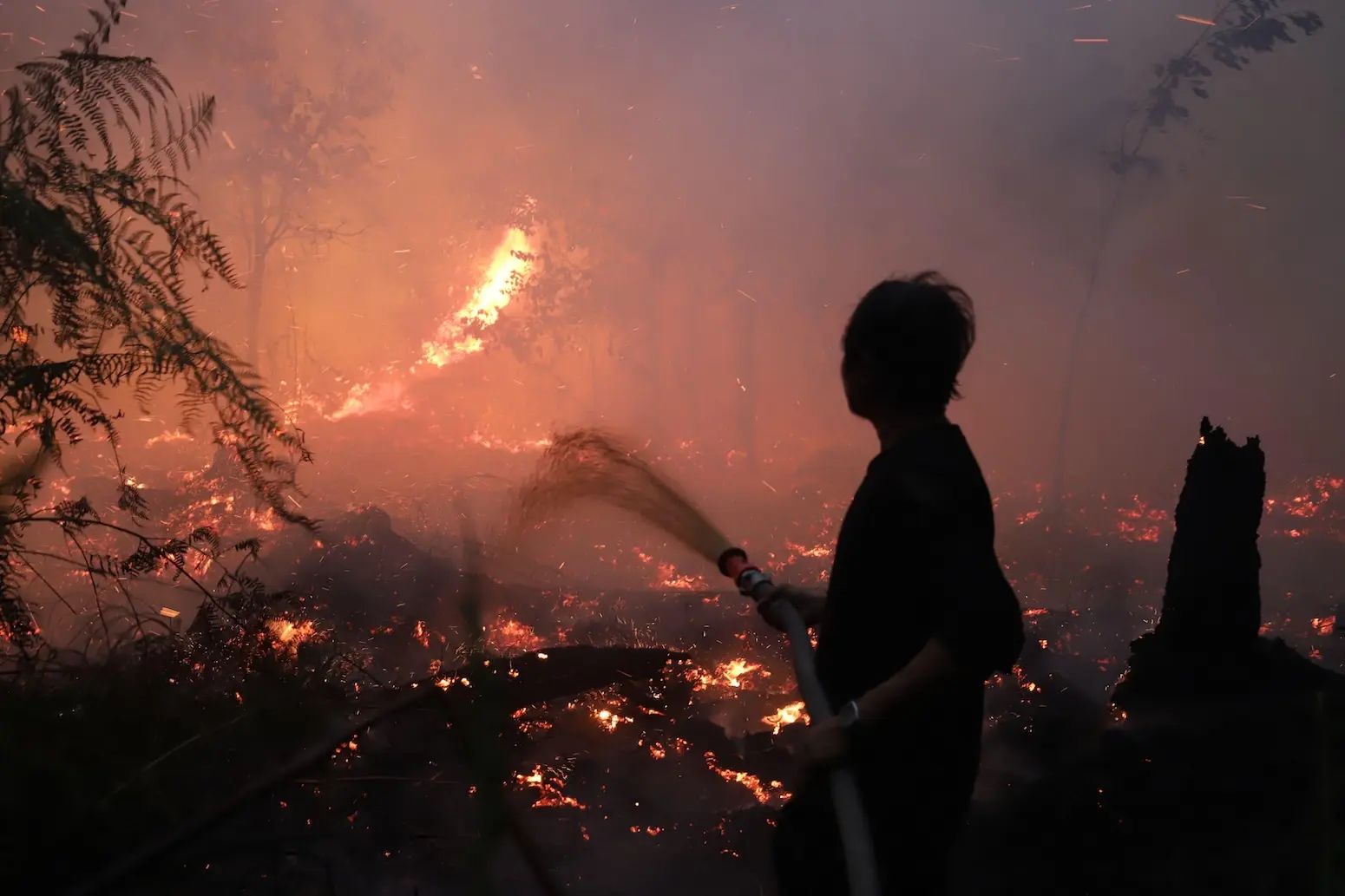
As of September 7, Indonesia had produced 76 million tonnes of carbon from fires in 2026. The Global Fire Emissions Database shows that in 2015, the worst year this century, fires burned 2.6 million hectares and generated 333 million tonnes of carbon. Guido van der Werf, a fire researcher at Wageningen University, says 2026 is "more or less on track" to reach those levels. 2015 was the year Indonesia's fires produced more CO2 than all of Europe's fossil-fuel emissions combined. An estimated 100000 people across the region died early from smoke-related illness. The peatland restoration agency Jakarta created in the aftermath of that disaster was dissolved in 2025.
The 2026 number is also probably an undercount. The Copernicus figures come \
from satellite fire radiative power readings, which cannot easily see through thick smoke and do not fully capture the slow smouldering combustion of peat burning metres underground.
"We have to remember that this is still the beginning of the season, and we expect the fires to continue and the emissions to keep increasing, potentially through to the end of October.
"Mark Parrington · Senior Scientist · Copernicus Atmosphere Monitoring Service · September 2026
What Is Actually Burning, and Why It Matters.
The most dangerous fires in Indonesia are not the visible walls of flame. They are underground. Indonesia holds the world's largest tropical peatlands: ancient deposits of partly decomposed vegetation, sometimes ten metres deep, drained for agriculture, palm oil and logging roads. When drained peat dries out, it ignites. Unlike surface fires, peat fires smoulder for weeks or months, releasing fine particles, carbon monoxide and gases that water cannot extinguish. The epicentre is Kalimantan and eastern Sumatra. A new frontier: Papua province, which van der Werf says is now "burning more than they've ever burned." El Nino began in June and is expected to intensify into 2027.
CO2 from Indonesia fires, September 1 to 7
19.7 million tonnes
Share of global wildfire emissions in that week
over one third
Emissions vs seasonal average
273% above normal
People exposed to haze across seven provinces
12.5 million
Respiratory infections as of September 9
113,336 (up from 50,891)
Year-to-date fire carbon (as of Sept 7)
76 million tonnes
2015 full-year total, the record this century
333 million tonnes
113000 Respiratory Cases. Volunteers Distributing Oxygen Cylinders.
In Pontianak, capital of West Kalimantan, the air quality index reached 394 on September 10, well above the 300 hazardous threshold (IQAir). Over the weekend it exceeded 1,100, forcing the international airport to temporarily close. Respiratory infections across seven provinces doubled in just over a week: from 50,891 cases on September 1 to 113,336 on September 9, per the health ministry spokesperson Widyawati. In the first 11 days of September, a single Pontianak clinic treated 187 breathing-difficulty cases, against 422 for all of August. Volunteers are distributing oxygen cylinders to residents who cannot breathe. The haze has spread to Malaysia, Singapore and Brunei.
The Peatland Agency Dissolved the Year Before It Was Needed.
Indonesia's response to 2015 was to create a Peatland Restoration Agency, tasked with rewetting the drained swamps that serve as fuel. President Prabowo Subianto's government dissolved it in early 2025, merging its functions into a larger ministry with a reduced budget and no dedicated mandate. The fires burning now are the fires that agency existed to prevent. Whether 2026 reaches 2015's scale depends on when the rains arrive. The monsoon typically breaks the season in October or November. Parrington's warning stands: conditions have not peaked.