Hair Grows by Being Pulled, Not Pushed
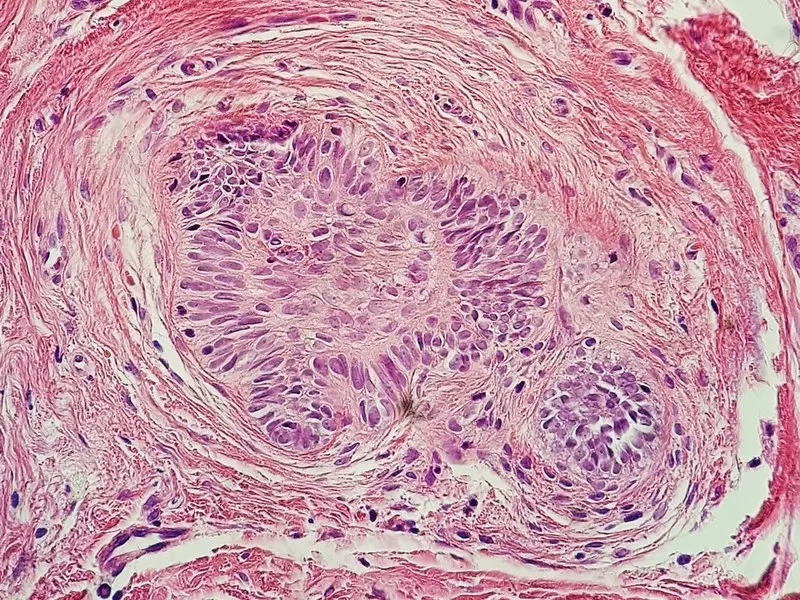
Pulled, Not Pushed
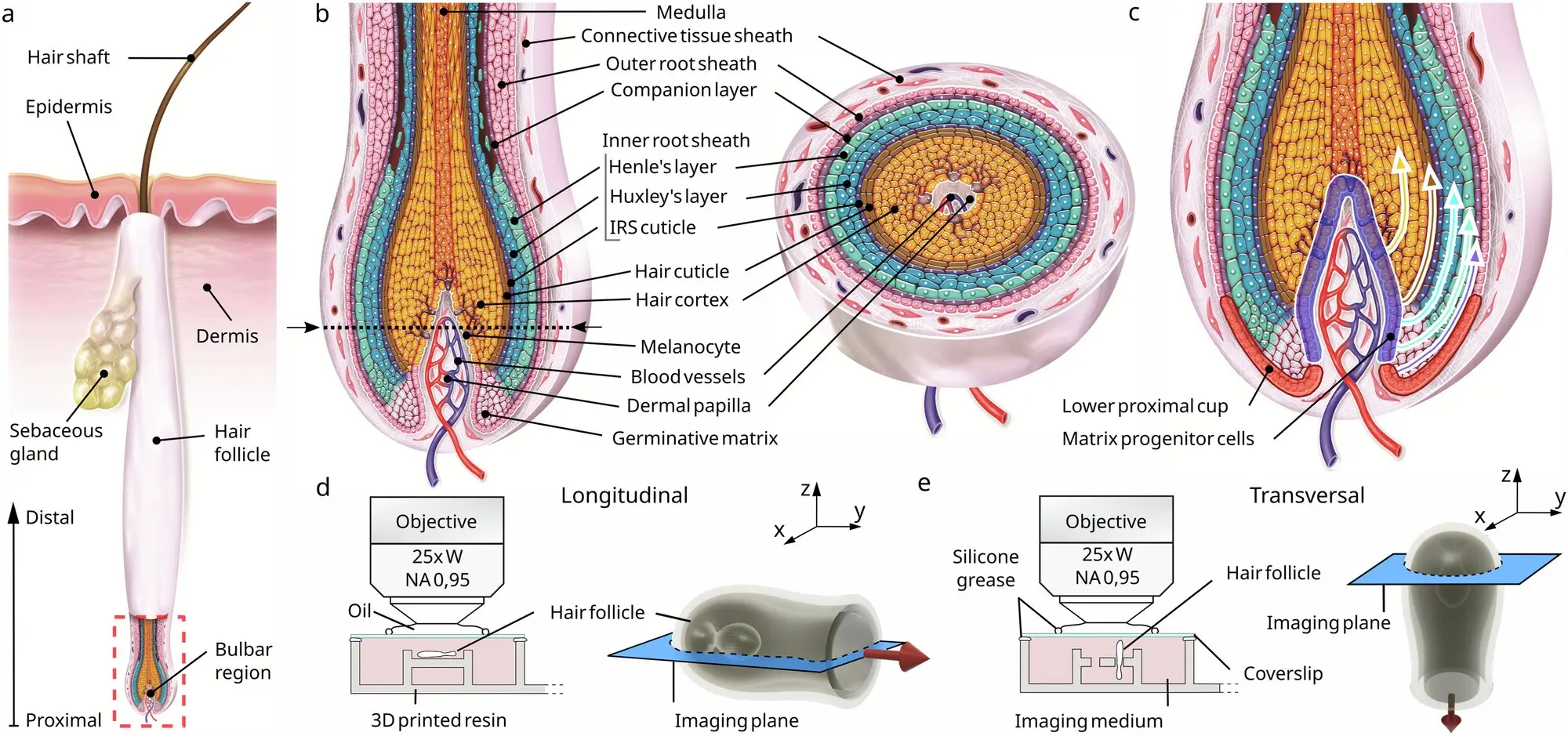
For decades, every biology textbook explained hair growth the same way: cells at the base of the follicle divide, stack up, and push the hair shaft outward like a slow conveyor belt. It was neat, logical, and almost certainly wrong. Researchers from L'Oreal Research and Innovation and Queen Mary University of London used high-resolution 3D time-lapse microscopy to watch living human hair follicles in real time, tracking individual cells as they moved. What they saw did not match the textbook at all. The hair was not being pushed. It was being pulled upward by a ring of cells in the outer root sheath, a previously overlooked layer that surrounds the hair shaft. Those cells spiral downward while generating an upward mechanical force, acting less like a conveyor belt and more like a tiny engine. The findings were published in Nature Communications.
Growth mechanism (old model)
cells divide at base and push hair upward
Growth mechanism (new finding)
outer root sheath pulls hair upward
Drop in growth when actin is blocked
more than 80 percent slower
Drop in growth when cell division is blocked
nearly unchanged
Technique used
3D live time-lapse microscopy on ex vivo follicles
Research partnership
L'Oreal Research and Innovation + Queen Mary University of London
The experiment that overturned the textbook. The team ran two separate tests. First they blocked cell division inside the follicle, which was supposed to be the engine of growth. Hair kept growing at almost the same rate. Then they disrupted actin, the protein that lets cells physically contract and move. Growth collapsed by more than 80 percent. The conclusion was unavoidable: mechanical force, not cell division, is the primary driver. Computer simulations confirmed that only the pulling model
What is the outer root sheath and why did we miss it. The outer root sheath is the layer of cells that wraps around the outside of the hair shaft inside the follicle. It had been studied before, but always in static images, essentially snapshots that could not show motion. Live 3D imaging revealed that its cells move in a coordinated downward spiral, and as they do, they exert an upward pull on the hair above. Lead author Dr. Thomas Bornschloegl described it as the follicle acting "almost like a
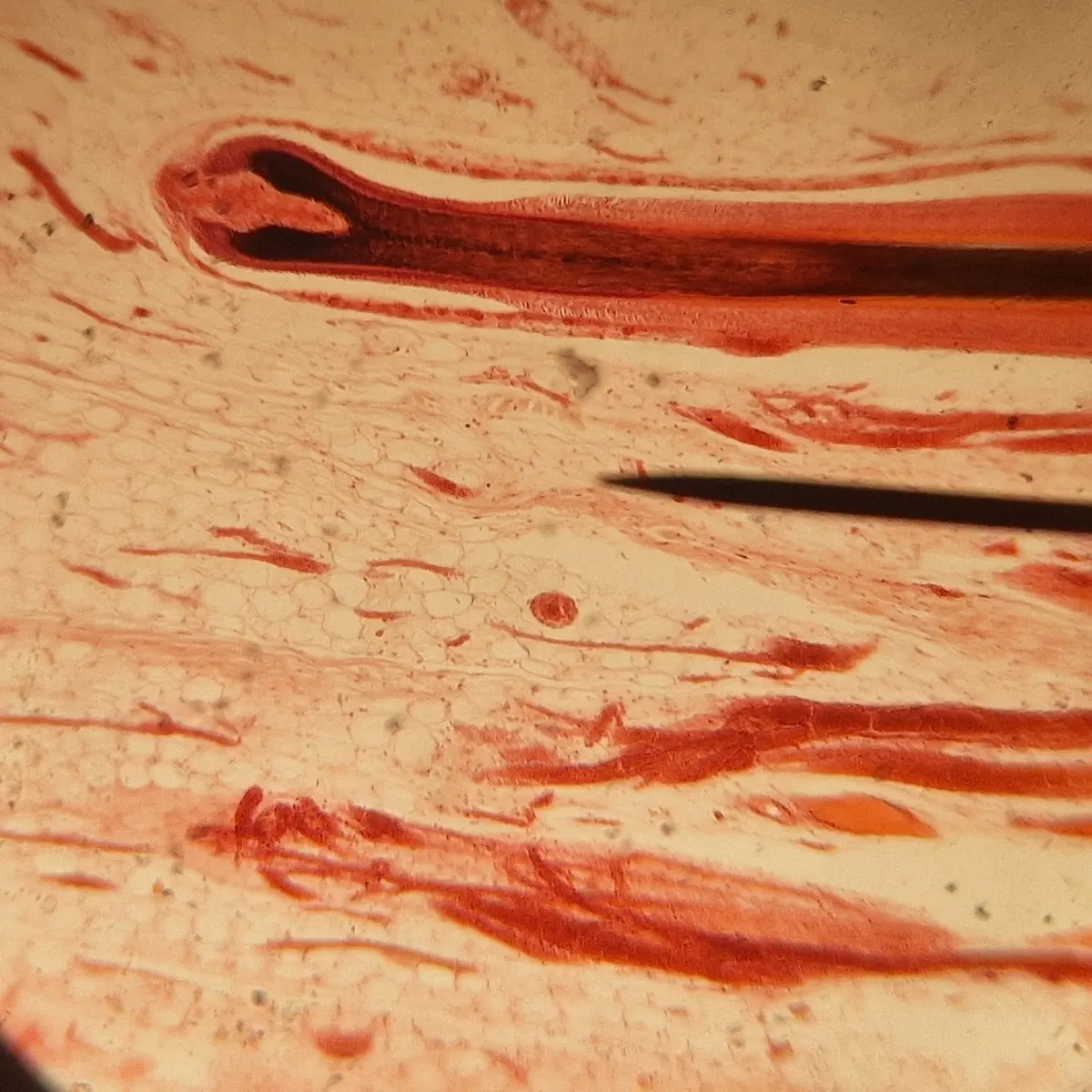
subtitle:hair follicles on the average human scalp
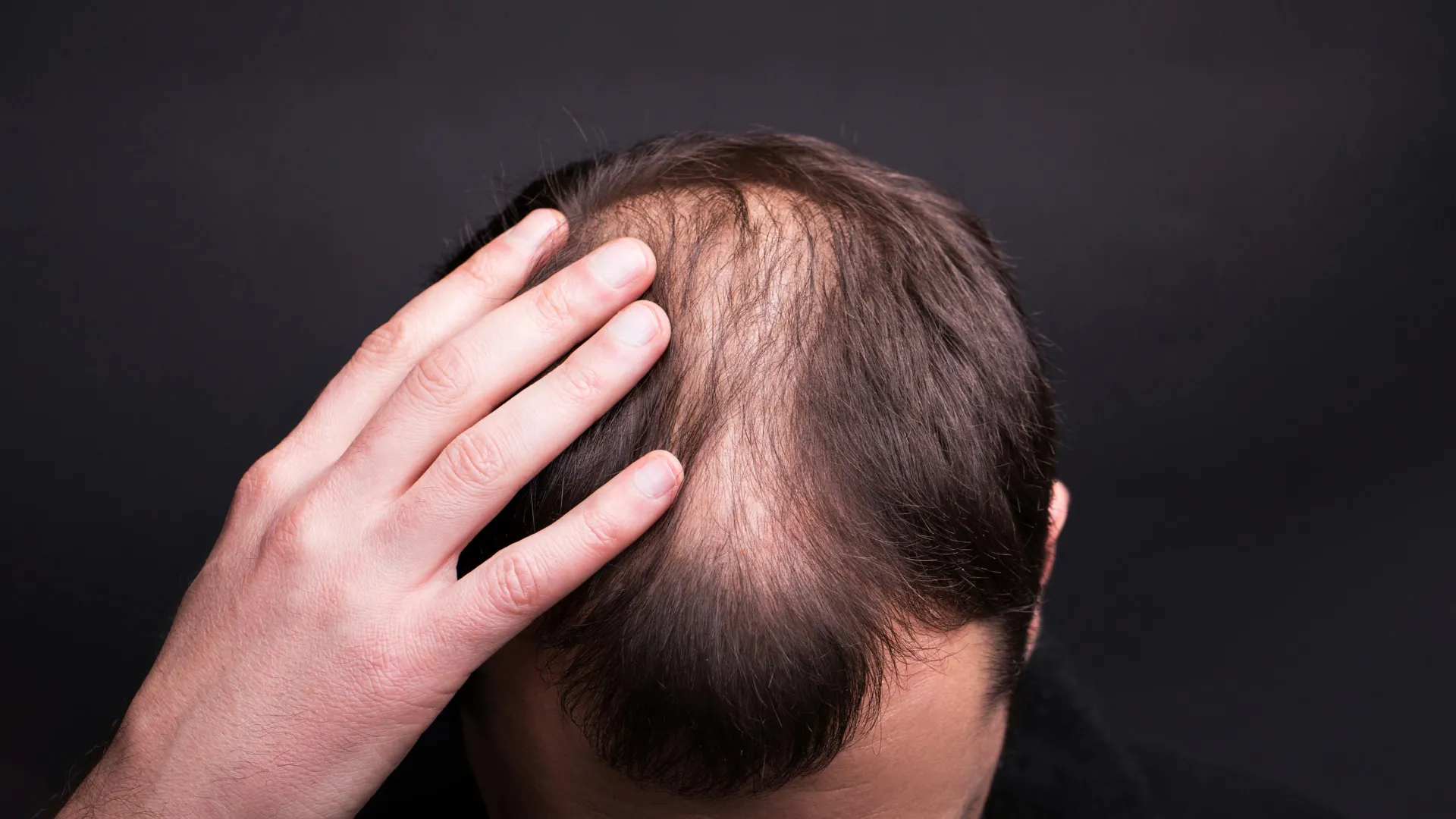
Why this matters for hair loss treatment. Current treatments for androgenetic alopecia (pattern hair loss) target hormones and blood supply. The new findings suggest a third target: the mechanical environment of the follicle itself. If the outer root sheath loses coordination or its cells stop contracting properly, the pull weakens and hair growth slows. Researchers believe this opens a new class of drug targets, ones that affect the physical rather than the biochemical behaviour of the follicle
"This reveals that hair growth is not driven only by cell division. Instead, the outer root sheath actively pulls the hair upwards.
"Dr. Thomas Bornschloegl · L'Oreal Research and Innovation
The research team and what comes next. The paper, titled "Mapping cell dynamics in human ex vivo hair follicles suggests pulling mechanism of hair growth," was co-authored by Nicolas Tissot and colleagues at L'Oreal and Queen Mary. Dr. Ines Sequeira, Reader in Oral and Skin Biology at Queen Mary, noted that the imaging method developed during the study will allow researchers to test new compounds on living follicles in a way that was never possible before. Both institutions have signalled furthe