Garmin vs Apple Watch for Runners: 2026 verdict
The question every runner Googles eventually
Every existing comparison pits flagship against flagship: a $600 Garmin Forerunner 965 against an $800 Apple Watch Ultra. That tells you almost nothing if you run 20 miles a week and want a watch that works, not a debate between enthusiasts. This comparison covers the full 2026 lineups for both brands, from the $250 entry point up to $800, and maps each watch to the type of runner who will actually get value from it. There are four scenarios. Each has a clear answer. As of October 2026.
Garmin Forerunner 70
$249.99 (entry, AMOLED, 13-day battery)
Garmin Forerunner 170
$299.99 (replaces FR165, adds NFC payments)
Garmin Forerunner 265
$449.99 (multi-band GPS, 13-day battery)
Garmin Forerunner 965
$599.99 (maps, 31-hr GPS, 23-day battery)
Apple Watch Series 12
$399 (42mm GPS, 10-hr workout battery)
Apple Watch Ultra 4
$799 (dual-frequency GPS, 50-hr battery)
GPS accuracy, single-band (FR70, FR170, Series 12)
under 1% error on open roads
GPS accuracy, multi-band (FR265, FR965, Ultra 4)
under 1% in cities and forests
Workout battery comparison
Garmin FR70: 19 hrs. Series 12: 10 hrs. Ultra 4: 45 hrs.
Scenario 1. The casual runner (under 25 miles a week, no races planned)
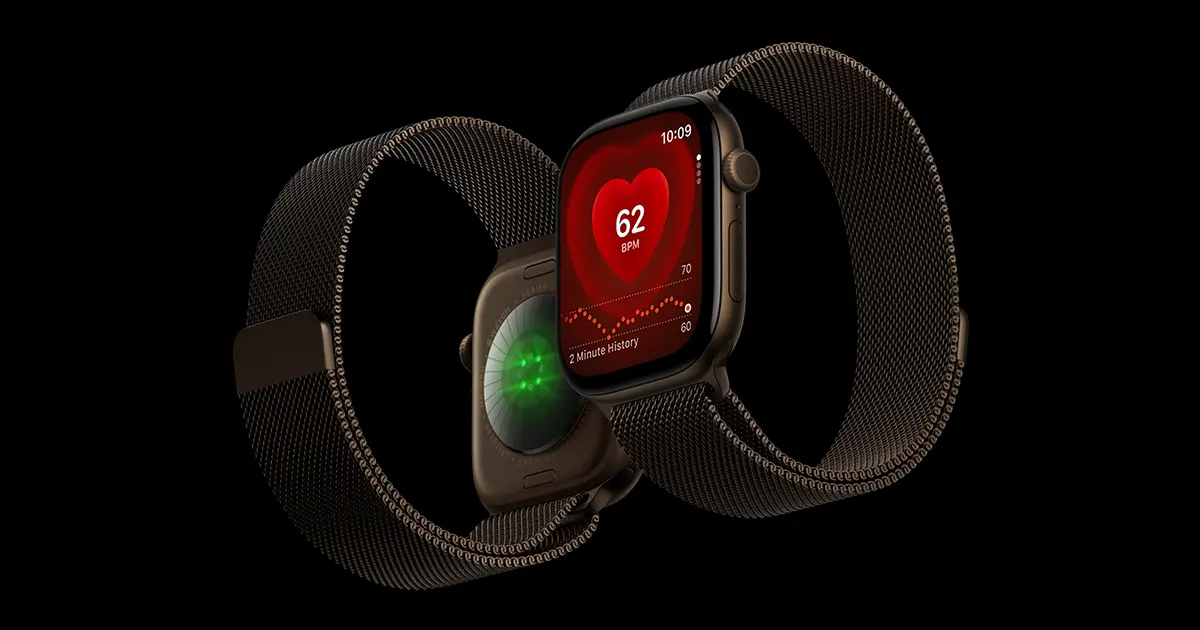
You run three or four times a week, mostly for fitness, and a 5K is about as far as it gets. What you want is automatic tracking, heart rate, and something comfortable enough to wear all day without thinking about charging. Apple Watch Series 12 ($399) is the right answer here. It records VO2 max, training load, cadence, stride length, and vertical oscillation. It handles calls, messages, Apple Pay and health alerts (ECG, fall detection, sleep apnea) without a second device. The 10-hour workout battery is more than enough for any session this runner will do. Charging overnight keeps it full every morning. The Garmin Forerunner 70 ($249.99) is cheaper and has more running-specific metrics, but it is a single-purpose device. If your life is in the Apple ecosystem and you want one thing on your wrist, the extra $150 for the Series 12 is money well spent. Verdict: Apple Watch Series 12.
Scenario 2. The structured trainer (30 to 50 miles a week, race goal)
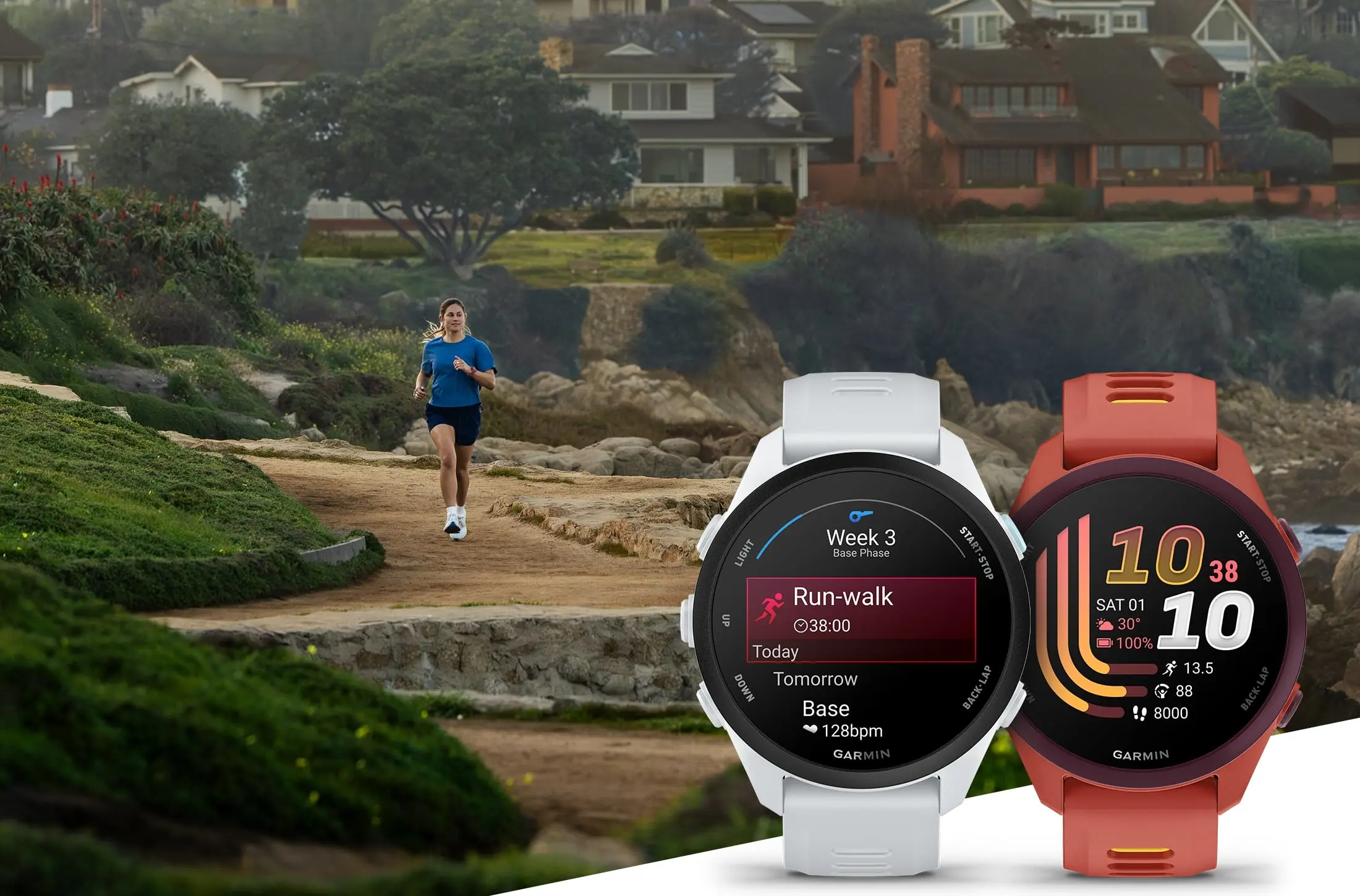
You follow a training plan. You care whether today's run was aerobic base or threshold. You want to know if you are recovering or digging a deeper hole. This is where Garmin's Firstbeat Analytics platform earns its price. The Forerunner 265 ($449.99) gives you Training Status (productive, peaking, overreaching), Training Readiness (a 0 to 100 score for whether to push or rest), Recovery Time (hours until your next hard effort), and race time predictions for 5K through marathon. These are not cosmetic features. The Apple Watch Series 12 has Training Load and heart rate zones, but it does not have Training Status, Recovery Time, or race time predictions. You can supplement with Strava Premium, but the integrated coaching layer is absent.
Why multi-band GPS matters for the marathon trainer
When you run in urban canyons or under tree cover, single-band watches can misread pace by 5 to 15 seconds per mile. The FR265 uses SatIQ to switch to multi-band automatically when signal is ambiguous, keeping pace data clean. Battery life of 13 days in smartwatch mode means charging once a week at most. Verdict: Garmin Forerunner 265.
Scenario 3. The endurance or trail runner (50K or longer, 30-plus GPS hours)
You need your watch to last longer than you do on a single effort. A 30-hour ultramarathon kills any Apple Watch. The 100-mile finisher needs a device that records from start line to finish line with GPS on the whole time. The Garmin Forerunner 965 ($599.99) records 31 hours in GPS mode. The Fenix 8 pushes to 48 hours. The FR965 has full topographic color maps on the wrist. Multi-sport mode handles swim-bike-run transitions. Wrist-based Running Power removes the need for a chest strap or footpod.
Apple Watch Ultra 4 for the endurance runner
The Ultra 4 ($799) has 45 hours in Max Extended Workout mode (1-second GPS recording) and dual-frequency L1 plus L5 GPS matching Garmin accuracy in demanding terrain. It is a genuine option for trail 50K events. But at $799 it costs the same as the Garmin Fenix 8 entry point, and the Garmin analytics depth (Training Status, readiness, maps) remains an advantage. Verdict: Garmin Forerunner 965 for most. Apple Watch Ultra 4 only if you are already in the Apple ecosystem and need smartwatch features the rest of the week.
Scenario 4. The Android user (any distance)
There is no Apple Watch for Android. Every Apple Watch requires an iPhone to set up and sync. If your phone runs Android, the entire Apple column disappears from this comparison. Any Garmin watch works with any smartphone. Garmin Connect syncs over Bluetooth to Android and iPhone equally. For Android runners, the question is simply which Garmin tier matches their training: the FR70 at $249.99 for casual use, the FR265 at $449.99 for structured training, or the FR965 at $599.99 for endurance and navigation.
Casual runner, iPhone, wants one device for everything
Apple Watch Series 12 ($399)
Half or full marathon training, 30 to 50 miles/week
Garmin Forerunner 265 ($449.99)
Ultramarathon or trail running, needs 30-plus GPS hours
Garmin Forerunner 965 ($599.99)
Apple ecosystem, serious runner, wants Apple + top GPS
Apple Watch Ultra 4 ($799)
Android phone, any distance
Garmin (FR70, FR265, or FR965 by mileage)
Budget entry point, all platforms
Garmin Forerunner 70 ($249.99)
Strava sync
Both platforms sync automatically, no manual export needed
Training load survives a platform switch Both Garmin Connect and Apple Health export your workout history to Strava, which acts as a neutral archive. If you switch from Apple Watch to Garmin (or the reverse) your mileage history survives through Strava. You do not lose your training record when you change watches.