Five Days to Stockholm: 2026 Nobel Contenders
The biggest week in science starts in five days
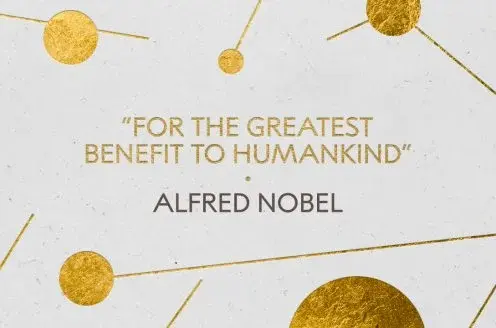
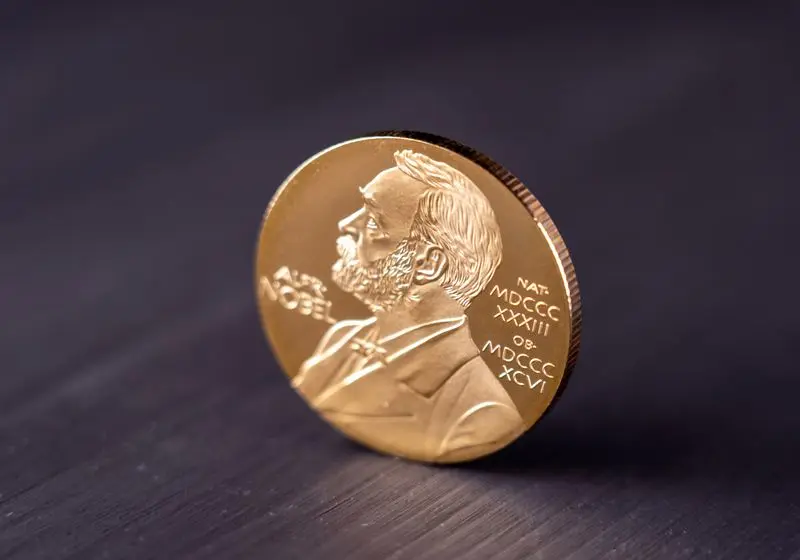
On Monday, October 5, the Nobel Committee in Stockholm announces the prize in Physiology or Medicine. Physics follows Tuesday. Chemistry on Wednesday. Literature on Thursday. Peace on Friday. Economics closes the week on Monday October 12. Six prizes, six committees, six decisions made in sealed rooms that will not be reversed. This year 287 individuals and organisations were nominated for Peace alone. Clarivate, whose annual Citation Laureates list has correctly foreshadowed 89 eventual Nobel winners since the programme launched, published its 2026 class on September 17. The prize is 11 million Swedish kronor, roughly 1 million euros, divided among up to three laureates per category. Alfred Nobel's 1895 will required that prizes reward work which "conferred the greatest benefit to humankind." The committees take that phrase literally.
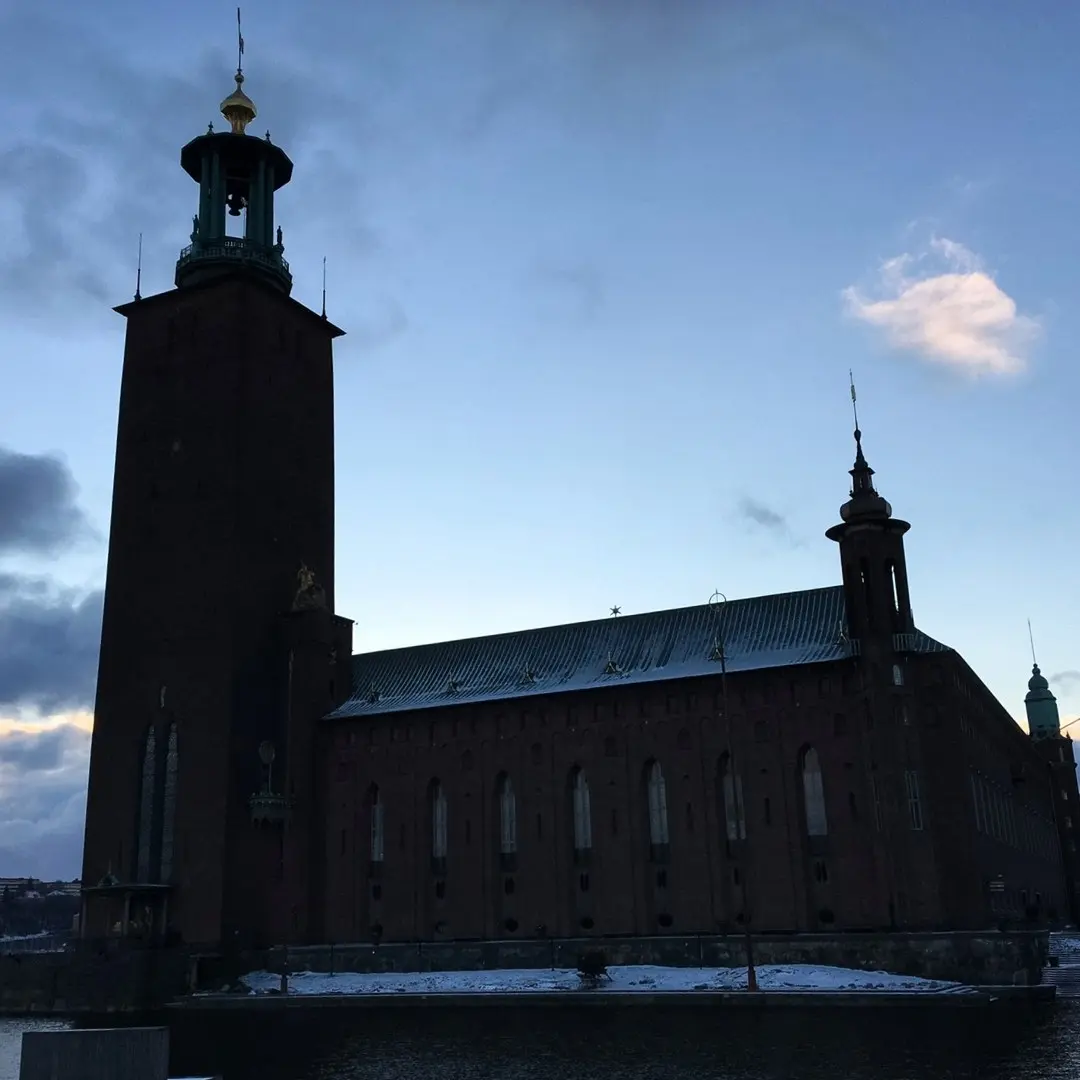
Credit: Brian Dooley / CC0. Stockholm City Hall, where Nobel banquets have \
been held since 1930, photographed from the Riksbron bridge.
Medicine, October 5: the science that made Ozempic possible
For decades the most plausible candidate in this category has been the trio who identified Glucagon-Like Peptide-1 and turned it into a drug target. Daniel J. Drucker at the Lunenfeld-Tanenbaum Research Institute, Jens Juul Holst at the University of Copenhagen, and Svetlana Mojsov at Rockefeller University each made the foundational discoveries that underpinned semaglutide, tirzepatide, and the broader class of GLP-1 receptor agonists now prescribed to more than 50 million patients worldwide. The decisive signal came this year: Drucker and Holst received the 2026 Lasker Basic Medical Research Award, announced in September. The Lasker has predicted the Nobel in Medicine more than 30 times. Mojsov characterised the exact 7-36 amide form of GLP-1 that binds the receptor. She is a 2026 Clarivate Citation Laureate for that specific contribution.
A second strong field for Medicine
Emmanuel Mignot of Stanford and Masashi Yanagisawa of the University of Tsukuba discovered orexin and its role in regulating sleep and wakefulness. Their work led directly to a new class of insomnia drugs. They received the Lasker Award in 2023, two years before Drucker and Holst. Two Lasker signals in the same category in three years is unusual. Only one team can win.
Physics, October 6: OLEDs are on two billion screens
Chihaya Adachi of Kyushu University, Stephen Forrest of the University of Michigan, and Mark Thompson of the University of Southern California have appeared on Clarivate Citation Laureates lists multiple times for their invention of phosphorescent OLEDs and thermally activated delayed fluorescence (TADF). The Nobel Committee last gave Physics to a materials advance in 2010, for graphene. The OLED case is comparably strong: the technology appears in every high-end smartphone display, in most televisions sold above $1,000, and increasingly in automotive dashboards. Adachi's TADF mechanism roughly quadrupled the energy efficiency of organic displays by using all excited states rather than discarding 75 percent of them.
Nicola Spaldin of ETH Zurich is also a Clarivate 2026 honoree, recognised \
for establishing room-temperature magnetoelectric multiferroics. These materials can be switched by both an electric field and a magnetic field simultaneously. The applied case is energy-efficient computing. Qikun Xue of Tsinghua University, who experimentally observed the quantum anomalous Hall effect, rounds out the serious Physics contenders.
Chemistry, October 7: lipid nanoparticles vs. base editing
The chemistry prize has two plausible frontrunners with almost nothing in common. The first is lipid nanoparticles. Pieter Cullis at the University of British Columbia spent three decades developing how to package RNA inside a fat particle small enough to enter a cell. His formulation became the delivery system for both the Moderna and Pfizer-BioNTech COVID-19 vaccines. The committee already gave Chemistry to the mRNA concept in 2023, to Katalin Kariko and Drew Weissman. Awarding the delivery technology as a separate prize is unusual but precedented.
The second Chemistry frontrunner is base editing. David Liu at the Broad \
Institute developed a method to rewrite individual DNA letters without cutting the double helix, eliminating the off-target errors that limited earlier CRISPR approaches. Liu's base editors are in clinical trials for sickle-cell disease and transthyretin amyloidosis. Chemistry went to CRISPR in 2020. Base editing is sufficiently distinct that a second prize for the broader family is defensible.
Literature, October 8: the question the Academy keeps not answering
Can Xue is the current favourite at most bookmakers. She is a Chinese avant-garde novelist, largely untranslated into English, whose work the Swedish Academy has discussed for years. Neither she nor Haruki Murakami has won. Murakami has been the second-favourite for so long it has become a running joke. The Academy has consistently avoided the most-tipped name and has favoured writers outside English in the past decade: Abdulrazak Gurnah (2021), Annie Ernaux (2022), Jon Fosse (2023), Han Kang (2024). Other names in the frame include Cristina Rivera Garza, Gerald Murnane, and Thomas Pynchon, who has appeared on these lists longer than most readers have been reading.
Peace Prize favourite
Vanessa Nakate (Uganda), 34% implied odds
Second favourite
Sudan Emergency Response Rooms, 25% odds
Third
Mykola Kuleba and Save Ukraine, 10%
Also tracked
Doctors Without Borders (11%), Mark Carney (9%)
Candidates nominated in 2026
287 (208 individuals, 79 organisations)
2025 winner
Maria Corina Machado, Venezuela
Last climate-focused winner
IPCC and Al Gore, 2007
Peace, October 9: Nakate or the Sudan networks
Vanessa Nakate, 28, is a Ugandan climate activist and UNICEF Goodwill Ambassador who has spent six years documenting how climate change falls hardest on the countries that emitted least. The betting markets give her roughly a one-in-three chance. The second-place favourites are the Emergency Response Rooms of Sudan, volunteer networks that have run communal kitchens, medical evacuations, and supply chains inside a civil war that the world largely stopped watching. They won the Rafto Prize and a Right Livelihood Award in 2025. The Norwegian Committee has a long history of picking the less-famous name. Nakate is the famous name this year.
"The discovery of GLP-1 as an incretin hormone was an unexpected finding. We had no idea it would eventually help so many people manage their weight.
"Jens Juul Holst · Professor · University of Copenhagen
Economics, October 12: the digital economy is overdue
The Sveriges Riksbank Prize is announced last, as always. Prediction markets give the highest probability to Partha Dasgupta of Cambridge, at around 14 percent, for environmental economics and a framework that counts nature as capital. Richard Blundell of University College London follows at 11 percent, for labour economics and consumption models used by tax authorities in a dozen countries.
The Clarivate 2026 Citation Laureates for Economic Sciences include Susan \
Athey of Stanford, recognised for "pioneering analysis of the economics of information technology," alongside Hal Varian, Google's former chief economist. An Athey win would be the first Economics Nobel given primarily for digital-market research: auction design, platform measurement, and the integration of machine learning into empirical economics. The committee last went to an information-adjacent field in 2001, for asymmetric information. The digital economy has been waiting twenty-five years.