Every Home Coffee Brewing Method: Specs and Pick
One number to remember before you pick a method
The SCA (Specialty Coffee Association) Golden Cup Standard defines a perfect cup as 55 grams of coffee per litre of water, brewed at 93C, with an extraction yield of 18 to 22 percent. Every method below either hits that target in its own way or deliberately bypasses it for a different result. The closer a method sticks to the standard, the more forgiving it is. The further it strays, the more skill or patience it demands. Pick the method that fits how much time and equipment you want to commit to, not the one that sounds most impressive.
All eight methods at a glance
The table below shows every spec that matters for a first cup. Starter cost is the minimum you need to brew once, not counting beans or a scale. Difficulty is 1 (almost zero technique) to 5 (requires dialled-in grind, temperature and timing). Ratio is coffee to water by weight. All temperatures are at the point of contact with the grounds.
Method
Ratio | Temp | Grind | Time | Difficulty | Starter cost
Drip machine
1:17 | 93C | Medium | 5 to 8 min | 1 | $35+
French press
1:15 | 93C | Coarse | 4 min | 2 | $20+
Pour over (V60)
1:16 | 93C | Medium-fine | 3 to 4 min | 3 | $25+
Chemex
1:16 | 93C | Medium-coarse | 4 to 5 min | 3 | $45+
AeroPress
1:14 | 88C | Medium-fine | 1.5 to 2 min | 2 | $40+
Moka pot
1:10 | Stovetop | Fine-medium | 5 to 8 min | 2 | $25+
Cold brew
1:8 | Room temp | Coarse | 12 to 18 h | 1 | $15+
Espresso
1:2 | 93C | Fine | 25 to 30 s | 5 | $400+
Drip machine: the method that requires the least of you
Set it and forget it. A good automatic drip machine holds water at the right temperature, pre-infuses the grounds, and produces a full pot without supervision. SCA-certified models (Technivorm Moccamaster at $349, Breville Precision Brewer at $199, OXO Brew 9-Cup at $199) are the benchmark. Budget models from $35 work but rarely reach the right temperature. The grind matters more than the machine: a burr grinder at $90 or more will outperform a $250 machine paired with a blade grinder. Best for: households that want multiple cups without watching the process.
French press: full body with no paper filter
Hot water steeps directly with coarsely ground coffee for four minutes, then a metal mesh plunger separates them. The metal filter passes oils and fine particles that paper traps, producing a heavier, richer cup. Use 30 grams of coarse grounds per 450 grams of water at 93C. Press at four minutes and pour immediately. Leaving it longer means the grounds keep extracting and the cup turns bitter. Best for: people who want a textured, full-bodied cup with minimal hardware.
Pour over (V60, Kalita Wave): the clarity method
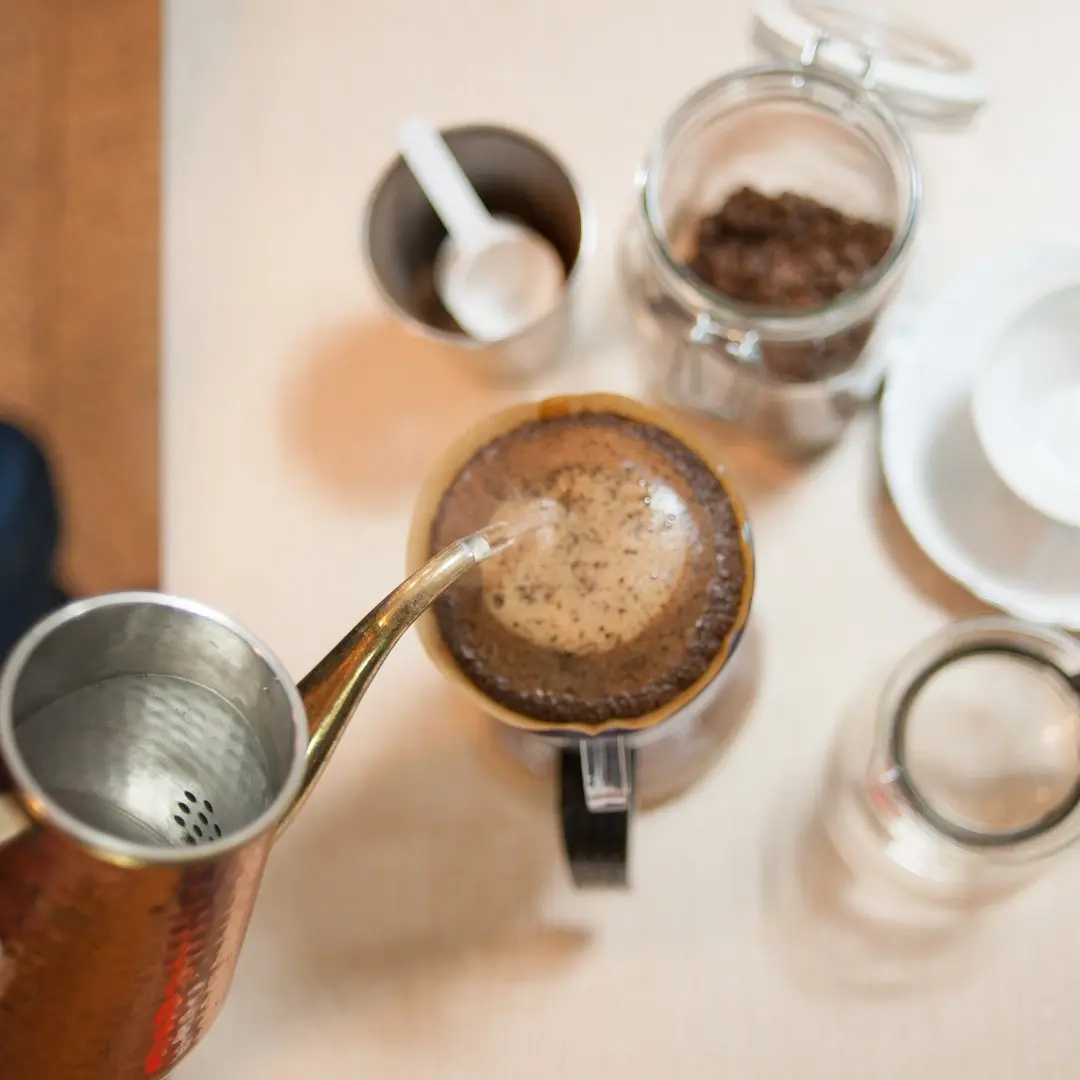
Water poured by hand over a paper filter extracts cleanly, highlighting brightness and delicate tasting notes that richer methods obscure. A Hario V60 ($25) or Kalita Wave ($35) and a gooseneck kettle ($30 or more) are all you need to start. The technique that matters most is the bloom: pour twice the weight of the coffee as water first (30 grams water for 15 grams coffee), wait 30 to 45 seconds, then continue in slow circles. Total brew time should be 3 to 4 minutes. Coarser grind or faster pour if it runs over 4 minutes. Best for: light and medium roast single-origin beans where tasting notes matter.
Chemex: the same method, slower and larger
The Chemex uses the same pour-over principle but thicker proprietary filters (20 to 30 percent thicker than V60 filters) that strip even more oils, producing one of the clearest cups possible. It also brews 3 to 10 cups at once, making it better for groups. The grind needs to be slightly coarser than a V60 because the filter slows flow rate. A 6-cup Chemex costs $45. Replacement filters are $12 for 100. Best for: households that want a large, clean batch and enjoy the ritual of the pour.
AeroPress: the fastest and most forgiving method
The AeroPress uses air pressure to push water through coffee in under two minutes. It tolerates a wide range of grind sizes and techniques, which is why it has a large competition community built around it. Unlike pour-over, small variations in pouring technique do not ruin the cup. Use water slightly cooler than for other methods (85 to 92C) to reduce bitterness. The standard recipe: 15 grams of medium-fine grounds, 200 grams of water at 88C, press after 90 seconds. A new AeroPress costs $40. Best for: travellers, small kitchens, and anyone who wants a good cup fast without a learning curve.
Moka pot: strong and stovetop
The moka pot forces boiling water upward through fine grounds using steam pressure (about 1.5 bar, far less than espresso at 9 bar). The result is a concentrated, intense cup that shares espresso's character without requiring any machine beyond a stove. A 3-cup Bialetti Moka Express costs $30. Use fine-medium grounds, fill the basket level without tamping, and remove from heat the moment the top chamber fills. Leaving it on longer makes the cup harsh. Best for: anyone who wants a strong, espresso-adjacent cup with minimal cost and no electricity.
Cold brew: no heat, no bitterness
Coarse grounds steep in cold or room-temperature water for 12 to 18 hours, then are filtered out. The long, cold extraction pulls sweetness and body while leaving most of the compounds that cause bitterness behind. The result is a concentrate (ratio 1:8) that is diluted 1:1 before drinking, or a ready-to-drink batch at 1:15. A mason jar and a fine-mesh strainer cost $15 total. The only catch: it requires planning ahead. Best for: hot weather, people who find regular coffee acidic, and batch brewers who want a week of iced coffee ready in the fridge.
Espresso: the hardest, most versatile, most expensive method
A pump forces water at 9 bars through 18 to 20 grams of finely ground coffee in 25 to 30 seconds. The result is 36 to 40 grams of concentrated liquid, the base for every milk drink (flat white, latte, cappuccino). Getting it right requires a calibrated grinder ($200 minimum), a capable machine ($400 minimum for the Breville Bambino), and practice dialling in the grind each time you open a new bag of beans. The Breville Barista Express ($500) includes a built-in grinder and is the most practical all-in-one starting point. Budget at least $700 for a setup worth using. Best for: people who drink milk drinks daily and are willing to treat it as a craft.
One thing most beginner guides skip: the grinder matters more than the brewer. A $90 burr grinder paired with a $30 French press outperforms a $200 pour-over kit paired with a $20 blade grinder. Blade grinders chop unevenly, which means part of the grounds extract too fast and part too slow. The result tastes simultaneously bitter and sour. Buy a burr grinder first.