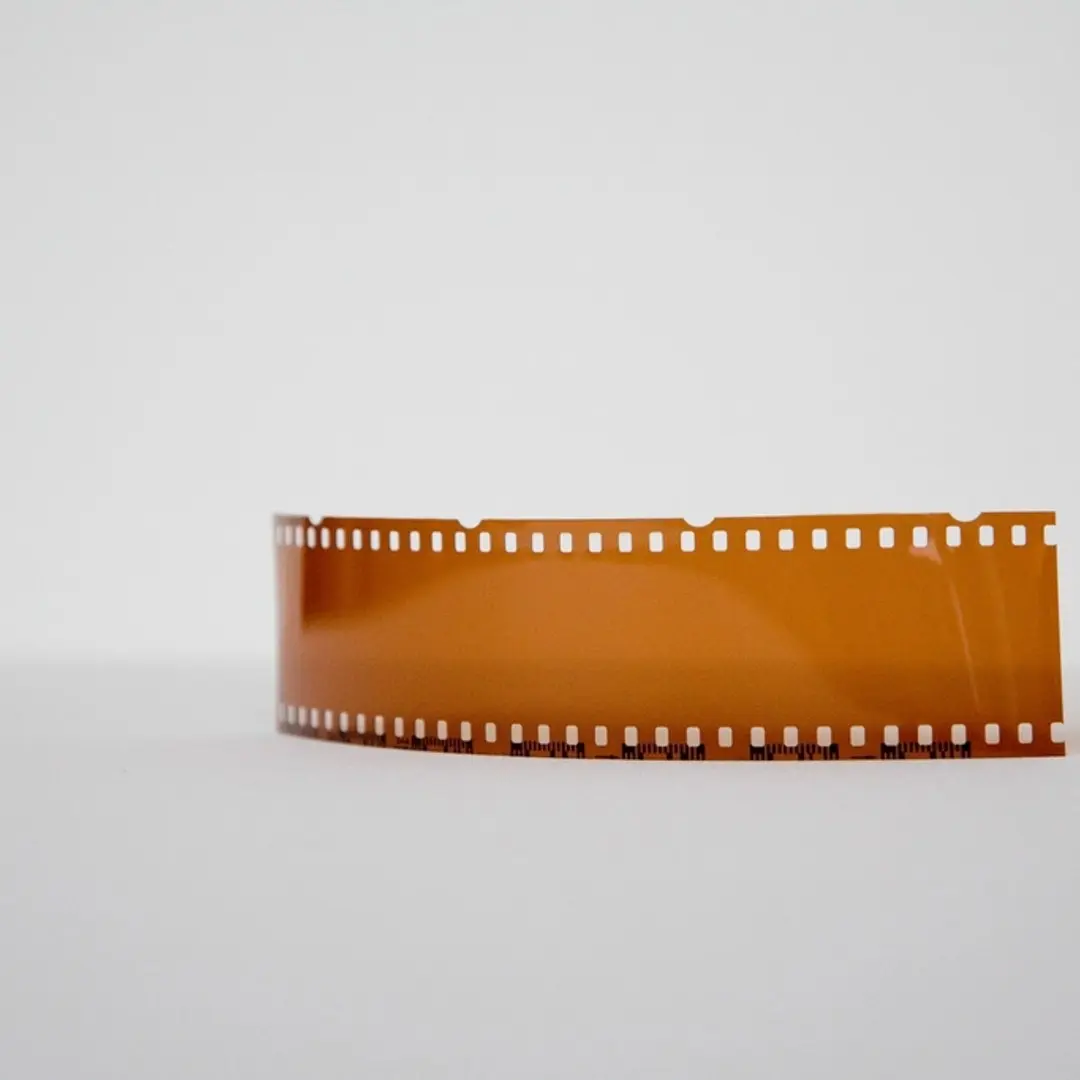
Develop B&W film at home: the exact numbers
Every Existing B&W Dev Guide Sends You Somewhere Else for the Numbers
Every beginner guide covers the 8 steps, then tells you to look up your timing on the Massive Dev Chart. This page has the full picture in one place: exact dilution ratios, a timing table for the three most popular beginner film stocks at ISO 400 and 20 degrees Celsius, the agitation schedule, and the Ilford washing method. All figures come from Ilford technical data sheets. Black and white film is the right place to start. The developer runs at room temperature (20 degrees Celsius). A degree either way changes contrast only slightly. Colour C-41 runs at 38 degrees: a degree either way shows on the negative. Learn on black and white first. The first session takes about 90 minutes end to end. Active hands-on time is about 20 minutes. The rest is waiting.
Total session time
About 90 minutes (20 min active)
Upfront kit cost
USD 80 to 100 (tank, chemicals, thermometer)
Difficulty
Beginner. One session is enough to feel confident.
Temperature
20 degrees Celsius (68 F) for all B&W developers
Processing format
35mm or 120, in a Paterson or similar daylight tank
Step 1. What You Need to Buy Once
The daylight processing tank makes home development possible: once the lid is on, everything follows in room light. A Paterson Super System 4 tank holds one 35mm or 120 roll, about USD 35 new. A changing bag costs about USD 20. Together they replace a full darkroom for the loading step. Also needed: a digital thermometer accurate to 0.5 degrees (USD 10), two measuring graduates (600ml and 100ml, about USD 10 combined), a kitchen timer, a bottle of Photo-Flo or ILFOTOL wetting agent (USD 8), and a drying line. Chemicals last for many rolls. A 500ml bottle of Rodinal costs about USD 15 and diluted 1+50 yields roughly 30 rolls. A litre of ID-11 powder costs about USD 12 and yields about 20 rolls at stock or 10 at 1+1. A litre of rapid fixer costs about USD 12. Stop bath is optional: plain water works as an emergency stop.
Step 2. Mix Your Chemicals Before You Load
Mix developer last so it is fresh. Correct order: stop bath, fixer, then developer. All solutions should reach 20 degrees Celsius before you pour. Rodinal 1+50: measure 10ml of Rodinal into a 600ml graduate, add water to the 510ml mark. Use it once and discard. It is a one-shot developer. ID-11 1+1: mix 250ml of ID-11 stock with 250ml of water to get 500ml. Use it once and discard: simpler for beginners than reuse-with-extension. Rapid fixer: Ilford Rapid Fixer at 1+4 (200ml to 800ml water) fixes most films in 2 to 4 minutes. Test it with a piece of film leader: if it takes more than 6 minutes to clear, the fixer is exhausted. Stop bath: 500ml of plain water at 20 degrees works. Five inversions, 30 seconds.
Film
Developer | Dilution | ISO 400 | Time at 20C
Ilford HP5 Plus
ID-11 | 1+1 | 400 | 13 min
Ilford HP5 Plus
Rodinal | 1+50 | 400 | 11 min
Kodak Tri-X 400
ID-11 | 1+1 | 400 | 11 min
Kodak Tri-X 400
Rodinal | 1+50 | 400 | 13 to 14 min
Ilford Delta 100
ID-11 | stock | 400 | 8.5 min
Ilford Delta 100
Rodinal | 1+50 | 400 | 14 min
Delta 100 is rated ISO 100 at box speed. The row above is for shooting it at ISO 400 (a two-stop push). If you shoot it at box speed (ISO 100), use ID-11 stock for 8.5 min or Rodinal 1+50 for 8 min at 20 degrees C. Source: Ilford official data sheet and Massive Dev Chart.
Step 3. Load the Film in the Changing Bag
Loading the reel is the step that trips up most beginners. Practice it first in the light with a sacrificial roll you do not mind ruining. Feel how the film clicks along the grooves of the Paterson reel. A plastic Paterson reel is self-loading: hold the two halves and rotate them alternately, like a ratchet. The film feeds itself in. Metal reels require threading from the centre outward. When you are confident in the light, close the changing bag zip completely. Crack the cassette open with a bottle opener on the flat end. Cut the leader straight across with scissors. Load the film onto the reel, drop it into the tank, and fit the light-tight lid. Now you can open the bag: the tank is safe in full light. One common mistake: leaving the end of the film attached to the cassette spool inside the bag. Run your fingers along the film before you finish loading to confirm both ends are free.
Step 4. Develop: the Agitation Schedule
Pour the developer into the tank in one smooth pour. Start the timer the moment liquid first contacts the film. First 30 seconds: agitate continuously. Invert the tank, rotate it a quarter turn, invert again. Keep moving. From 30 seconds to the end of development: agitate for 5 seconds at the start of every 30 seconds. Four inversions takes about 5 seconds. Between agitations, set the tank down. Do not tap it on the bench to release bubbles: that is an old instruction that is no longer recommended. At the end of development: pour the developer out in one fast pour. Time from the first pour out to the next pour in (stop bath or water) should be under 15 seconds.
Step 5. Stop, Fix, and Wash
Stop bath: pour in the stop solution (or plain water), invert 5 times over 30 seconds, pour out. Fixer: pour in, agitate continuously for the first 30 seconds, then 5 seconds every 30 seconds, for 2 to 4 minutes (check the bottle). Pour out and save the fixer: it is reusable. Mark the container with a permanent marker and add a tick for each roll you fix in it. The Ilford washing method uses almost no water and gives archival-quality negatives. Fill the tank with water at 20 degrees, invert 5 times, drain. Refill, invert 10 times, drain. Refill, invert 20 times, drain. Final rinse: add 2 drops of ILFOTOL or Photo-Flo wetting agent to 500ml of water, invert 5 times gently, and drain. The wetting agent prevents water spots on the negative as it dries.
Step 6. Dry, Cut, and Sleeve
Remove the spiral from the tank in normal room light. Unload the film from the reel. Hang it from one end with a clip, and weight the bottom end with a second clip to prevent curling. A bathroom or shower cubicle is the ideal drying space: close the door, run hot water for 30 seconds first to settle any dust, then hang the film and close the door. Leave it for at least two hours, or overnight. Do not touch the emulsion side (the matte side) while it is wet. Once dry, cut the strip into sections of 5 or 6 frames using scissors with rounded tips, and sleeve each section in a cut-film page. A box of 100 archival sleeves costs about USD 12 and holds many rolls.
The four mistakes that ruin first rolls: (1) loading the reel in partial darkness rather than full darkness, a faint light under a door is enough to fog film; (2) temperature drift during development, mix chemicals and let them all reach 20 degrees before you start; (3) expired fixer that no longer clears film in 3 minutes, test it with the leader-clearing method above; (4) pulling the negative off the drying line before it is fully dry, wet negatives scratch permanently if sleeved too soon.
