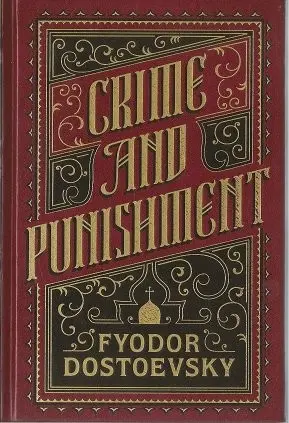
Crime and Punishment
Crime and Punishment
He commits the murder in the first hundred pages. The rest of the novel is the punishment. Dostoevsky understood the mind like no one else.
The Weight of a Crime
Fyodor Dostoevsky's 1866 novel follows Raskolnikov, a destitute student in St. Petersburg who murders a pawnbroker to prove his theory that extraordinary men are above conventional morality. What follows is a psychological collapse of extraordinary intensity as guilt, paranoia, and the inescapable conscience tear him apart. Detective Porfiry circles, a saint-like prostitute named Sonya offers redemption, and Russia itself feels like a pressure chamber. First published in serial form in The Russian Messenger, it remains the definitive novel of guilt.
Reading Crime and Punishment
Pressure
/
Part
"Pain and suffering are always inevitable for a large intelligence and a deep heart.
"Fyodor Dostoevsky · Crime and Punishment
Dostoevsky wrote Crime and Punishment under crushing financial pressure while also writing The Gambler simultaneously on two separate deadlines. He dictated The Gambler to a stenographer named Anna Snitkina, whom he later married.
The novel was written just after Dostoevsky returned from ten years in Siberia for political dissent. His experience of imprisonment and redemption shaped every page of Raskolnikov's story.