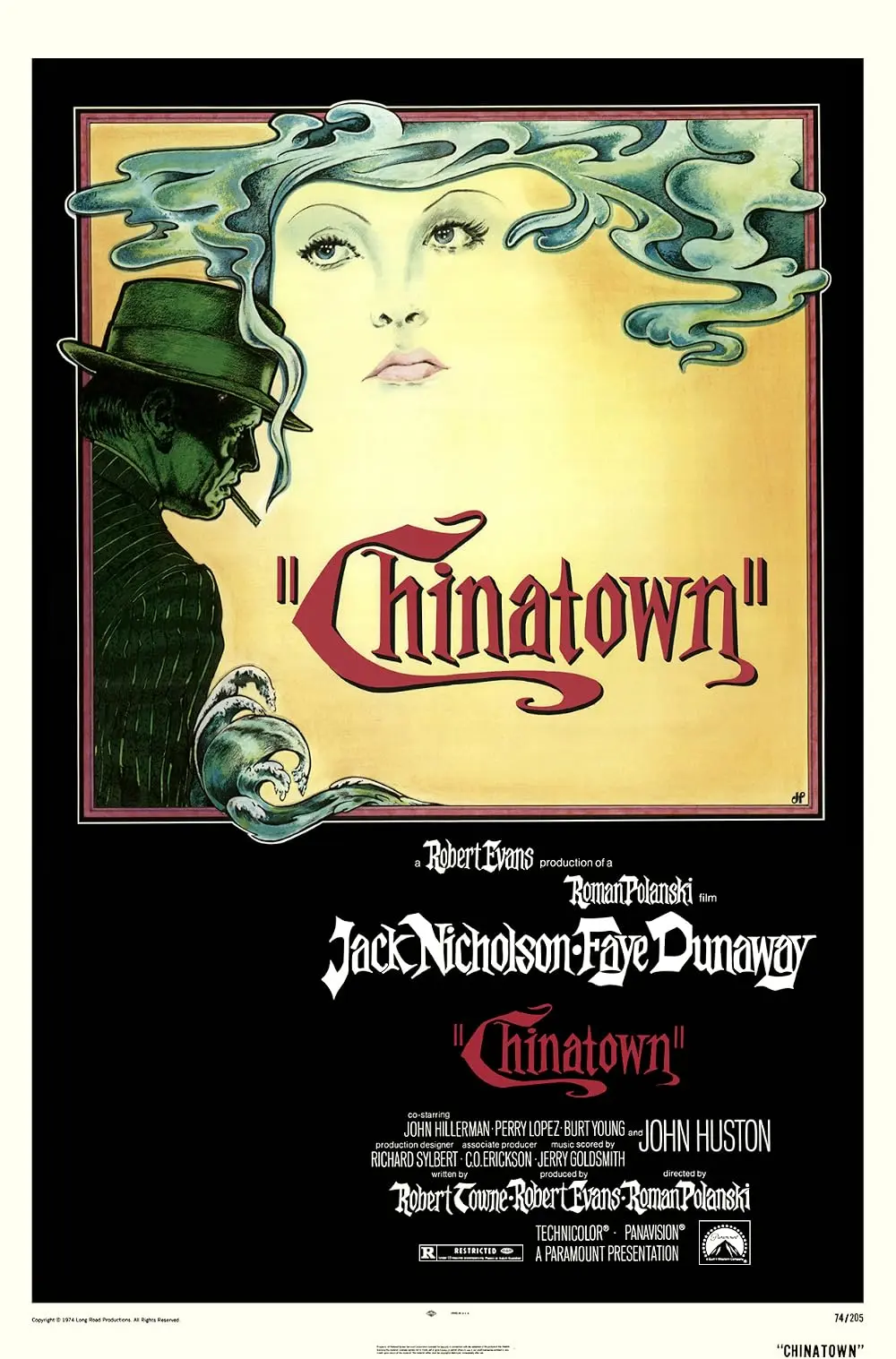
Chinatown: Water Rights As Original Sin
Chinatown (1974)
A private detective film in which the crime is a municipal water policy, and the ending the writer never wanted.
Runtime
131 minutes
Director
Roman Polanski
Budget
$6 million
Box office
$29.2 million worldwide
Cinematography
John A. Alonzo
The Real Theft Is Infrastructure
Robert Towne built the script on the California water wars, the diversion of the Owens Valley that let Los Angeles exist at the scale it does, and then wrapped it in the form of a detective story. Jake Gittes is a competent investigator who understands adultery, divorce and the small corruptions he makes his living from, and is structurally incapable of recognising a crime committed at the level of reservoirs and land purchase. Every time he thinks he has the answer he has the small version of it. Polanski shot it almost entirely from Gittes's point of view, so the audience is confined to what he can see, and then overruled Towne on the ending, insisting that the film could not allow its detective to save anybody.
Watching Chinatown
Pull
/
Scene
"Forget it Jake. It's Chinatown.
"Walsh · Chinatown · 1974
Towne wanted Evelyn to survive and the villain punished. Polanski, who had lost his wife to murder four years earlier, refused, and shot his own ending without an alternative.
Jerry Goldsmith wrote the score in about ten days after the original was rejected, built around four pianos, four harps and a solo trumpet, and it is now the standard neo noir sound.
The film's real subject is that some crimes are too large to be detected by people whose job is detecting crimes. Noah Cross is not hiding: he explains himself over fish at lunch and tells Gittes plainly that he is buying the future. That is why it endures as the definitive American film about corruption. It assumes the powerful do not conspire in the dark, they file paperwork, and the detective genre is constitutionally unable to cope.