CDU at 4.9%: Germany's Oldest Party Loses a State
4.9%: The Night the CDU Ceased to Exist in a German State
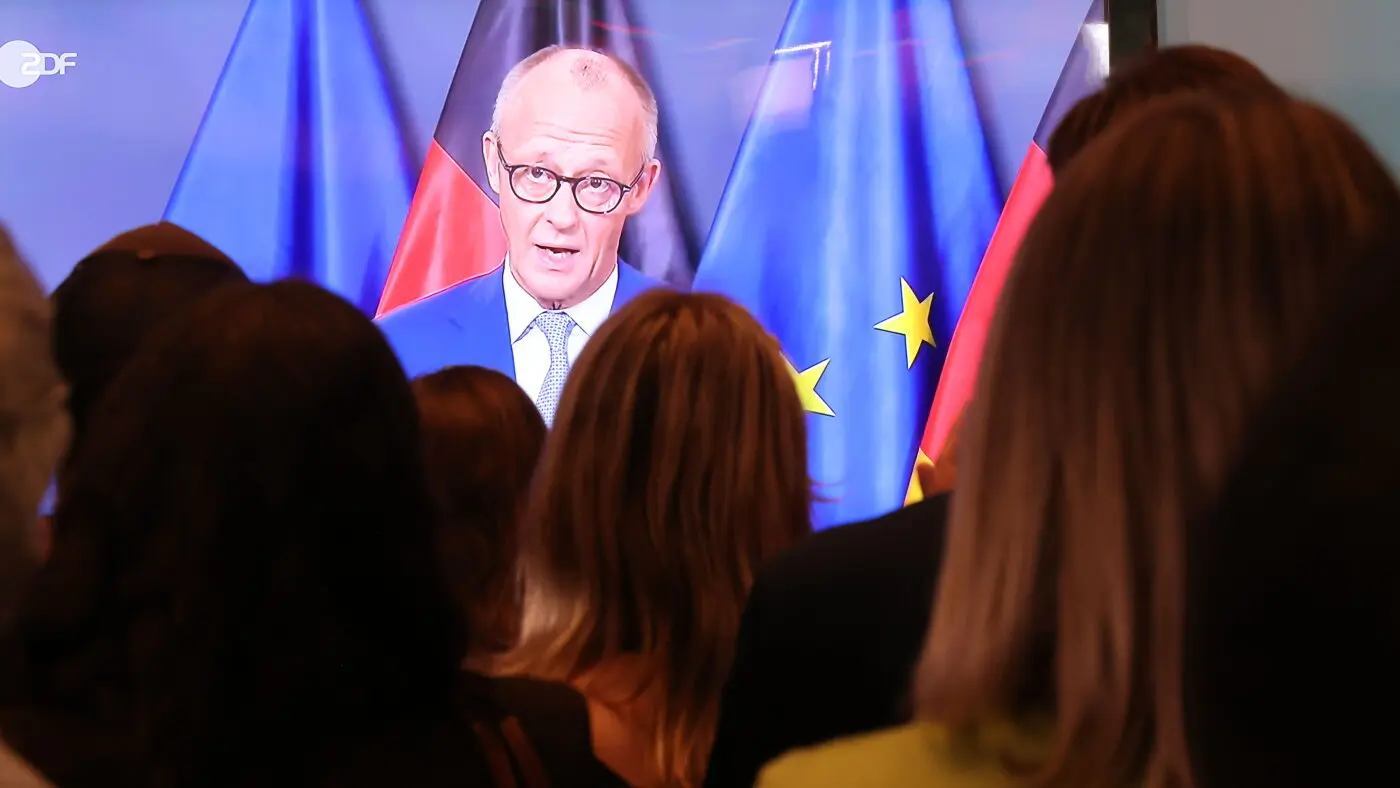
On Sunday September 20, 2026, the CDU won 4.9% of the vote in Mecklenburg-Western Pomerania. That result, below the 5% threshold required for representation, ended the CDU's presence in the Landtag entirely. It is the first time in the party's modern history that it has failed to win seats in any German state parliament, and the first time it has been absent from this chamber since 1951. In the same election five years earlier, it won 13.3%. The AfD, which won 16.7% in 2021, took 38.2% on Sunday, finishing first. Chancellor Friedrich Merz did not reach for euphemism. "We cannot sugar coat the result," he said. "It is a disaster. The CDU fought hard, but in the end it was the CDU that got crushed in the polarization between the SPD and the AfD." His approval rating stood at 13%, the lowest ever recorded for any German chancellor in the Forsa polling series, down from a peak of 42% in July 2025.
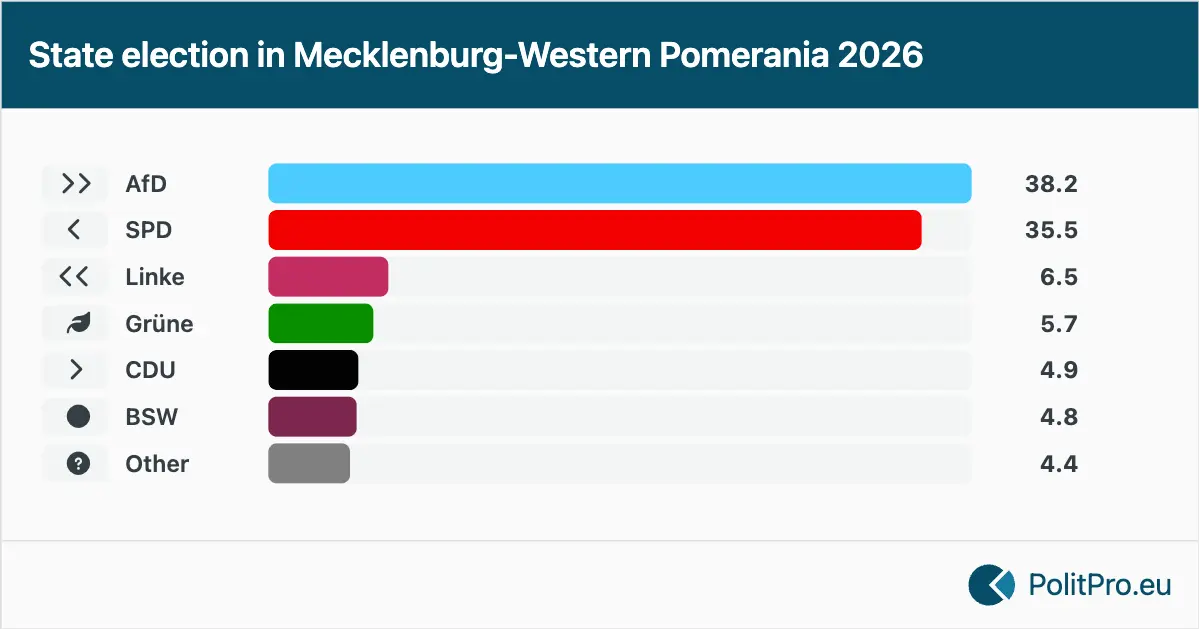
AfD vote share 2021
16.7%
AfD vote share 2026
38.2%
CDU vote share 2021
13.3%
CDU vote share 2026
4.9%
CDU seats won
0
Turnout 2026
78.1% (+7.3pp)
Merz approval rating
13%
Three State Elections. Three Disasters.
Mecklenburg-Western Pomerania was the third state election in which Merz's CDU suffered a historic defeat in weeks. On September 6, the AfD took 43.8% in Saxony-Anhalt while the CDU fell from 37.1% to 17.2%, losing every one of the 40 constituencies it had held in 2021. Only 9% of Saxony-Anhalt voters said they approved of Merz as chancellor. On the same Sunday, Berlin voted too, where Die Linke came first with 25.7% and the CDU placed second with 18.8%. The AfD campaigned on hardline deportation policy, an end to support for Ukraine, and reopening the Nord Stream pipelines. SPD minister-president Manuela Schwesig centred her campaign on the phrase "Woman against Blue," a reference to the AfD's party colour. She came second with 35.5%, down from 39.6% in 2021, and is now expected to form a coalition with Die Linke and the Greens.
"We have overtaken the CDU and people want a change of policy. We are clearly the new people's party in Germany. I believe the CDU cannot continue with Friedrich Merz.
"Alice Weidel (AfD co-leader) September 20 2026
The Firewall Still Holds. For Now.
The AfD's 32 seats in the new Landtag are not convertible into power. Every mainstream German party has declared it will not form a coalition with the AfD at any level of government. Because the SPD, Die Linke, and the Greens can together form a majority, the firewall holds in Mecklenburg-Western Pomerania. It held in Saxony-Anhalt too, despite the AfD winning 38 of 41 constituencies outright. Nationally, the AfD leads German federal polling at close to 30%. The Federal Office for the Protection of the Constitution classified the party as a "confirmed right-wing extremist movement" in 2023. Whether the firewall survives another election cycle in which the AfD wins first place in multiple states while governing none is the question Germany is now living through.
Merz Cannot Be Removed Easily and Will Not Go Voluntarily
Germany's Basic Law makes removing a sitting chancellor difficult. A constructive vote of no confidence requires the Bundestag to simultaneously select a replacement, which the coalition arithmetic makes highly unlikely. A confidence vote by the chancellor himself would dissolve the government and force a federal election, which polling suggests the CDU would lose badly. Resignation is the third option. Merz has ruled it out. He called his reform agenda "the antidote to the poison of authoritarianism" and vowed "backbone, steadfastness and patience." The leaders of all eight CDU-governed states backed him publicly before the vote and called for unity. Politico reported that replacing Merz was "no longer taboo in private conversation among Union legislators." Sunday's result extended that conversation without resolving it.
What a Party at 4.9% Actually Means
The CDU has governed Germany for 52 of the 77 years since the Federal Republic was founded. It produced Konrad Adenauer, Helmut Kohl, and Angela Merkel. It was present in every German state parliament without interruption until last Sunday. Its absence from the Mecklenburg-Western Pomerania Landtag means no platform to nominate members, no committee seats, no state-level parliamentary staff or budget in that chamber. A party at 4.9% does not merely lose influence. It disappears from the institutional architecture of that state entirely. The 2025 federal election brought Merz to the chancellorship with 28.5% of the national vote. Two states and fourteen months later, both results look like they belong to a different country.