BRICS Comes to New Delhi: 11 Nations, One Summit
Full BRICS member nations
11
BRICS partner countries
10
US dollar share of global forex reserves, 2000
71%
US dollar share of global forex reserves, Q1 2026
57%
India-Russia bilateral trade, current
$65 billion
India-Russia bilateral trade target by 2030
$100 billion
Putin Left Russia. That Alone Is the Story.
Vladimir Putin has not attended a BRICS summit outside Russian soil since the Ukraine war began in 2022. He skipped Johannesburg in 2023 and Rio de Janeiro in 2025 entirely. On September 11, 2026, he landed in New Delhi, the first time he has travelled to a non-allied country in more than four years. The occasion is the 18th BRICS Leaders Summit at Bharat Mandapam, hosted by India under Prime Minister Narendra Modi. It is also BRICS's 20th anniversary as a geopolitical concept. The bloc has grown from the original five (Brazil, Russia, India, China, South Africa) to eleven full members, adding Egypt, Ethiopia, Iran, Saudi Arabia, the UAE and Indonesia. A further ten nations hold partner status: Belarus, Bolivia, Cuba, Kazakhstan, Malaysia, Nigeria, Thailand, Uganda, Uzbekistan and Vietnam.
The Optics: Putin, Xi, Pezeshkian, Under an Indian Roof
The gathering at Bharat Mandapam brought together leaders who do not normally share a room: Putin, Chinese President Xi Jinping, Iranian President Masoud Pezeshkian, South African President Cyril Ramaphosa and Indonesian President Prabowo Subianto, all under Modi's chairship. The West has spent four years trying to isolate Putin diplomatically. New Delhi is a demonstration that a large part of the world is not participating in that isolation.
India's 20-Billion-Dollar Dilemma Walks Through the Door
The Modi-Putin bilateral on September 11 covered the two countries' ambition to lift trade from $65 billion to $100 billion by 2030, part of a joint Programme for Economic Cooperation. Modi also raised the safety of Indian seafarers on ships in the Black Sea, where Russian and Ukrainian naval operations have repeatedly put merchant crews at risk. The meeting ended with Putin extending an invitation for Modi to visit Moscow later this year. India has continued buying discounted Russian crude throughout the war, making it one of Moscow's largest customers. That relationship was on full display in New Delhi: warm, pragmatic, and useful to both sides.
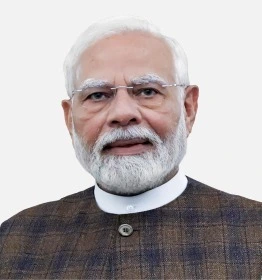
Modi and Xi Face to Face Since the Galwan Clash
The more closely watched meeting came on September 13, when Modi and Xi held bilateral talks on the summit's second day, their first real engagement since the deadly Galwan Valley border clash of June 2020, which killed 20 Indian soldiers and an unknown number of Chinese troops. The two leaders agreed that the India-China boundary question should be resolved in a "fair, reasonable and mutually acceptable" way. Xi said China approached relations from a "strategic and long-term perspective" and called on both countries to draw on each other's strengths. Modi said peace along the disputed border was essential for broader improvement in ties. China takes over the BRICS chairmanship from India at the end of 2026.
"The changing world cannot be steered by outdated institutions. Reforms are essential in representation, in responsiveness, and in rule-making.
"Prime Minister Narendra Modi at the 18th BRICS Summit closing session
The Dollar at 57 Percent: A Retreat Without a Rout
The declaration's most concrete economic commitment is expanding trade and payments in BRICS local currencies, which India framed around payment system interoperability rather than a single BRICS currency. No such currency has been proposed by any member government. Brazil's President Lula confirmed in February 2026 that no common currency was on the table. The numbers give context. The US dollar accounted for roughly 71% of the world's identifiable foreign-exchange reserves in 2000, according to the IMF. By Q1 2026 that figure stood at 57.13%. The fall is real but slow: two decades to move 14 percentage points. India's Unified Payments Interface is positioned as a model for settlement systems that let local currencies clear without routing through dollars. Russia's Kremlin noted it does not seek formal de-dollarisation.
What the New Delhi Declaration Actually Commits To
The declaration was adopted unanimously on the opening day. No member objected to the text, a significant result given the Iran-UAE division over West Asia, resolved through back-channel talks before the summit opened. Beyond local currency payments, BRICS committed to: greater UN Security Council representation for developing countries, with China and Russia explicitly backing India and Brazil; AI cooperation focused on safety and inclusivity; counter-terrorism coordination including condemnation of the April 2025 Jammu and Kashmir attack; and stronger health, energy and food supply chains. BRICS began as a Goldman Sachs investment thesis in 2001. It now accounts for roughly 40% of global GDP by purchasing power and more than 40% of world population. The gap between that weight and members' actual influence in the IMF, the World Bank and the UN Security Council is what the declaration's reform language is trying to close.