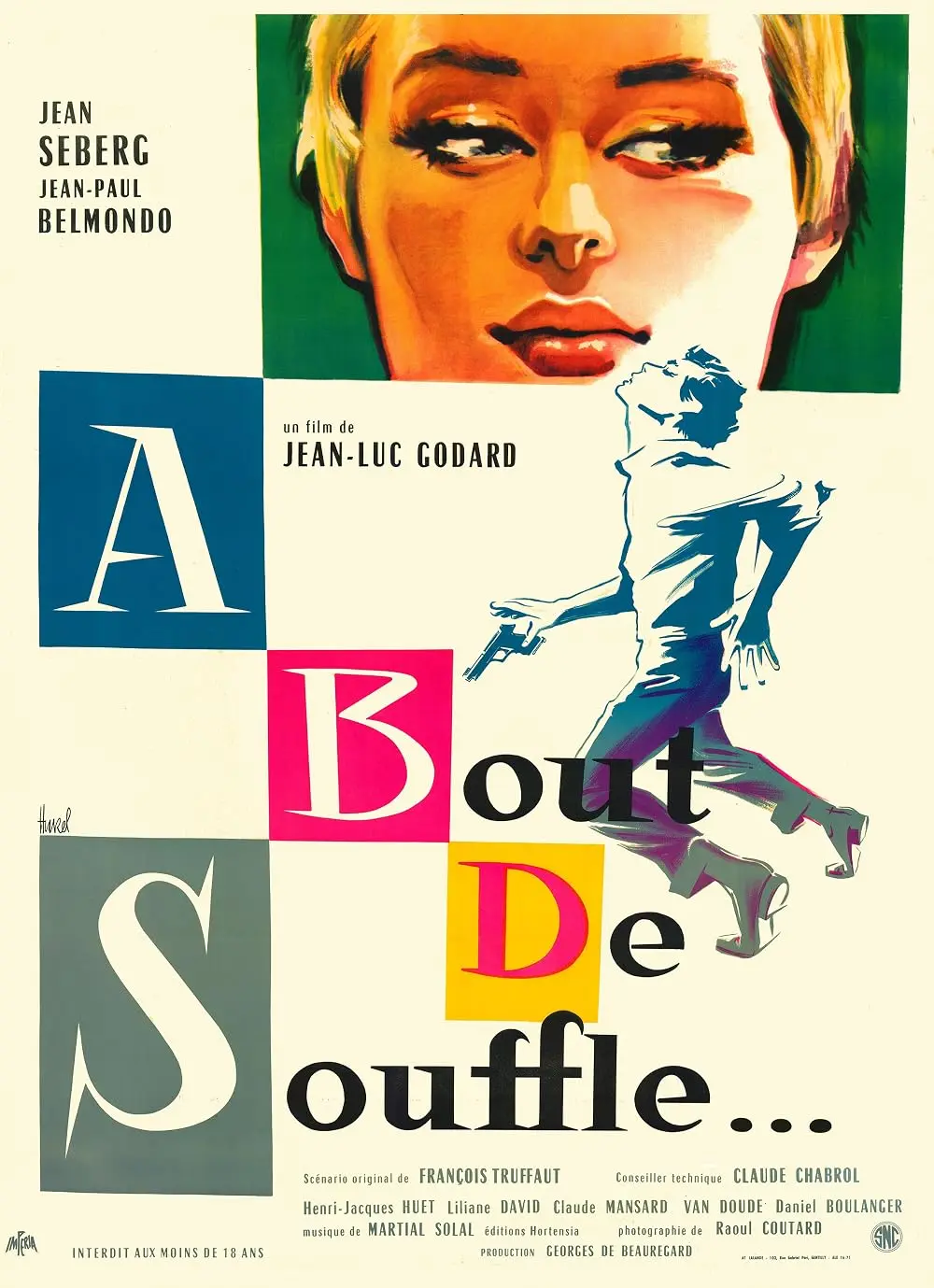
Breathless: Cut In The Middle Of Its Own Shots
Breathless (1960)
The film ran too long, so Godard cut chunks out of the middle of takes instead of trimming scenes. That accident became the jump cut.
A Gangster Film With The Manners Of An Essay
A small time thief steals a car, shoots a policeman on a country road almost by accident, and spends the rest of the film in Paris trying to collect money and persuade an American student to come to Rome with him. Nothing about the plot is new. Everything about the execution was. Godard shot on real streets with a handheld camera pushed in a wheelchair, used available light and fast film stock, recorded no usable sound and dubbed it all later, and let Belmondo and Seberg talk past each other for twenty minutes in a hotel room about nothing. When the first cut came in far too long, the producer wanted whole scenes removed. Godard instead removed pieces from inside shots, leaving the discontinuity visible.
Runtime
87 minutes
Director
Jean-Luc Godard
Budget
$400,000
Cinematography
Raoul Coutard
Watching Breathless
Tone
/
Entry
"I want to become immortal, and then die.
"Michel Poiccard · Breathless · 1960
Raoul Coutard shot handheld from a wheelchair and postal trolley using Ilford HPS stock spliced from still film rolls, because no motion stock was fast enough for the real interiors.
The jump cuts were a solution to length imposed after the fact. Godard removed frames from inside takes instead of losing scenes, and the visible joins became the style.
Within two years the film's methods were everywhere: location shooting, natural light, direct address, characters who have seen films and say so. It is dedicated to Monogram Pictures, the American studio that made cheap crime films, which is the New Wave's whole argument in one card. Truffaut wrote the original treatment and Chabrol advised on the technical side, so the three central figures of the movement are all present on one credit list.