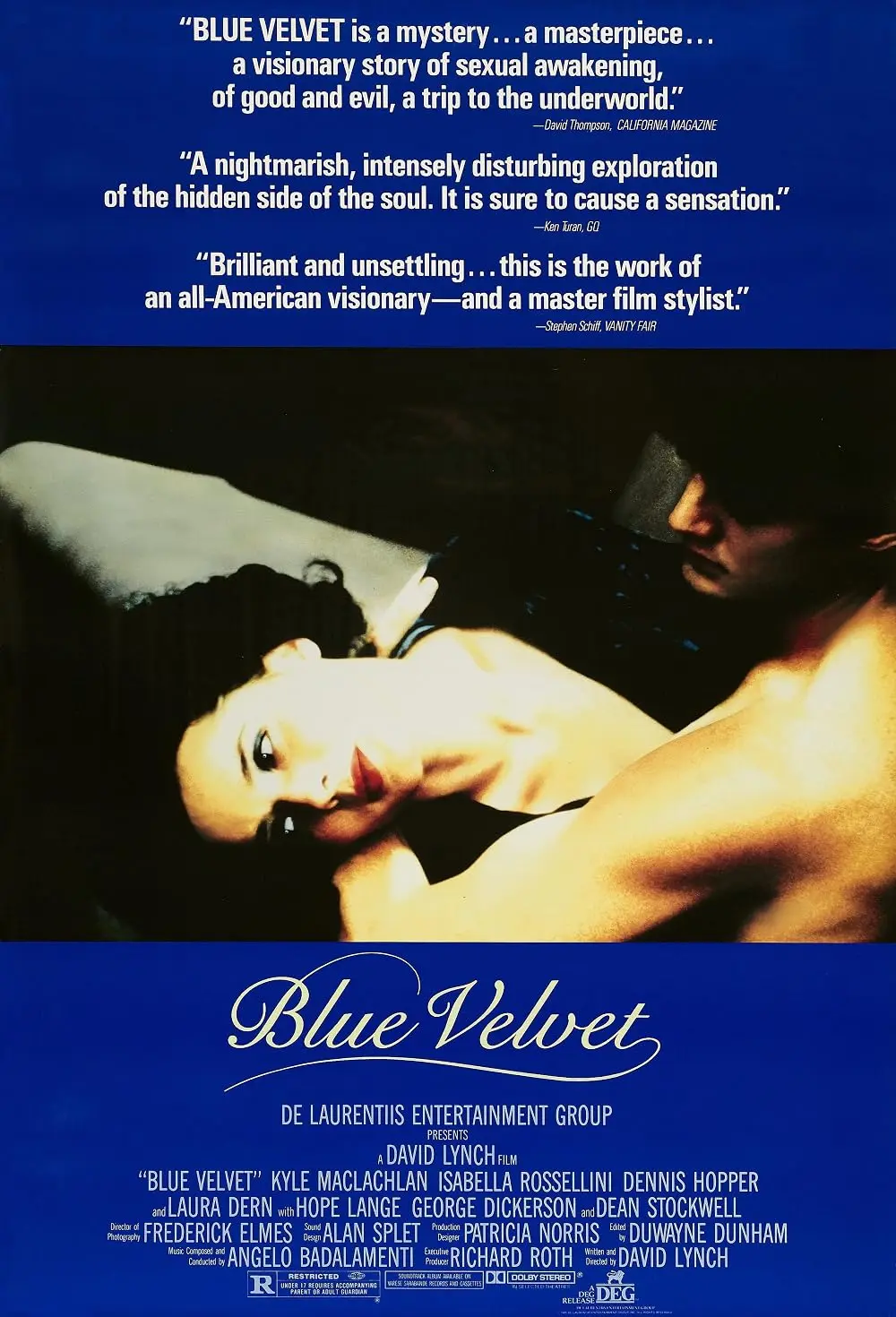
Blue Velvet: Half His Salary For Final Cut
Blue Velvet (1986)
Lynch gave up most of his fee to keep control, and delivered a film that split critics down the middle for a decade.
Runtime
121 minutes
Director
David Lynch
Budget
$6 million
Box office
$8.7 million worldwide
Cinematography
Frederick Elmes
Under The Lawn
The film opens on white picket fences, red roses and a fire engine going past in slow motion, then drops the camera into the grass to find beetles fighting in the dirt. That is the whole thesis, stated in ninety seconds. A student home from college finds a severed ear in a field, takes it to the police, and cannot stop pulling at the thread, which leads to a nightclub singer being blackmailed and a man who breathes gas through a mask and treats violence as choreography. Dennis Hopper reportedly told Lynch he had to have the part because he was Frank Booth. What makes the film hold is the tone: Lynch plays the small town material with complete sincerity rather than irony, so the horror reads as something that lives in the same house.
"It's a strange world.
"Sandy Williams · Blue Velvet · 1986
Watching Blue Velvet
Emotional weight
/
Chapter
Dino De Laurentiis granted final cut in exchange for Lynch halving his own fee and working with a reduced budget, after the studio interference on Dune two years earlier.
Reviews split violently. Roger Ebert attacked the film as exploitative of Isabella Rossellini while his colleague Gene Siskel defended it, and the argument ran on television for years.
The film established the register Lynch worked in for the rest of his career and which television absorbed wholesale five years later with Twin Peaks: American small town surfaces played straight, with something underneath that the surface exists to hold down. Angelo Badalamenti's score began here too, and the combination of vintage pop and industrial drone became a permanent grammar for unease.