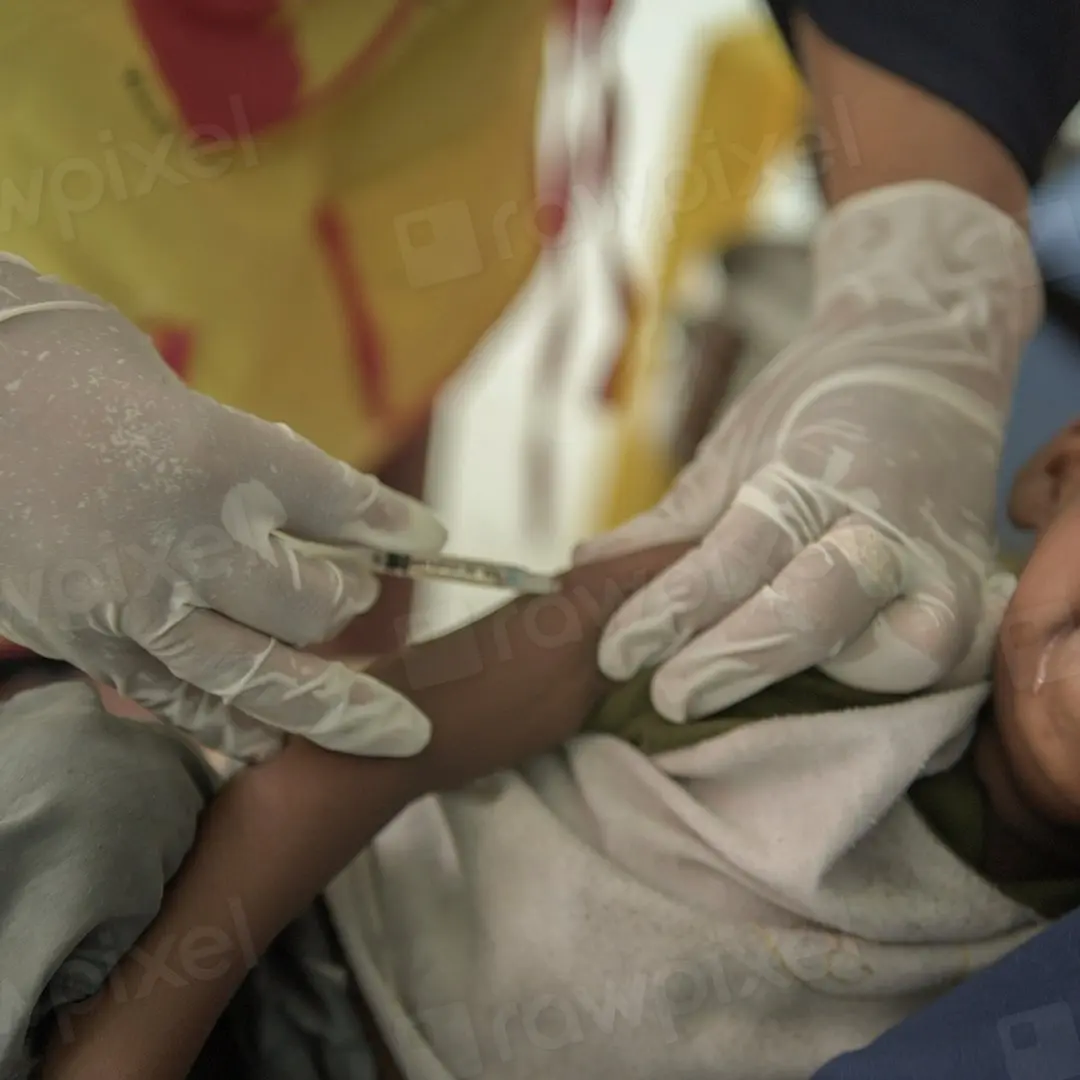
Bangladesh: 1,009 Children Dead From Measles
1,009 children dead from a vaccine-preventable disease
Bangladesh has recorded more than 1,009 measles deaths since March 2026, almost all of them children under five. Before this outbreak, the country had seen no comparable surge in living memory. The CDC has identified it as the world's largest active measles outbreak. The United States recorded its own worst year in decades across the same period: 3,294 cases, three deaths in Pennsylvania. Bangladesh's toll is three hundred times larger. This was not an act of nature. First-dose measles-rubella coverage fell from 88.6 percent in 2019 to 86 percent in 2023, slipping below the 95 percent threshold that interrupts transmission. No nationwide supplementary vaccination campaign had run since December 2020.
"To my knowledge, Bangladesh has never witnessed so many children dying from measles. This is a truly terrible situation.
"Mahmudur Rahman · Former IEDCR Director Dhaka
Three failures in five years broke the immunity chain
Measles requires 95 percent two-dose coverage to stop circulating. Bangladesh had reached 118 percent first-dose coverage by 2016, counting catch-up campaigns. Then three compounding failures hit in succession. First, COVID-19 from 2020 to 2022 grounded outreach workers, closed clinics, and reset the supplementary campaign schedule. Routine immunisation visits fell sharply in 2020 and recovered slowly. Second, a global vaccine shortage in 2024 and 2025 created procurement gaps. Third, in July 2024 Prime Minister Sheikh Hasina was ousted after mass protests, and the political transition that followed delayed vaccine purchasing decisions for months.
By January 2026, cases were rising in districts with no history of sustained transmission
Dhaka division reported the heaviest burden: 8,263 suspected cases in the first month of reporting alone. Rajshahi followed with 3,747, Chattogram with 2,514. Of all reported cases, 79 percent were in children under five. One in three was an infant under nine months, who would not yet have been eligible for the routine first dose at twelve months. The fifty-eight districts affected cover every division in the country.
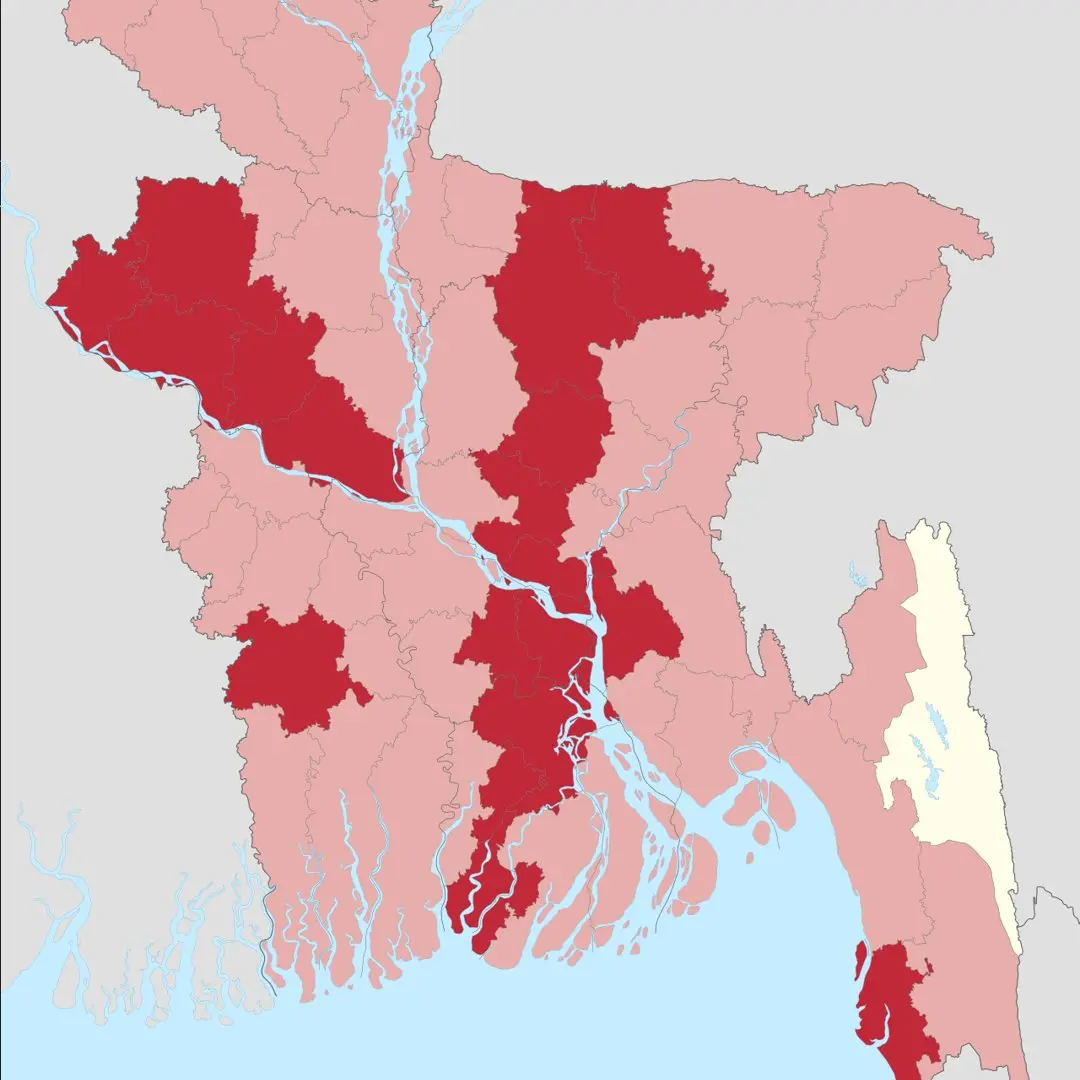
Credit: Zeeshan Y Tariq, Wikimedia Commons (CC0). District case burden, April to May 2026.
Total suspected measles cases (to September 10)
168,745
Laboratory-confirmed cases
19,933
Deaths (confirmed and suspected measles-related)
1,009
Hospitalised
148,555
Districts affected out of 64
58 of 64
Cases in children under five
79 percent of total
Last nationwide supplementary campaign before 2026
December 2020
First-dose coverage 2019 vs 2023
88.6% down to 86%
19.75 million doses administered. Four million children still missed.
Bangladesh launched an emergency measles-rubella campaign in April 2026, initially targeting 18 million children. By September, 19.75 million doses had been given, exceeding the original target. Hospital admissions declined from their April peak, which epidemiologists took as evidence of a substantial effect. Deaths continued to be recorded through September as children kept arriving with acute infections. The critical gap: roughly four million children were not reached by the campaign, concentrated in hard-to-access rural and urban-poor communities. Halimur Rashid, director of disease control at the DGHS, said a further vaccination round was being prepared. At one major hospital, 86 percent of 57 deaths were in children under fifteen months. Thirty-one were under nine months, too young for the routine schedule, dependent entirely on community herd immunity that was no longer there.
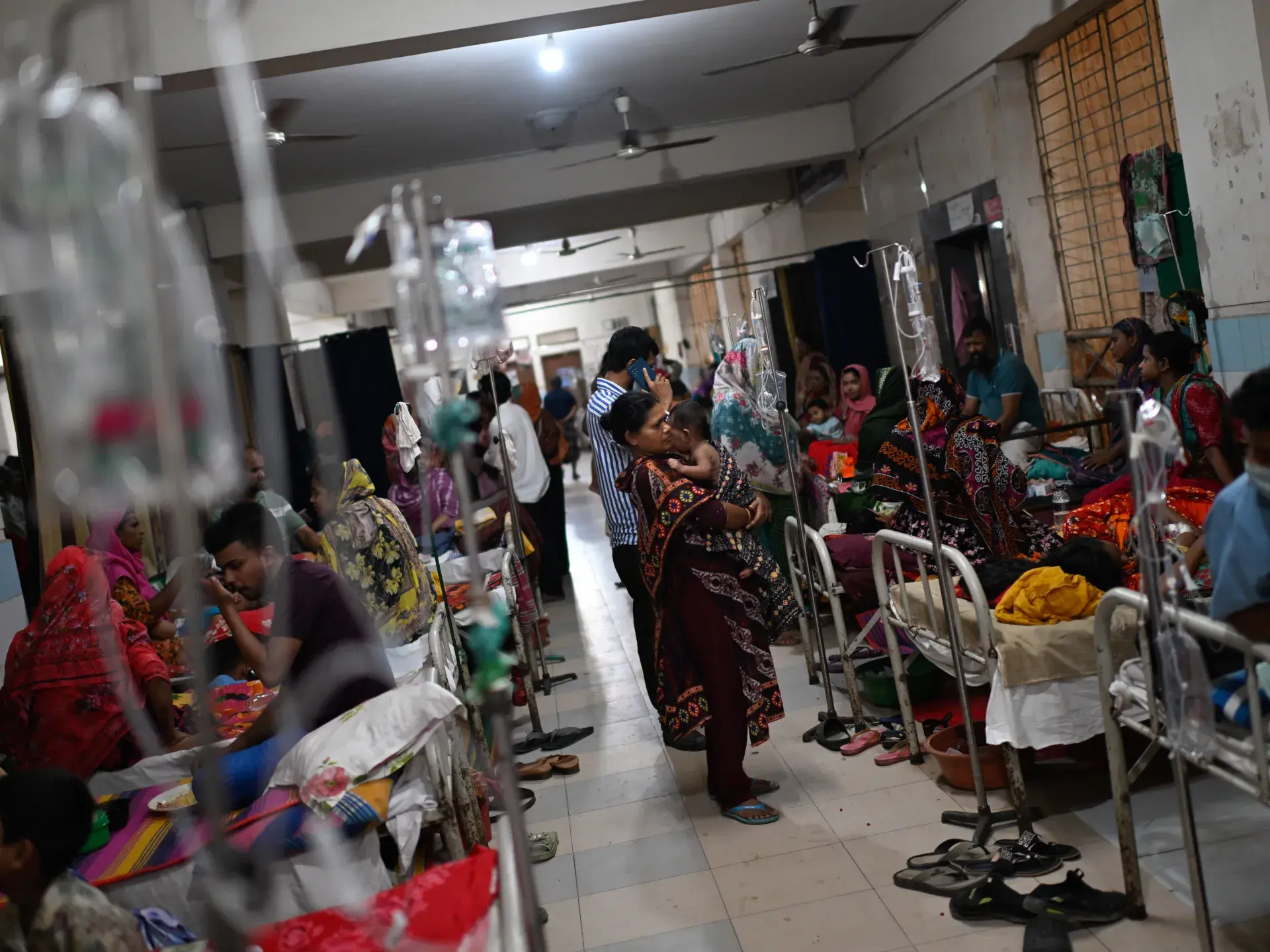
"We could not achieve herd immunity. Measles cannot be eradicated and the aim was to reduce casualties.
"Zahid Raihan · DGHS Spokesman
The threshold is 95 percent. That number does not negotiate.
A single infected person can transmit measles to nine of ten unvaccinated contacts in the same room. Coverage at 86 percent sounds close to the target. It is not. At 86 percent, enough susceptible people exist in every community to sustain chains indefinitely. The cumulative effect of missing the threshold for three consecutive years was 1,009 deaths and 168,000 infections. Experts now argue that national averages conceal local failure. The next campaign must use community-level microplanning: mapping unvaccinated children household by household rather than declaring a district covered when its average looks acceptable. The WHO listed 14 countries at high or very high outbreak risk entering 2026, including several with political or economic disruptions similar to Bangladesh's 2024 to 2025 period. The mathematics of measles do not make exceptions.