115-million-year-old dinosaur blood confirmed
"To detect intact heme-derived molecules in 115-million-year-old red blood cells is astonishing: this really is a landmark discovery.
"Prof. Kliti Grice
Soft tissue and blood finds in dinosaur fossils
| Discovery | Year | Specimen | Age | What was preserved | Heme confirmed |
|---|---|---|---|---|---|
| Aratasaurus museunacionali, Brazil | 2026 | Theropod leg bone | 115 million years | Mineralised red blood cells + collagen amino acids | Yes, chemically confirmed via spectroscopy |
| Possible RBC structures in bone | 2015 | Multiple species | ~75 million years | Cell-like structures in vascular canals | No - morphology only, chemistry not established |
| Soft tissue and blood vessels | 2005 | T. rex, Montana | 68 million years | Flexible blood vessels, possible cell remnants | Partial - subsequent studies disputed contamination |
| Heme recovery from bone | 1990s | T. rex | 68 million years | Reported heme signals | Disputed - not independently replicated at the time |
Age of fossil
115 million years
Previous oldest confirmed find
~80 million years
Discovery site
Romualdo Formation, Brazil
Specimen
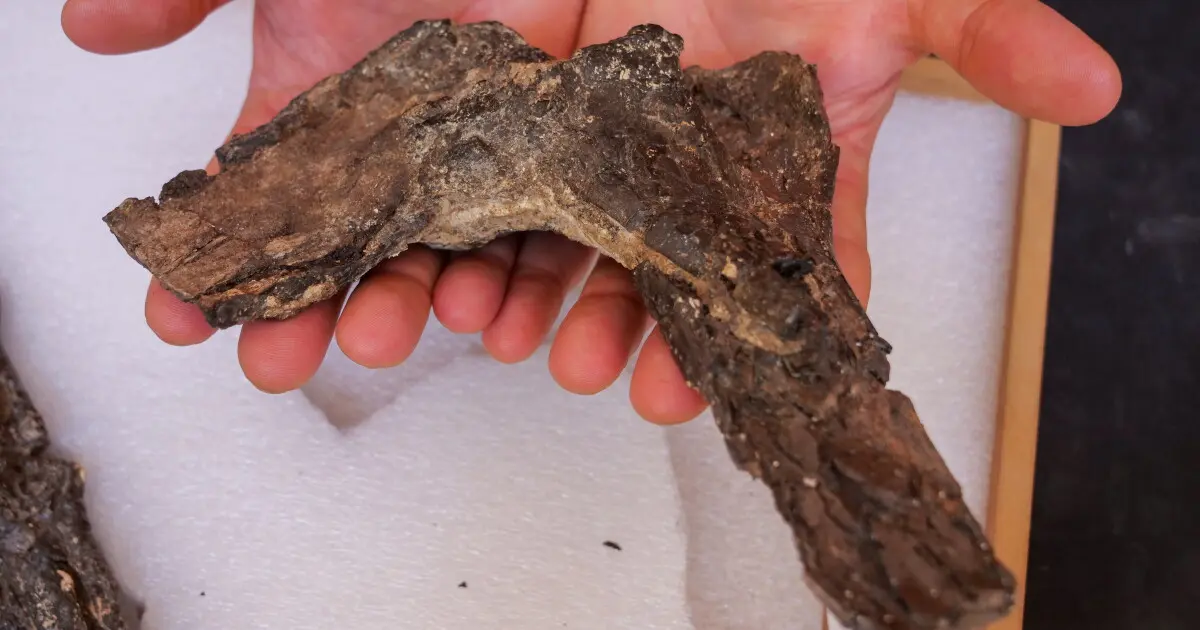
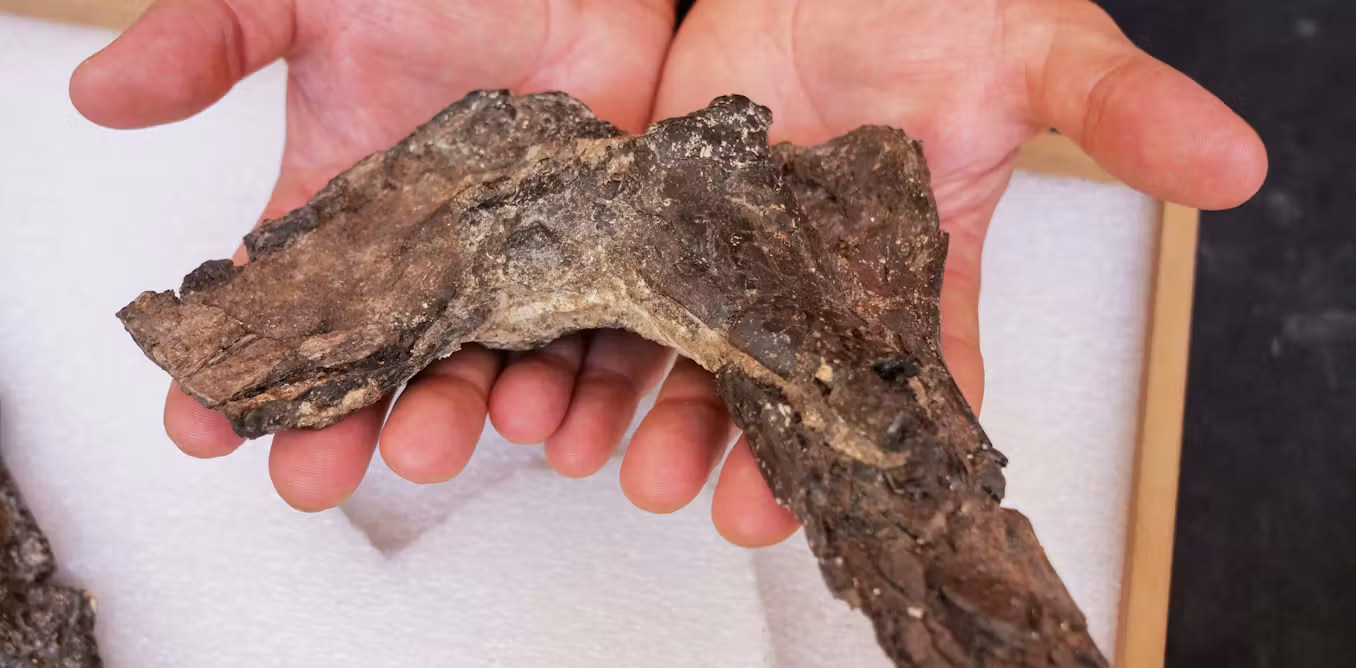
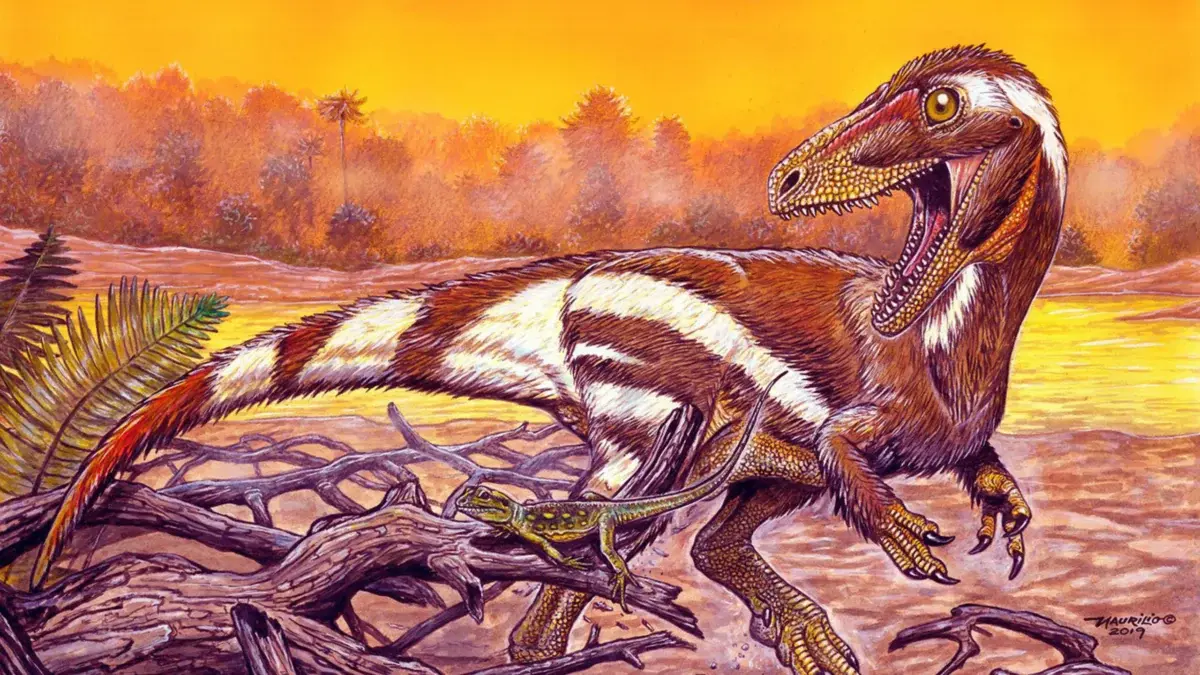
Right hind limb of a juvenile Aratasaurus
Dinosaur length
~3 metres (10 feet)
Age at death
~4 years old
Key molecule detected
Heme B (oxygen-carrying component of haemoglobin)
Mineral preserving the cells
Hausmannite (manganese oxide)
Published in
PNAS (Proceedings of the National Academy of Sciences)
How 115 million years of survival was possible
The red blood cells were mineralised by hausmannite, a compound of manganese oxide, acting as a natural time capsule. It stabilised the cellular structures and protected heme and collagen amino acids from degradation.
The fossil was buried rapidly after death in a shallow, oxygen-poor, microbe-rich environment - conditions that slowed decay.
Researchers used multiple independent methods: microscopy to locate ellipsoidal cell-like structures in vascular canals, then elemental mapping (iron, carbon, nitrogen) and spectroscopy to confirm the heme signature.
The altered form of heme B was 90 times more abundant than the unaltered form - consistent with gradual chemical change over deep time rather than recent contamination.
Contamination from fungal filaments, spores, or modern microbes was ruled out by the absence of diagnostic markers.
One leading expert is not fully convinced
Prof. Mary Schweitzer (North Carolina State University), who has herself discovered remnants of blood vessels and soft tissues in dinosaur fossils, reviewed the study and raised two objections.
Morphology: the cell-like structures do not have the nuclear bulge expected in non-mammalian red blood cells, which should appear dome-like rather than concave.
Size: the structures are smaller than most non-mammalian red blood cells, so the visual match is not met.
Schweitzer was more persuaded by the chemical evidence: she told reporters that conventional wisdom on the rapid breakdown of endogenous organics is routinely challenged by modern analytical techniques. She did not dismiss the heme and collagen findings.
What researchers say comes next
Independent replication of the heme detection in the same specimen
Systematic re-examination of museum specimens using modern molecular techniques
Further investigation of hausmannite as a preservation agent in other fossil sites
Research into whether blood-derived biomolecules can inform dinosaur metabolism and activity levels
Broader implications explored for astrobiology: if heme can survive 115 million years in harsh conditions, similar biomolecules could persist elsewhere
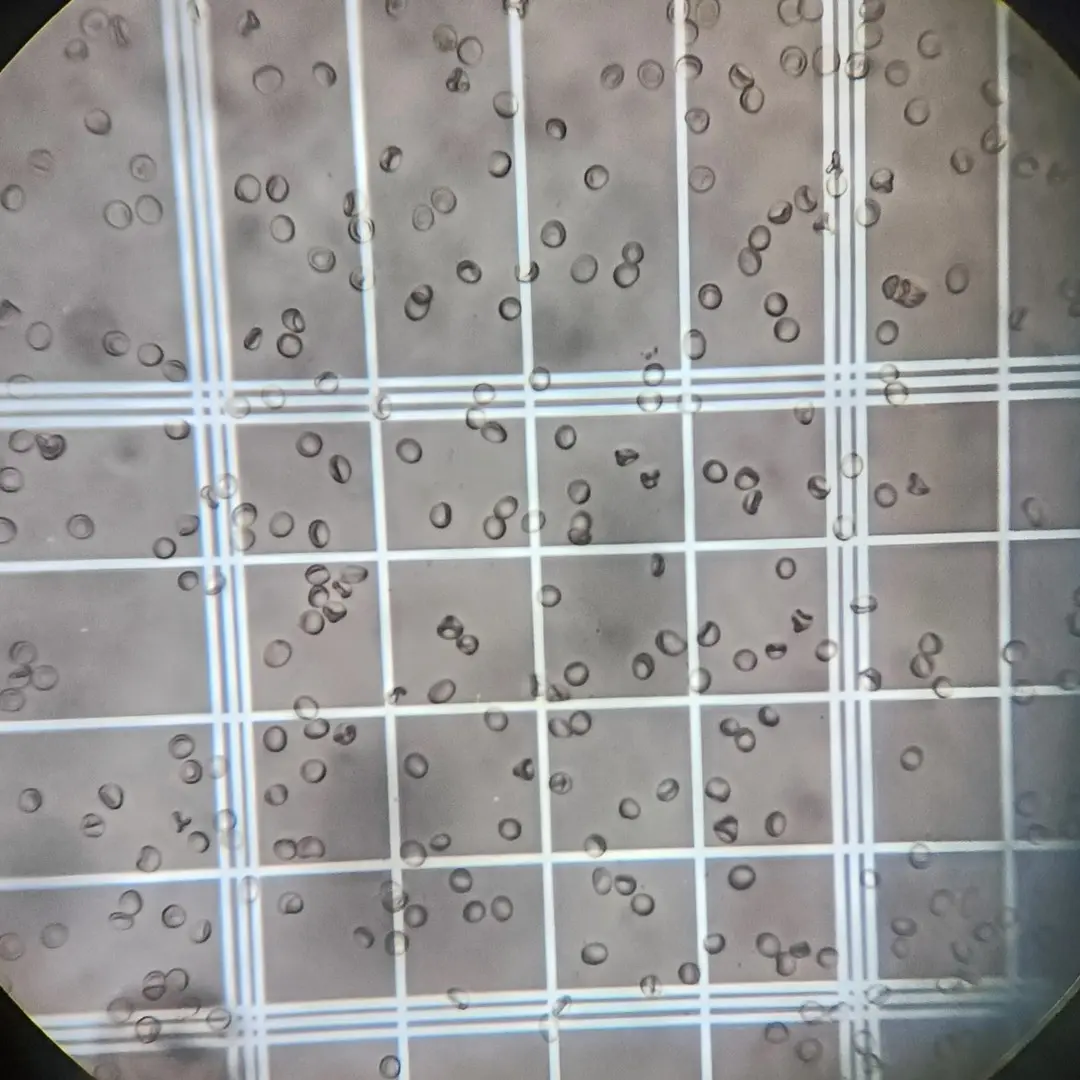
Sources: PNAS paper (Grice et al., 2 Nov 2026), Curtin University press release, Popular Science, New Atlas, The Conversation, ScienceAlert, Livescience. Skeptical commentary from Prof. Mary Schweitzer sourced via Livescience and ScienceAlert. Cover: erythrocytes under compound microscope, CC0, Kaveri.dhavan via Wikimedia Commons.