1,014 Dead. Now the Whistle Blows Again.
1,014 Dead. Now the Whistle Blows Again.
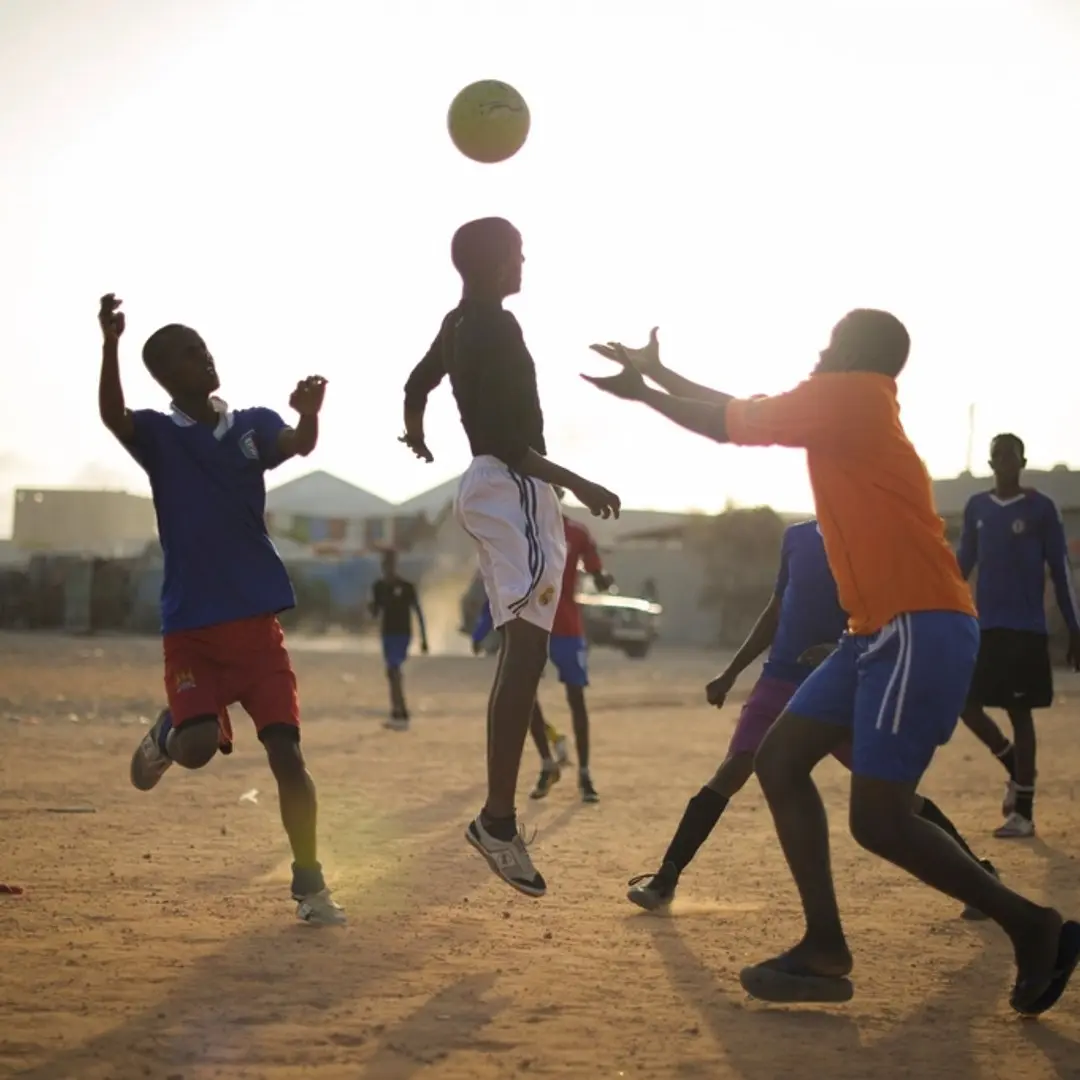
Palestinian football had been silent since October 7, 2023. No club leagues, no cup draws, no fixtures. The Palestinian Football Association suspended all competitions the day the war began. Then, on September 4, 2026, 244 clubs kicked off simultaneously across four regions: Gaza, the West Bank, Jerusalem, and Palestinian refugee camps in Lebanon. The tournament they launched is called the Thousand Martyrs Cup. The name counts the dead: 1,014 members of the Palestinian football community killed in the preceding three years, among them more than 570 players, over 100 of them children. Israeli forces had, in the same period, destroyed or damaged roughly 270 sports facilities in Gaza, including 9 of the 10 stadiums and 51 of 54 club premises in the territory. The tournament is not a celebration. It is a register.
Nine of Ten Stadiums in Gaza Are Gone
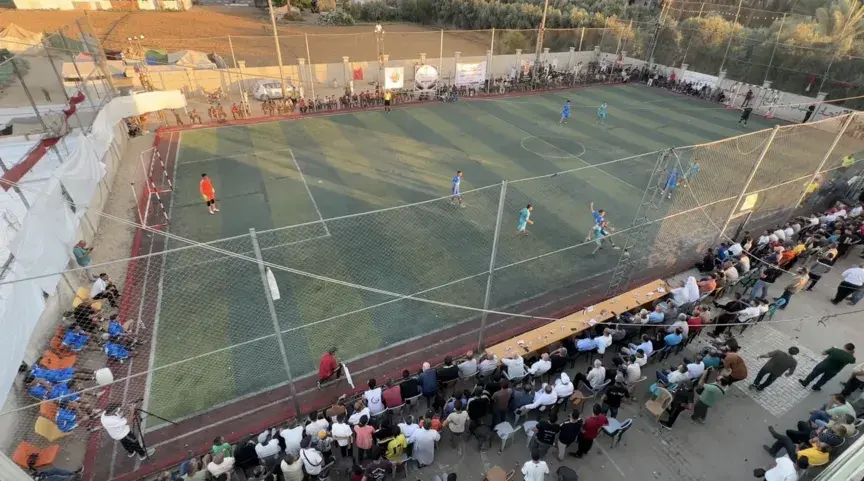
For Ittihad Deir al-Balah, one of the three clubs in Gaza still able to field a squad, preparation for the Thousand Martyrs Cup meant gathering torn footballs, scuffed training cones, and rusted equipment on a dirt field while Israeli drones circled overhead. The club lost at least ten players and staff before the tournament began, including their manager, Hani Al-Mosadar, and midfielder Nasrallah Al-Mqataa. Three days before the opening round, Khadamat Jabaliya lost its star player, Abdel-Fattah Abu-Aish, in an airstrike. Of Gaza's pre-war ten stadiums, nine are destroyed or unusable. Opening matches were played on rubble-cleared dirt pitches; some spectator areas now serve as displacement camps. The Lebanese branch played at Abu Jihad Al-Wazir Stadium in the Ain al-Hilweh refugee camp. The West Bank opened at Faisal Al-Husseini International Stadium in Al-Ram, north of Jerusalem.
"This is the beginning of restoring life to the Palestinian sports body and giving our people a space of hope and joy in the homeland and the diaspora.
"Jibril Rajoub. President of the Palestinian Football Association. September 4 2026
"I May Be Killed in the Next 15 Minutes"
The Dropsite News dispatched a journalist to Deir al-Balah for the opening. One player, Mohammed Al-Taramasi, gave his interview this way: "I am now talking to you," he said, "and I may be killed in the next 15 minutes." He played anyway. Assistant coach Motaz Rabia described the resource situation plainly: the club could not afford a single training ball. Equipment had to be borrowed, repaired, or improvised. The group-stage draw, held simultaneously across all four branches on September 1, was conducted by association officials in conditions that ranged from functional offices in the West Bank to rubble-strewn rooms in Gaza. In total, 244 clubs registered: 165 from the West Bank and Jerusalem, 50 from Gaza, and 28 from Palestinian refugee camps in Lebanon. Youth players were permitted to register alongside seniors, a rule change reflecting how many adult players have been killed or displaced.
Sport as Resistance, Not Recovery
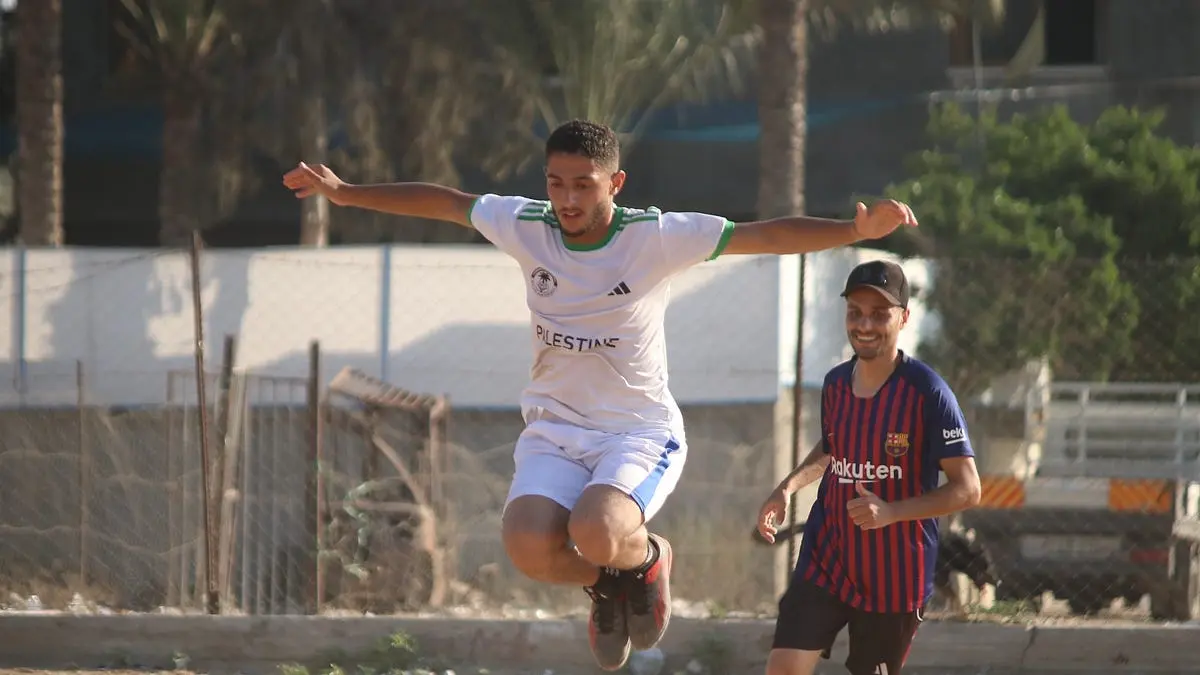
PFA President Rajoub described sport explicitly as "part of our resistance," a phrase that carried specific weight: Israeli bombardment has targeted sporting infrastructure with a consistency that drew a formal complaint to the International Olympic Committee. The IOC received the PFA's dossier on facility destruction in early 2025; FIFA opened a monitoring process in February 2025. The domestic league proper will not return until at least the 2027-28 season, and only if the security situation allows. The Thousand Martyrs Cup is a two-month competition, not a restoration of normal life. Rajoub was careful on that point: this is, as he put it, "a limited step." It is also the first step in 35 months. The 1,014 names the tournament carries were players, coaches, referees, and officials. None of them will see the results.