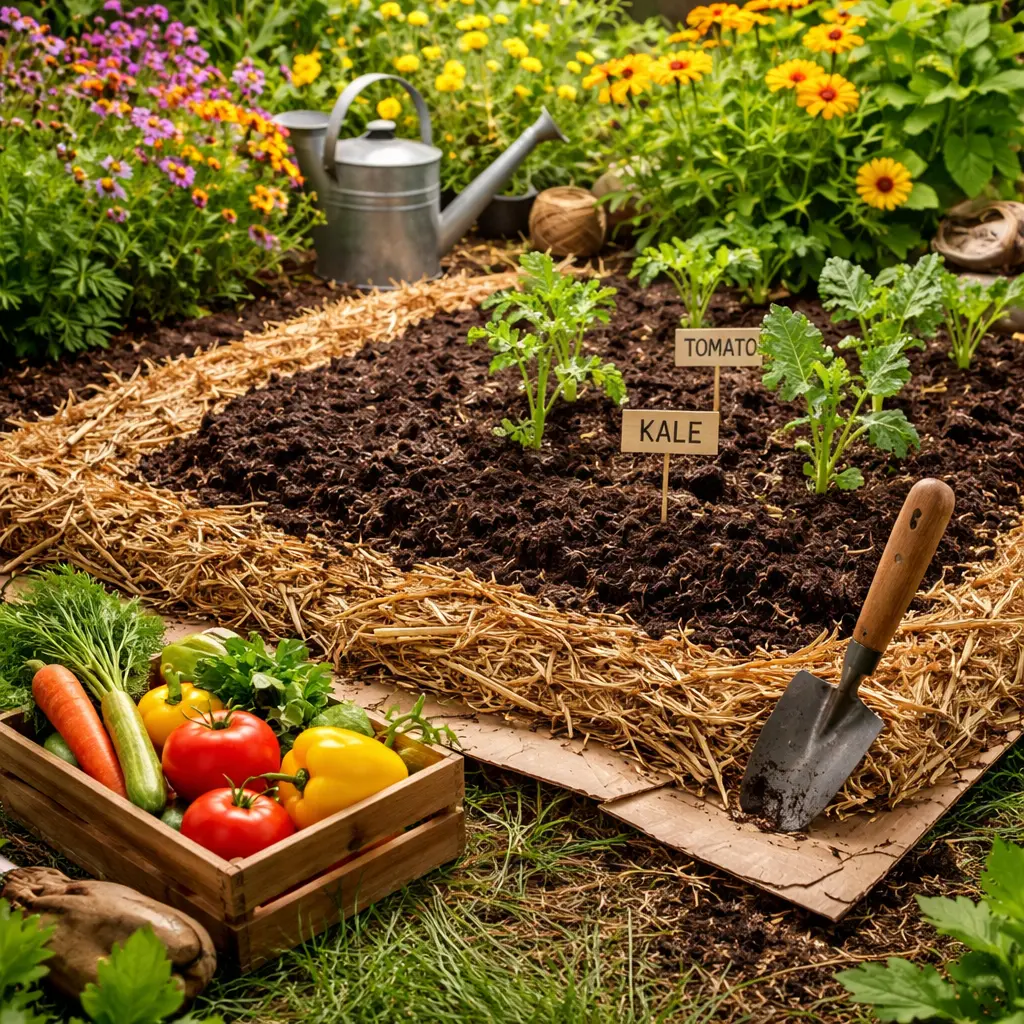
Start a No-Dig Garden Bed
"The no-dig method is not a shortcut. It is a better understanding of what soil is and how it works.
"KaiRenner26th of April 2026

Why No-Dig Outperforms Tilling
Tilling disrupts soil fungal networks (mycorrhizae), brings weed seeds to the surface where light germinates them, and destroys soil structure that took years to form. The no-dig method smothers existing vegetation with cardboard (sheet mulching), then builds a growing medium on top with compost. Worms and soil biology work the cardboard into the subsoil. The result is fewer weeds, better water retention, and dramatically higher organic matter.
6to 8 Inches
2Layers
Mow or Flatten Existing Vegetation
Cut grass or weeds low but do not remove them — they become the base layer.
Mow or Flatten Existing Vegetation
Mow existing grass or weeds as short as possible. You do not need to remove them. Perennial weeds with deep taproots (dock, bindweed) may break through over the first season — dig those specific plants out before laying cardboard. Annual weeds and most grass species will be fully suppressed within one season by the cardboard layer.
Lay Cardboard
Cover the bed area with cardboard overlapping edges by 6 inches.
Lay Cardboard
Lay plain cardboard directly over the mowed area — no tape, no staples, remove any plastic strapping. Overlap adjacent pieces by at least 6 inches to prevent gaps where light and weeds can push through. Water the cardboard thoroughly — saturated cardboard molds against the ground and breaks down faster. Keep cardboard away from the crowns of any plants you want to keep.
Apply Deep Compost Layer
Pile 6 to 8 inches of well-made compost directly over the cardboard.
Apply Deep Compost Layer
Spread 6 to 8 inches of finished compost, mushroom compost, or a compost-topsoil blend over the cardboard while it is still wet. Do not mix — just pile on top. This layer is what you plant into. In the first year, stick to transplants (tomatoes, squash, brassicas) rather than direct-sown small seeds — 6 inches of compost supports transplants better than tiny seeds that need firm seedbed contact.
What You Need
Plain cardboard boxes — no glossy or plastic coating
6 to 8 cubic yards of compost per 100 square feet of bed
Water source to wet the cardboard
Transplant starts for the first season
Weed Seeds in Compost Are the Main Risk Poorly made compost that did not reach 140 to 160°F in the hot phase contains viable weed seeds. A no-dig bed built with unfinished compost produces a weed-dense first year. Use well-finished, dark, crumbly compost with a neutral earthy smell. Avoid fresh manure as the top layer — it also contains weed seeds.
"Six inches of compost on top of cardboard is the most productive gardening surface you can create in a single afternoon.
"KaiRenner26th of April 2026