Prop Making Documentation Template for Contests
SAMPLE, FICTIONAL PROP
The prop below is invented to show the layout. Replace the sample with your own prop, numbers and photos. Check your event rules for what must be listed.
Fill in: prop overview
| Field | Your entry |
|---|---|
| Prop name | |
| Source character | |
| Length and size | |
| Weight | |
| Main materials | |
| Hours | |
| Cost USD |
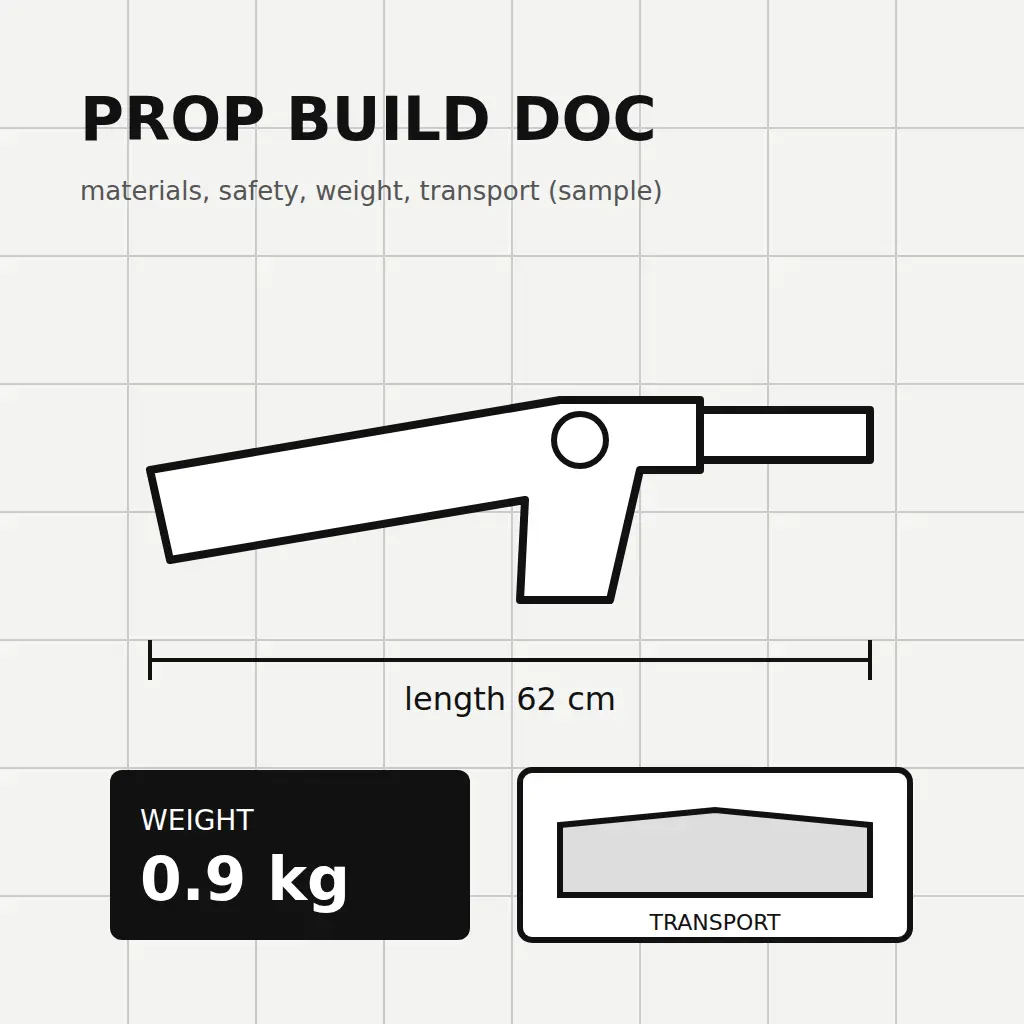
Sample prop (fictional)
| Field | Sample entry |
|---|---|
| Prop name | Foam blaster |
| Length and size | 62 cm long, 22 cm tall |
| Weight | 0.9 kg |
| Main materials | EVA foam, PVC pipe, acrylic paint |
| Hours | 31 |
| Cost USD | 54 |
Materials and techniques
| Part | Material | Technique |
|---|---|---|
| Body | EVA foam 10 mm | Cut, heat shape, contact glue |
| Barrel | PVC pipe | Cut and sand |
| Details | Craft plastic | Layering |
| Finish | Acrylic and sealer | Base coat, dry brush weathering |
Safety notes
List how the prop is safe to carry. Note no sharp points, no real projectile parts, rounded edges, and that paint and sealer were applied in a ventilated space. Many events inspect props, so state the rule you checked.
Weight and handling
State the weight and how it is carried: by hand, strap or sling. Judges and event staff ask about heavy props, so write the figure and whether it breaks into parts.
Transport
Say how the prop travels: in one piece or in parts, in a bag or a box, and how long it takes to reassemble. Note any piece that needs padding.
Build Book Pack, creator code
The Build Book Pack in the Slatesource shop has stage layout, gallery and timeline chips in one go. Use the creator code BUILDBOOKSTUDIO for 10 percent off. The author of this page earns a commission when you use the code.

Questions about this template
Leave a message and I will reply.